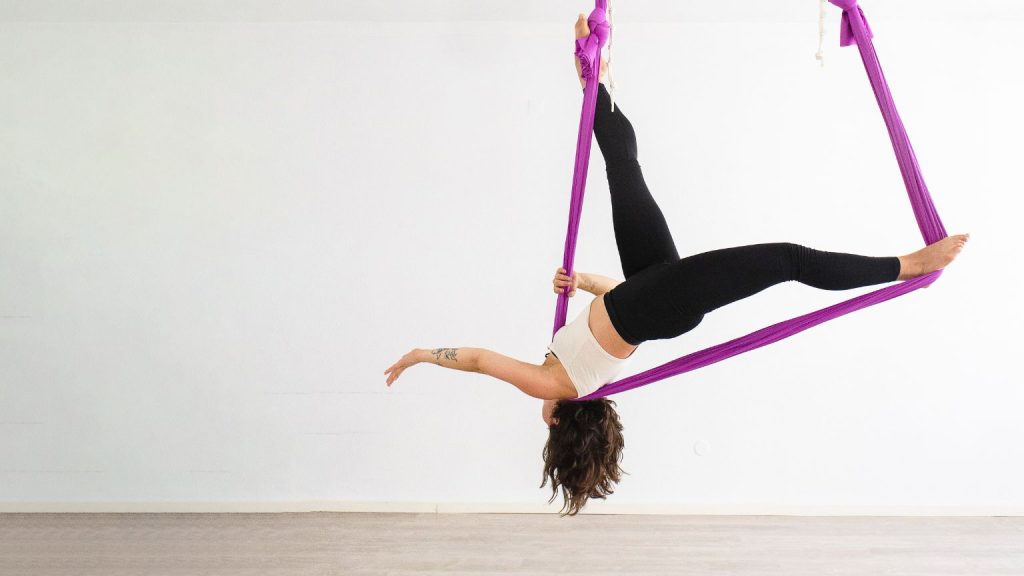
Aerial fitness has become one of the most attractive training options in recent years. More and more people are looking for alternatives to traditional sports that allow them to train the body in a complete, conscious, and motivating way.
Within the broad world of sports, and especially aerial sports, this discipline stands out for its ability to combine strength, body control, and coordination.
Training in suspension completely changes the relationship with movement. The body works from a different perspective and requires a stronger connection between mind and muscles, which explains why many people find aerial fitness to be a unique and highly engaging experience.
1. A complete training method within modern sports
Unlike many other sports, aerial fitness does not focus on a single muscle group or one type of effort. It is a full-body training method that activates the entire body at once, improving functional strength and overall body control.
Some of the key elements that make it a complete workout include:
- Constant activation of the core as the center of movement
- Balanced work for arms and legs
- Progressive improvement of balance and coordination
- Natural adaptation to each person’s fitness level
By working with body weight, this training method reduces joint impact and supports safe, long-term progression.
2. The rise of aerial sports and their influence on fitness
The growth of aerial sports has played a major role in the popularity of aerial fitness. Disciplines such as aerial yoga, aerial straps, and trapeze for acrobatics have shown that suspension training is not only artistic but also highly effective for physical conditioning.
These practices bring clear benefits to training:
- A feeling of lightness that reduces impact
- Greater body awareness during movement
- Improved control and precision
- Increased focus throughout the session
Aerial fitness brings these elements together in an accessible format, making it easier to integrate into diverse training routines.
3. Physical benefits of aerial fitness
One of the main reasons people choose aerial fitness is the wide range of physical benefits it offers, both in the short and long term.
Development of functional strength
Suspension work continuously activates deep muscles. This encourages balanced strength development, especially in:
- Abdominal and lower back muscles
- Shoulders and arms
- Glutes and legs
This type of functional strength supports not only aerial training but also everyday movement and other sports.
Improved mobility and flexibility
Many sequences allow muscles to lengthen in a progressive and controlled way. This helps to:
- Improve joint mobility
- Reduce muscular tension
- Increase flexibility without forcing the body
For this reason, aerial fitness is often combined with aerial yoga.
Better posture and body control
Working in the air requires proper alignment. Over time, this leads to:
- Greater postural stability
- More efficient movement patterns
- Reduced compensations in the body
4. Mental and emotional benefits of aerial training
Aerial fitness does more than transform the body. It also has a positive impact on mental and emotional well-being, which helps explain its growing popularity.
Among the most notable benefits are:
- Increased self-confidence
- Improved focus and concentration
- Reduced daily stress
- Greater motivation to train consistently
The need to stay present during each exercise turns aerial training into a practice that combines movement with mental clarity.
5. Differences between aerial fitness, aerial yoga, and trapeze for acrobatics
Although these disciplines all involve suspension, their goals are different.
- Aerial fitness focuses on overall physical conditioning, combining strength, control, and dynamic movement
- Aerial yoga emphasizes mobility, breathing, and relaxation at a slower pace
- Trapeze for acrobatics prioritizes technique, coordination, and the execution of aerial figures
This variety allows you to choose the discipline that best matches your goals or combine several within your training routine.
6. The importance of equipment in aerial fitness
In any sport, equipment influences training quality, but in aerial fitness it plays an even more important role. Suspension training requires reliable, comfortable equipment designed for continuous use.
Good equipment allows you to:
- Train with greater safety
- Maintain comfort during longer sessions
- Improve technical execution
- Avoid distractions while moving
For this reason, more practitioners take the time to research before choosing their gear. In this context, specialized brands such as Aerial Obsessed develop equipment based on real practice within aerial disciplines.
7. A training method that continues to evolve
Aerial fitness is not a passing trend. Its growth reflects a new way of understanding movement, training, and physical well-being.
More people are integrating it into their routines for reasons such as:
- Its versatility
- Its adaptability to different fitness levels
- Its mindful approach to movement
This ongoing evolution strengthens its position within modern sports.
8. Training in the air as a conscious way of moving
Choosing aerial fitness as a training method means committing to a more connected and conscious way of moving. It is not just about improving physical condition, but about understanding the body and respecting the learning process.
Within the world of sports and aerial sports, this discipline continues to gain recognition for its balance between physical challenge and overall well-being.