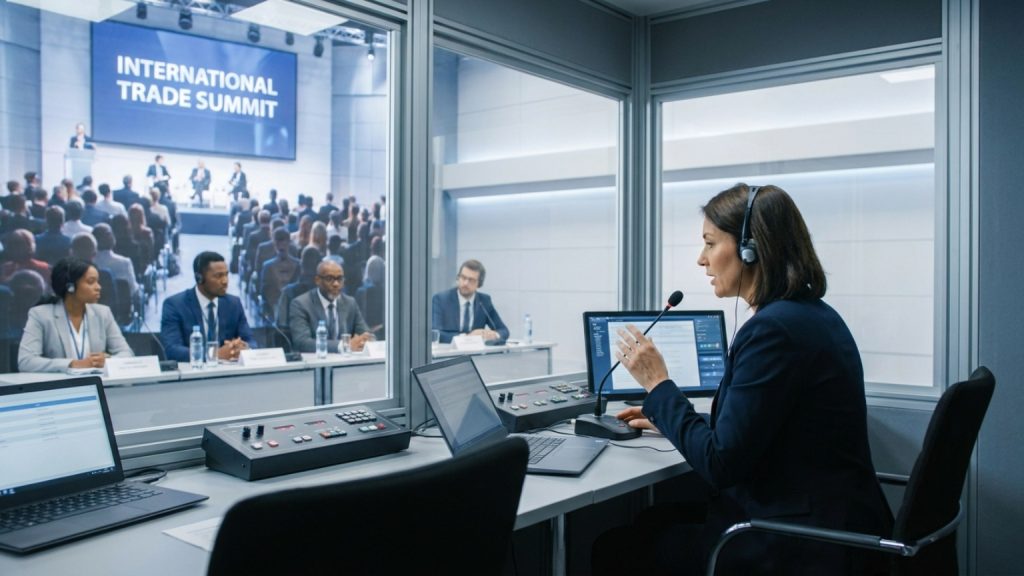
Misunderstandings often arise when individuals from different linguistic backgrounds attempt to communicate. These barriers can hinder business deals, legal processes, and personal connections. Ensuring clear, accurate communication is crucial for successful interactions. A professional interpreter provides the necessary bridge.
1. What is the definition of a professional interpreter?
A professional interpreter acts as a vital communication bridge between individuals speaking different languages. This specialist converts spoken messages from a source language into a target language in real-time. The goal is to ensure clear and accurate understanding during live interactions.
- Linguistic Fluency: A professional interpreter possesses exceptional command of both the source and target languages. This includes a deep understanding of grammar, vocabulary, and idiomatic expressions.
- Subject Matter Competence: Interpreters often specialize in specific fields like medicine, law, or business. This specialized knowledge ensures the correct translation of technical terms and complex concepts.
- Ethical Conduct: Strict ethical guidelines govern the work of professional interpreters. These include maintaining confidentiality, impartiality, and accuracy in all communications.
- Real-time Delivery: Interpreters must process information quickly and render it accurately without delay. This skill is crucial for maintaining the flow of conversation in various settings. For example, during a medical consultation, the interpreter helps a doctor and patient understand each other immediately.
- Cultural Awareness: Understanding cultural nuances is essential for conveying messages appropriately. An interpreter ensures that the intended meaning and tone are preserved across different cultural contexts.
The professional interpreter is thus an indispensable figure in global communication. Their expertise facilitates understanding and fosters effective interactions across language barriers.
2. Why is the role of a professional interpreter crucial for accuracy?
A professional interpreter ensures precise communication across different languages. Their deep understanding of linguistic nuances and cultural contexts prevents misinterpretations. This accuracy is vital for successful global interactions, especially in sensitive or high-stakes environments sensitive high-stakes environments.
- Cultural Nuance: Interpreters understand the cultural implications of language. They adapt messages to resonate appropriately with the target audience, avoiding unintended offense or confusion.
- Contextual Understanding: The interpreter grasps the full meaning and intent behind spoken words. This goes beyond simple translation, ensuring the true message is conveyed accurately.
- Specialized Terminology: Professional interpreters possess expert knowledge of specific industry jargon. This is essential for fields like medicine, law, or technical discussions. For example, a legal interpreter accurately conveys complex legal terms during court proceedings. This ensures all parties fully understand the implications.
- Real-time Adaptation: Interpreters can quickly adjust to the dynamic nature of live conversations. This maintains the flow and integrity of communication, even during rapid exchanges or unexpected turns.
- Ethical Standards: Interpreters adhere to strict codes of ethics, including confidentiality and impartiality. This commitment builds trust among all parties involved in the communication.
The work of a professional interpreter is therefore indispensable for effective global interaction. Their expertise guarantees clarity and mutual understanding, bridging significant communication gaps.
3. How does a professional interpreter facilitate real-time communication?
A professional interpreter plays a crucial role in enabling instant verbal exchange between individuals speaking different languages. This specialist ensures that spoken messages are conveyed accurately and promptly. The interpreter acts as a linguistic and cultural bridge, allowing participants to understand each other without delay. This process is essential in many global settings.
- Accurate Rendition: A professional interpreter accurately translates spoken words from one language to another. This ensures that the original meaning, tone, and intent of the speaker are preserved. For example, during a medical consultation, the interpreter conveys symptoms precisely.
- Cultural Nuance: The interpreter navigates cultural differences and idiomatic expressions. This prevents misunderstandings that arise from direct word-for-word translation. A good example is explaining a proverb or a specific cultural reference in a diplomatic meeting.
- Real-time Flow: The interpreter maintains the natural pace and rhythm of a conversation. This allows discussions to proceed smoothly, almost as if participants were speaking the same language. In a business negotiation, this smooth flow helps build rapport.
- Confidentiality: Interpreters adhere to strict ethical codes, including maintaining the privacy of all information shared. This builds trust among parties, especially in sensitive legal or medical situations. For instance, patient information remains protected during interpreted sessions.
- Contextual Understanding: The specialist prepares by understanding the subject matter and specific terminology of the discussion. This preparation ensures that complex ideas are interpreted correctly and clearly. For instance, in a technical conference, the interpreter uses appropriate industry jargon.
Therefore, a professional interpreter is indispensable for effective real-time global communication. Their expertise allows for clear, precise, and culturally sensitive interactions across language barriers.
4. What are the considerations for selecting a professional interpreter?
Selecting a professional interpreter requires careful consideration to ensure effective global communication. The right interpreter facilitates accurate message delivery and cultural understanding across language barriers. This strategic choice directly impacts the success of international interactions, from business negotiations to diplomatic exchanges.
- Specialized Expertise: Different settings demand specific subject matter knowledge. For example, a legal interpreter must understand precise terminology and court procedures to ensure accuracy in courtrooms.
- Language Proficiency and Cultural Nuance: An interpreter needs more than just fluency in two languages. They must also grasp subtle cultural differences and idiomatic expressions to convey the true meaning.
- Experience and Professional Certification: A proven track record and formal qualifications indicate reliability and skill. Certification often means adherence to ethical standards and best practices in the field.
- Interpretation Mode: The event format dictates the required interpretation type. Simultaneous interpretation suits large conferences, while consecutive interpretation works well for smaller meetings or interviews.
- Confidentiality and Ethics: Interpreters often handle sensitive information. A professional interpreter maintains strict confidentiality and adheres to a strong code of ethics.
Careful selection of a professional interpreter is vital for successful communication in diverse settings. This ensures messages are conveyed accurately and appropriately, preventing misinterpretations and fostering trust.