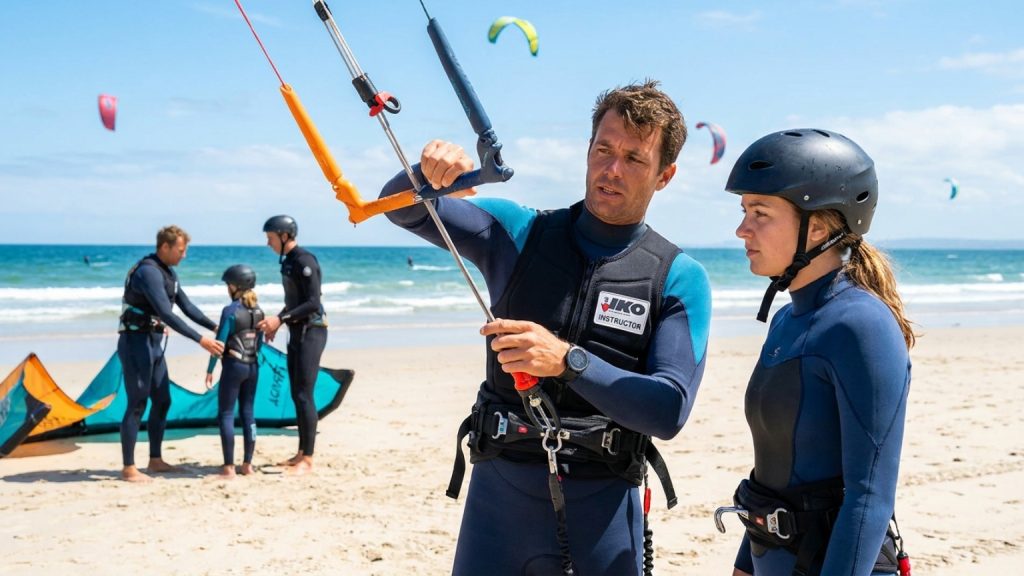
Many individuals dream of gliding across the water, powered by the wind. However, the initial steps into kitesurfing can seem complex and daunting. Understanding the importance of proper instruction is crucial for a safe and enjoyable experience.
1. What is the certification of a kitesurf instructor and its importance?
A kitesurf instructor’s certification confirms their professional competence and adherence to global teaching standards. This credential indicates that an instructor has completed rigorous training in teaching methods, safety protocols, and practical kitesurfing skills.
Organizations like the International Kiteboarding Organization (IKO) issue these certifications, setting benchmarks for quality instruction. This ensures students receive safe and effective lessons.
- Safety Protocols: Certified instructors prioritize student safety above all else. They teach proper equipment handling, launch and landing procedures, and emergency responses to prevent accidents.
- Structured Learning Path: The certification guarantees a systematic approach to teaching kitesurfing. This method allows students to build skills progressively, from basic kite control to riding on the water.
- Equipment Expertise: Instructors understand the various types of kites, boards, and safety systems. This knowledge helps them select the most suitable gear for each student and specific wind conditions.
- Emergency Response Training: Certified instructors possess the skills to manage critical situations effectively. They know how to do water rescues and administer first aid, ensuring student well-being during lessons.
- Environmental Awareness: Instructors teach students about local wind patterns, tides, and potential hazards. This understanding helps students make informed decisions and stay safe on the water.
The presence of a certified instructor significantly enhances the learning experience for new kitesurfers. It provides assurance that students are in capable hands, learning safely and effectively.
2. Why is the guidance of a certified kitesurf instructor crucial for safety and skill development?
The guidance of a certified kitesurf instructor is essential for anyone learning the sport. This expert supervision ensures safety and promotes effective skill progression. An instructor provides structured lessons, which helps students avoid common mistakes and learn correct techniques from the start.
- Safety Protocols: An instructor teaches proper safety measures and risk assessment. This includes understanding wind conditions and performing thorough equipment checks before entering the water.
- Correct Technique Development: Instructors provide immediate feedback on body positioning and kite control. This direct input prevents the formation of bad habits that can hinder future progress.
- Equipment Knowledge: The instructor explains how to set up, use, and maintain kitesurfing gear. This knowledge ensures students use the correct equipment for their size, skill level, and current wind conditions.
- Emergency Procedures: Instructors train students in emergency protocols, such as quick release systems and self-rescue techniques. This preparation is vital for handling unexpected situations safely on the water. For example, an instructor demonstrates how to pack the kite down in the water if the wind suddenly drops.
- Efficient Learning Curve: A structured learning path from a certified professional significantly shortens the time it takes to become independent. Students learn fundamental skills in a logical order, building confidence step by step.
Therefore, the presence of a certified instructor is not merely beneficial; it is a fundamental requirement for a successful and safe kitesurfing journey. Their expertise builds a solid foundation for long-term enjoyment and mastery of the sport.
3. How does one identify a certified kitesurf instructor and what does their teaching approach entail?
Identifying a certified kitesurfing instructor involves looking for specific professional credentials. These instructors adhere to recognized international standards, ensuring a high level of expertise and a structured teaching methodology. Their approach prioritizes student safety and effective skill progression from the very first lesson.
- Certification display: A certified instructor proudly displays logos from recognized organizations like IKO (International Kiteboarding Organization) or VDWS. These certifications confirm the instructor has met rigorous training and safety standards.
- Structured curriculum: The teaching process follows a clear, step-by-step progression. For example, an instructor typically starts with land-based kite control before moving to water practice, building skills systematically.
- Safety first approach: A primary focus remains on student safety and risk management. The instructor teaches essential safety protocols, including how to use quick-release systems and assess wind conditions.
- Personalized feedback: Each student receives tailored guidance based on their individual learning pace and style. This ensures efficient skill development and addresses specific areas for improvement.
- Equipment knowledge: The instructor demonstrates deep understanding of various kitesurfing gear. They select appropriate equipment sizes and types for different wind strengths and student skill levels.
Learning with a certified instructor ensures a safe and structured path to kitesurfing proficiency. This approach builds confidence and minimizes risks for all students.
4. What steps should be taken to choose the right certified kitesurf instructor?
Choosing the correct certified kitesurf instructor is a crucial step for effective and safe learning. An experienced instructor provides foundational knowledge and practical skills. This guidance ensures a student develops proper techniques from the start. A good instructor also helps prevent common mistakes.
- Certification and Experience: A certified kitesurf instructor holds recognized qualifications, such as an IKO certification. This ensures the instructor has met specific safety and teaching standards. For example, an IKO-certified instructor understands how to teach progression safely and effectively.
- Teaching Style and Communication: The instructor’s teaching approach should match the student’s learning pace. Effective communication helps a student understand complex concepts clearly. For instance, an instructor might use visual demonstrations and verbal explanations to teach kite control.
- Safety Protocols and Equipment: A reputable instructor prioritizes safety by thoroughly checking equipment and assessing weather conditions. This includes ensuring all gear is in good condition before each session. A specialist also teaches students how to manage unexpected situations safely.
- Student-Instructor Ratio: A smaller student-instructor ratio allows for more personalized attention. This direct focus significantly improves the learning curve for beginners. For example, a one-on-one session provides immediate feedback on specific movements.
- Reviews and Reputation: Researching an instructor’s past student reviews offers insights into their effectiveness and professionalism. Positive feedback often indicates a reliable and skilled teacher. A strong reputation suggests consistent quality instruction.
Careful selection of a certified kitesurf instructor is vital for a rewarding learning experience. This choice directly impacts a student’s safety, skill development, and overall enjoyment of the sport.