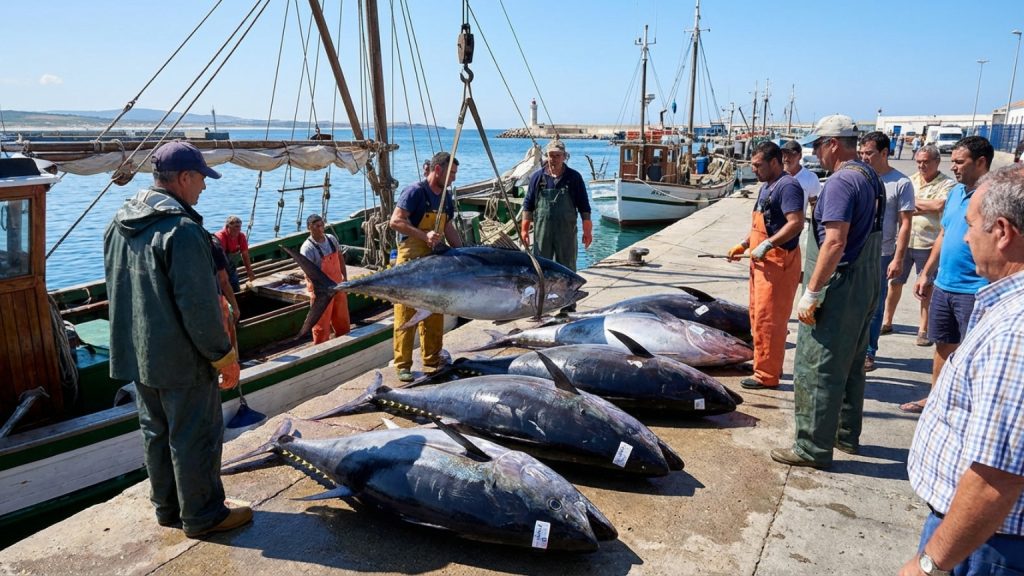
You might have heard about Tarifa’s prized red tuna and wondered what makes it so special. Many visitors seek to understand its significance. We are here to guide you through the world of this exceptional seafood, helping you appreciate its unique place in local culture and cuisine.
1. What is the Red Tuna of Tarifa: Its Definition and Unique Characteristics?
The Red Tuna of Tarifa refers to a specific type of tuna, *Thunnus thynnus*, caught using traditional methods in the waters near Tarifa, Spain. This fish is highly prized for its exceptional quality and rich flavor. Its value comes from a combination of the tuna’s natural characteristics and the ancient fishing techniques used.
- Species and Origin: The Red Tuna of Tarifa is the Atlantic bluefin tuna (*Thunnus thynnus*). These powerful fish migrate through the Strait of Gibraltar, making them accessible to local fishermen.
- Almadraba Fishing Method: Fishermen catch this tuna using the almadraba, a traditional, sustainable netting system dating back thousands of years. This method minimizes stress on the fish and ensures a fresh product. For example, during the spring migration, large net labyrinths are set up to guide the tuna into chambers for selection.
- Diet and Fat Content: The tuna’s migratory journey and diet in the rich Atlantic waters contribute to its high fat content. This makes its meat incredibly tender and flavorful, especially in cuts like the belly (ventresca).
- Unique Flavor Profile: The combination of its species, wild diet, and careful handling results in a distinct, deep red meat with a complex taste. It offers a buttery texture and a savory umami flavor that chefs around the world seek.
Understanding these elements helps explain why the Red Tuna of Tarifa holds such a special place in global gastronomy. Its unique qualities make it a sought-after delicacy for many culinary enthusiasts.
2. Why is the Red Tuna of Tarifa So Highly Valued?
The red tuna of Tarifa holds a very high value among chefs and food enthusiasts. This special fish gets its worth from a combination of ancient fishing methods, its natural habitat, and its outstanding quality. People prize it for its rich flavor and firm texture, making it a sought-after delicacy making sought-after delicacy.
- Almadraba Fishing Method: This traditional and sustainable fishing technique has been used for centuries near Tarifa. It allows fishermen to select mature tuna, ensuring the best quality and minimizing harm to younger fish.
- Unique Migration Route: The Strait of Gibraltar is a crucial passage for red tuna migrating from the Atlantic to the Mediterranean. The tuna swim hard against strong currents, which makes their meat lean, firm, and full of flavor. For example, a chef might highlight this muscularity in a delicate sashimi dish.
- Exceptional Fat Content and Texture: Tarifa’s red tuna boasts a perfect balance of marbling and muscle. This gives the fish a melt-in-your-mouth texture and a deep, complex taste that sets it apart from other tuna.
- Culinary Versatility: Chefs highly value this tuna for its adaptability in the kitchen. It can be enjoyed raw as sashimi, seared lightly, or even grilled, always delivering a memorable dining experience.
The red tuna of Tarifa is more than just a fish; it represents a culinary tradition and a natural wonder. Its unique characteristics and careful harvesting ensure its lasting appeal as a premium ingredient.
3. How is the Quality of Red Tuna from Tarifa Identified?
Identifying high-quality red tuna from Tarifa involves specific criteria that experienced buyers and chefs look for. These indicators ensure you receive a product known for its flavor, texture, and freshness. Understanding these details helps you appreciate why this tuna is so highly valued tuna highly valued.
- Color and firmness: The flesh should display a vibrant, deep red color, similar to beef. It must also be firm to the touch, without any signs of discoloration or softness. For example, a dull or brownish hue suggests the tuna is not fresh.
- Marbling: High-quality red tuna, especially from Tarifa, shows fine lines of fat distributed through the muscle, known as marbling. This marbling contributes significantly to its rich flavor and tender texture. The presence of good marbling is a key sign of a superior cut.
- Freshness and smell: Fresh tuna has a clean, subtle oceanic aroma, never a strong or unpleasant «fishy» smell. This indicates proper handling from the moment it leaves the water. A good example is a subtle sea breeze scent, rather than a pungent odor.
- Cut and origin: Specific cuts, like the ventresca (belly), are highly prized for their fat content and tenderness. Knowing the tuna comes from Tarifa, often caught using the traditional Almadraba method, also assures its authenticity and quality. This traditional method causes less stress to the fish, preserving its quality.
By paying attention to these critical indicators, you can confidently identify the exceptional quality of red tuna from Tarifa. These features are what make it a sought-after ingredient for chefs and gourmets worldwide.
4. What to Do to Experience the Red Tuna of Tarifa?
Experiencing the renowned red tuna of Tarifa offers a unique culinary adventure. This highly prized fish is a highlight for many visitors to the region. To truly appreciate its flavor, you should know where and how to seek it out. Tarifa provides several excellent ways to enjoy this local delicacy.
- Eat at specialized restaurants: Many local eateries in Tarifa focus on fresh seafood, especially during the peak season. They often highlight red tuna on their menus, prepared with expertise and local recipes.
- Explore different preparations: Red tuna is very versatile, and skilled chefs prepare it in many ways. You can try it raw as sashimi, seared, grilled, or even stewed, each offering a distinct and delicious taste.
- Visit during the tuna season: The best time to enjoy the freshest red tuna is typically from April to June when the fish migrate through the Strait of Gibraltar. During these months, the traditional «almadraba» fishing method is active, bringing in the highest quality fish.
- Look for «almadraba» tuna: This ancient, sustainable fishing method ensures you get the most authentic and fresh red tuna available. Restaurants often specify if they serve tuna caught this way, which indicates top quality and a true local experience.
By following these suggestions, you will truly experience the exceptional red tuna of Tarifa. This culinary journey promises memorable flavors and a deeper connection to the local food culture.