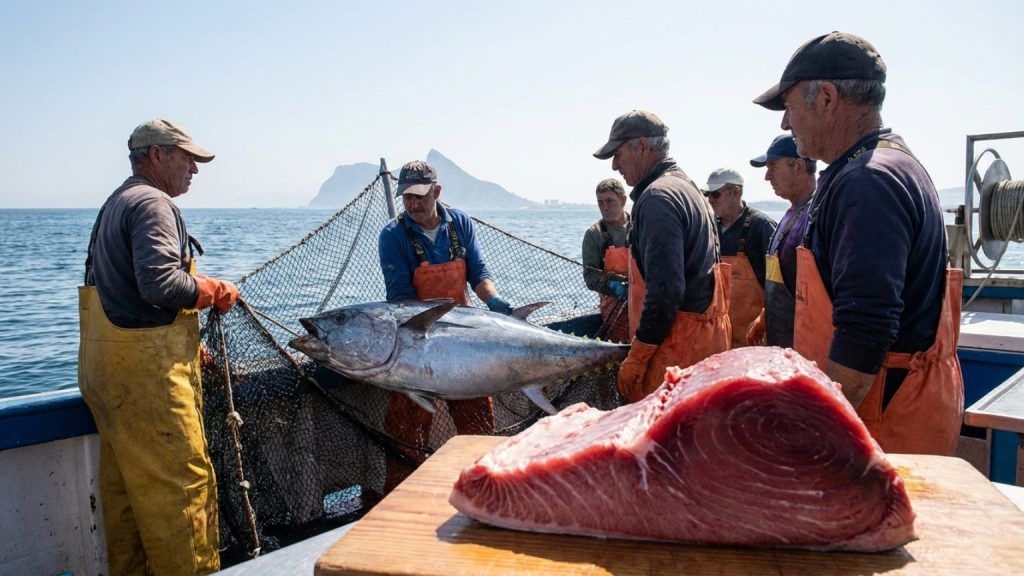
Have you ever wondered what makes Tarifa’s red tuna so renowned? Many hear its name but are unsure why it holds such a special place in gastronomy. We understand this curiosity. This article will help you explore its unique characteristics and deep cultural significance.
1. What is Tarifa’s red tuna: its definition and distinct characteristics?
Tarifa’s red tuna refers specifically to the Atlantic bluefin tuna caught near the Strait of Gibraltar. This area is a crucial migratory path for these magnificent fish. We value this tuna for its exceptional quality and rich flavor, which comes from its unique diet and muscular structure.
- Species and Origin: Tarifa’s red tuna is the Atlantic bluefin tuna, known scientifically as Thunnus thynnus. These powerful fish migrate through the Strait of Gibraltar, making this location a prime spot for their capture.
- Traditional Almadraba Fishing: The tuna is caught using the ancient Almadraba method, a sustainable fixed net system. This technique has been used for centuries, showing respect for the environment and the fish.
- Exceptional Flavor and Texture: This tuna has a deep red color and a firm, rich texture. Its high fat content gives it an intense, buttery flavor, making it highly sought after.
- Strict Seasonality: The red tuna season in Tarifa is short, typically from April to June. This limited window ensures the fish are at their peak quality during their migration.
- Culinary Versatility: Chefs value Tarifa’s red tuna for its versatility in the kitchen. For example, you can enjoy it raw as sashimi, seared, or grilled, always offering a premium taste experience.
This unique combination of species, location, and traditional fishing methods makes Tarifa’s red tuna truly special. It is a prized ingredient for chefs and a delight for diners worldwide.
2. Why is Tarifa’s red tuna so valued in gastronomy?
Tarifa’s red tuna is a highly prized ingredient in cooking around the world. It holds a special place for its distinct qualities and rich heritage. Many chefs and food enthusiasts seek it out for its superb flavor and texture. You will find it on menus in top restaurants across many countries.
- Traditional fishing methods: The local almadraba method ensures sustainable fishing practices. This ancient technique respects the fish and its natural migration patterns.
- Exceptional quality and flavor: Tarifa’s red tuna has a high fat content, which gives it a rich taste and firm texture. This makes it particularly desirable for gourmet dishes.
- Versatility in cuisine: Chefs use this tuna in many ways, from delicate raw preparations like sashimi to seared or grilled steaks. For example, you might enjoy a melt-in-your-mouth tataki or a perfectly grilled tuna loin.
- Cultural heritage: The tradition of red tuna fishing is deeply rooted in Tarifa’s history. It represents a significant part of the region’s identity and culinary pride.
- Limited availability: The seasonal nature of the fishing makes this tuna an exclusive delicacy. This scarcity adds to its high value and appeal among diners.
These combined elements make Tarifa’s red tuna a true culinary gem. Its rich legacy and exceptional taste continue to captivate those who experience it.
3. How do we identify the quality of Tarifa’s red tuna?
Identifying high-quality red tuna from Tarifa involves observing several key characteristics. These indicators help ensure you are getting the best product available.
When you know what to look for, you can appreciate the unique qualities that make this tuna so prized. For example, its diet in the rich waters of the Strait of Gibraltar directly influences its superior taste and texture.
- Color: High-quality red tuna has a deep, vibrant red color, similar to beef. Avoid tuna that looks dull, brown, or has iridescent hues, as these can indicate older or lower-quality fish.
- Texture: The flesh should be firm and elastic to the touch. It should not feel mushy or flaky, which often suggests the tuna is not fresh or has been handled poorly.
- Fat content: Look for fine lines of white fat, known as marbling, throughout the red flesh. This fat content adds flavor, moisture, and a silky texture when cooked.
- Smell: Fresh red tuna should have a clean, subtle oceanic scent. A strong, overly «fishy» odor is a clear sign that the tuna is no longer at its peak freshness.
- Origin and cut: Knowing the tuna comes from Tarifa, often caught using the traditional Almadraba method, confirms its specific origin and sustainable fishing practices. Different cuts, like ventresca or toro, also offer distinct textures and fat levels.
By paying attention to these details, you can confidently choose exceptional red tuna. These qualities ensure a superior culinary experience with every bite.
4. What is the best way to enjoy Tarifa’s red tuna?
- Sashimi and Tartare: These raw preparations showcase the tuna’s purity and delicate texture. A dash of quality olive oil or a light soy sauce often complements its natural taste perfectly.
- Seared «A la Plancha»: Quickly searing the tuna leaves the inside rare and juicy, creating a delicious contrast. This method is popular in Tarifa, often served with a simple dressing of garlic, olive oil, and sea salt.
- Tuna Belly (Ventresca): This specific cut, from the tuna’s underside, offers exceptional richness and tenderness. It is often grilled or pan-fried with minimal seasoning to let its unique flavor stand out.
- Traditional Stews: Tarifa’s red tuna also shines in local stews, such as «atún encebollado» (tuna with onions). These slow-cooked dishes infuse the tuna with savory flavors, offering a comforting and authentic experience.