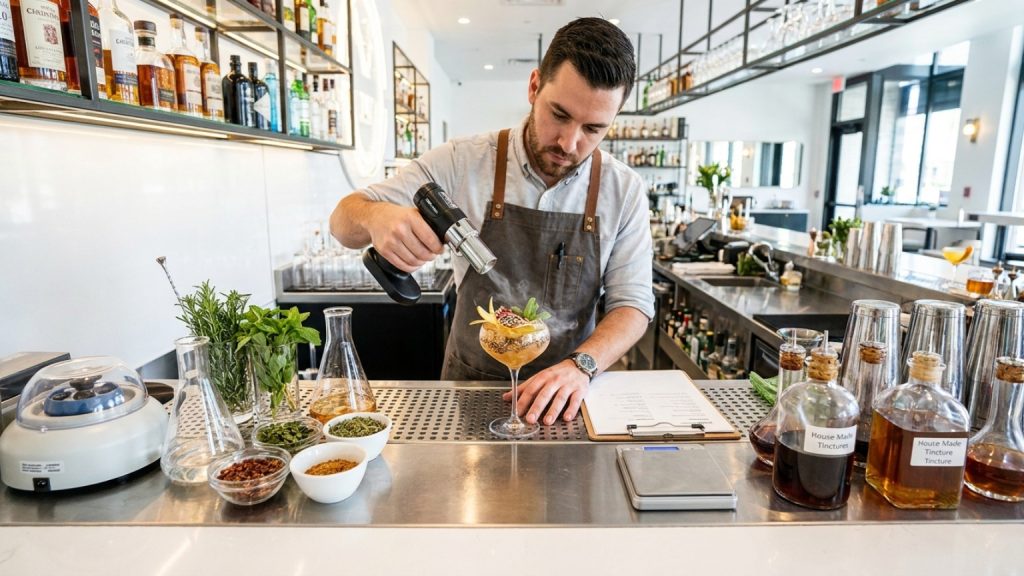
Many people find themselves ordering the same drinks repeatedly, missing out on new flavors. This can lead to a predictable and unexciting bar experience. Understanding creative mixology offers a solution. It opens up a world of innovative tastes and unique presentations, enhancing your appreciation for beverages.
1. What is creative mixology: its definition and scope?
- Flavor Exploration: This involves experimenting with a wide range of ingredients to build complex tastes. Mixologists often use fresh herbs, spices, fruits, and even vegetables in unexpected ways. For example, a creative cocktail might feature basil and black pepper, moving beyond typical citrus and sugar.
- Technique Innovation: Creative mixology uses advanced methods to change a drink’s texture or presentation. Techniques like smoke infusion, clarification, or making custom foams are common. These methods help create drinks that look and feel different from classic cocktails.
- Sensory Experience: A creative drink appeals to more than just taste. It considers aroma, visual appeal, and the feeling of the drink in the mouth. The goal is to create a complete and engaging moment for the person drinking it.
- Ingredient Sourcing: Finding high-quality and often unusual components is key to this art form. Mixologists may seek out rare spirits, artisan bitters, or local, seasonal produce. This focus ensures fresh flavors and supports unique drink ideas.
2. Why is creative mixology important for beverage innovation?
Creative mixology is vital for advancing beverage innovation in the hospitality industry. It encourages bartenders and chefs to explore new ingredients, techniques, and presentation styles. This approach helps create unique drinks that capture customer interest and set trends. By moving beyond classic recipes, businesses can offer novel and memorable experiences.
- Flavor Exploration: Creative mixology allows for the discovery of unexpected and delightful flavor combinations. For example, a drink might combine smoky mezcal, sweet pineapple, and a hint of spicy chili. This experimentation broadens the palate of consumers.
- Sensory Engagement: Drinks become more than just taste; they engage all senses through aroma, texture, and visual appeal. Consider a cocktail served with edible flowers or a mist of aromatic essential oils. These elements elevate the drinking experience.
- Brand Distinction: Unique and well-crafted drinks help establishments create a distinct identity and stand out from competitors. A bar known for its signature inventive cocktails attracts a specific clientele. This differentiation builds customer loyalty.
- Sustainability Practices: Mixologists can use creative methods to reduce waste and incorporate local, seasonal ingredients. Making a citrus oleo saccharum from discarded fruit peels is one such example. This practice supports both the environment and local producers.
- Customer Experience: Offering new and exciting options keeps customers engaged and eager to try something different. A regularly updated menu with innovative concoctions encourages repeat visits. This fosters a dynamic and appealing environment.
Ultimately, creative mixology is essential for growth and relevance in the beverage market. It ensures that drink offerings remain fresh, exciting, and appealing to a diverse range of tastes.
3. How to identify the elements of creative mixology?
Identifying the elements of creative mixology means looking beyond just the ingredients in a glass. It involves understanding the distinct components that contribute to a cocktail’s overall appeal and uniqueness. These elements work together to create a memorable drinking experience. A truly creative drink goes beyond basic recipes, offering something new and interesting.
- Flavor Profile: This refers to the balance of tastes, including sweet, sour, bitter, and sometimes salty or umami. Creative mixologists combine these in unexpected ways to make new experiences. For example, a drink might pair smoky mezcal with sweet pineapple and a hint of chili heat.
- Aroma: The smell of a cocktail significantly influences its perceived taste. This can come from infused spirits, fresh herbs, citrus peels, or aromatic bitters. A gin and tonic with a rosemary sprig offers a very different aromatic experience than one with a lime wedge.
- Texture and Mouthfeel: How a drink feels in the mouth adds a crucial dimension to its enjoyment. This includes elements like viscosity, effervescence, or foam. A creamy flip cocktail feels very different from a sparkling spritz.
- Presentation: The visual appeal of a drink is often the first thing a person notices. This includes the choice of glass, the color of the liquid, and any garnishes used. A cocktail served in a unique glass with an elaborate garnish creates an immediate impression.
- Concept or Story: Many creative cocktails are inspired by a specific idea, place, or historical event. This gives the drink a deeper meaning and can enhance the experience. A drink named «Midnight Garden» might use dark spirits and floral notes to evoke a nighttime feel.
Recognizing these elements allows for a deeper appreciation of creative mixology. It also helps bartenders develop new and exciting drink ideas.
4. What are the ways to explore creative mixology?
Exploring creative mixology involves more than just mixing spirits and juices. It requires a deep understanding of ingredients, techniques, and flavor combinations. Bartenders and enthusiasts can discover new ideas through several structured and experimental approaches. These methods help develop a unique style and signature drinks.
- Understanding Flavor Profiles: Learning how different tastes interact is fundamental. For example, knowing that citrus balances sweetness or that certain herbs pair well with specific spirits helps create harmonious drinks.
- Ingredient Sourcing and Experimentation: Using fresh, unique, or seasonal ingredients can inspire new creations. Making house-infused syrups with exotic spices or using fresh herbs from a local garden are good ways to experiment.
- Mastering Techniques: Proper shaking, stirring, muddling, and layering significantly impact a cocktail’s final taste and texture. Practicing these techniques ensures drinks are well-balanced and consistently made.
- Studying Classic Cocktails: Classic recipes provide a strong foundation and a common language in mixology. Modifying a classic Old Fashioned by using a different type of whiskey or adding a unique bitter creates a new variation.
- Sensory Exploration: Considering aroma, texture, and visual presentation enhances the drinking experience. Garnishing a drink with an aromatic orange peel or serving it in a specific glass adds to its appeal.
These approaches encourage continuous learning and experimentation in the world of drinks. They allow individuals to develop their own distinct style and create memorable cocktails.