Finding clothing that combines luxury, warmth, and sustainability can be challenging. You might wonder if alpaca clothing in Spain truly offers these benefits. Many seek durable and comfortable garments but are unsure about the unique properties of alpaca wool. Understanding this material is key.
1. What is the essence of alpaca clothing and its presence in Spain?
Alpaca clothing comes from the fleece of alpacas, animals native to the Andes Mountains. This natural fiber is known for its incredible softness, warmth, and lightweight feel. In Spain, alpaca garments are increasingly popular because of their luxurious qualities and sustainable production methods.
- Superior Comfort: Alpaca wool is much softer than sheep’s wool and does not contain lanolin, which makes it hypoallergenic. This means many people who find traditional wool itchy can comfortably wear alpaca garments, enjoying their smooth feel against the skin.
- Exceptional Warmth and Breathability: Alpaca fibers are hollow, trapping air inside to provide excellent insulation without adding bulk. For example, a lightweight alpaca scarf can offer more warmth than a much thicker wool scarf, making it ideal for cool evenings in Madrid or chilly mornings in the Pyrenees.
- Sustainable Choice: Alpacas have a lighter environmental impact than other livestock because they graze gently and do not damage pastures. Their wool is also completely biodegradable, making alpaca clothing a responsible option for environmentally conscious consumers seeking natural fibers.
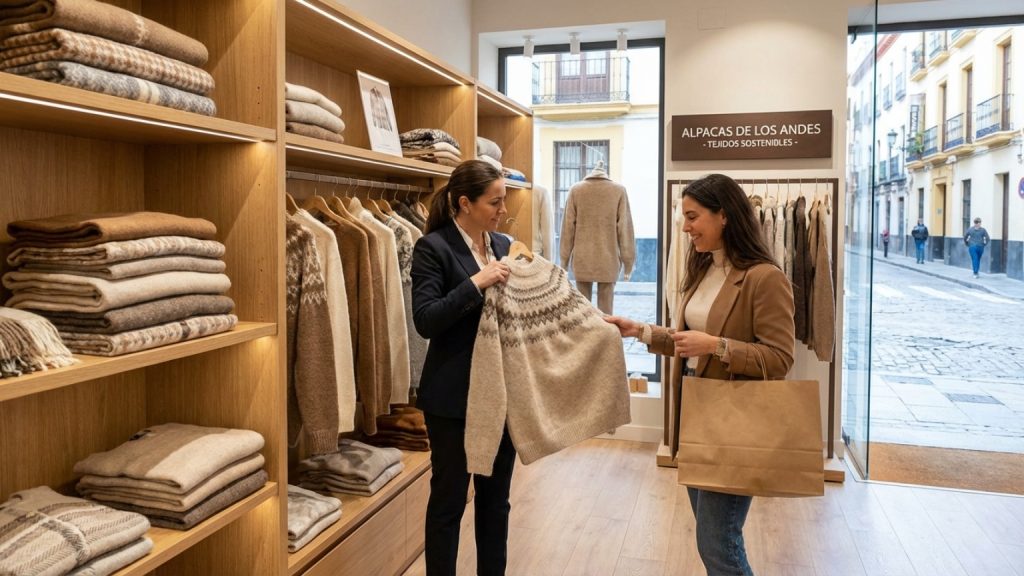
- Growing Fashion Appeal in Spain: Spanish consumers appreciate the elegance, quality, and natural origin of alpaca clothing. Designers and high-end boutiques in cities like Barcelona and Seville often feature alpaca sweaters, ponchos, and accessories, blending traditional Andean craft with modern European style.
- Durability and Easy Care: Alpaca fiber is strong and remarkably resistant to pilling, so garments maintain their appearance and last for many years with proper care. This makes an alpaca piece a valuable and long-lasting investment for any sophisticated wardrobe.
Alpaca clothing offers a unique combination of luxury, comfort, and ethical production. Its appeal in Spain reflects a growing demand for high-quality, sustainable fashion choices.
2. Why is the selection of alpaca clothing important for you in Spain?
In Spain, choosing alpaca clothing carefully is important because it offers distinct advantages for your wardrobe. The country’s varied climate, from chilly winters to cool evenings, makes versatile garments very useful.
Alpaca fiber provides exceptional warmth without bulk, and it also feels soft against your skin. Making a good selection ensures you get clothing that meets your comfort and style needs.
- Exceptional Comfort: Alpaca wool is very soft and does not itch, unlike many other wools. This makes it comfortable for direct skin contact, perfect for daily wear in Spain’s varied temperatures.
- Climate Adaptability: Alpaca fibers naturally regulate temperature, keeping you warm in winter and cool in milder weather. For example, a fine alpaca scarf can add warmth on a chilly evening in Seville without feeling heavy.
- Long-lasting Quality: Choosing well-made alpaca clothing means investing in garments that last for many years. Its strength and resistance to pilling mean your items will keep their look, even with regular use.
- Hypoallergenic Properties: Alpaca wool lacks lanolin, which is often the cause of allergic reactions to sheep’s wool. This makes it an excellent choice for individuals with sensitive skin or allergies, allowing more people to enjoy its benefits.
- Sustainable Fashion Choice: Many people in Spain now seek clothing that supports ethical production and environmental care. Alpaca farming has a low environmental impact, making it a responsible and stylish selection.
By carefully selecting alpaca clothing, you choose comfort, durability, and a style that suits the Spanish lifestyle. This thoughtful approach ensures you make a smart investment in your personal wardrobe.
3. How to identify genuine alpaca clothing when buying in Spain?
When buying alpaca clothing in Spain, knowing how to identify genuine items is important. Many beautiful garments are available, but not all are made from pure alpaca. You want to ensure you get the high quality you expect for your purchase. This guide helps you distinguish authentic alpaca from blends or fakes from blends fakes.
- Softness and texture: Genuine alpaca feels incredibly soft and smooth against your skin. It should not feel scratchy or coarse like some other wools.
- Lightweight warmth: Alpaca fiber is naturally hollow, making it very light yet exceptionally warm. A real alpaca garment will offer significant warmth without feeling heavy.
- Fiber content label: Always check the garment’s care label for its precise fiber composition. Look for «100% Alpaca,» «Baby Alpaca,» or «Royal Alpaca» to confirm purity.
- Appearance and sheen: Genuine alpaca has a soft, natural luster, not an artificial shine. It drapes well and typically shows fine, even fibers.
- Price point: Pure alpaca is a luxury fiber, so its price reflects its superior quality and ethical production. Extremely low prices for «alpaca» items should raise suspicion.
Using these simple checks helps you make informed decisions when shopping for alpaca clothing. This way, you can enjoy the true benefits of this wonderful natural fiber.
4. What steps to take for the purchase of alpaca clothing in Spain?
When you plan to buy alpaca clothing in Spain, taking specific steps helps ensure a quality purchase. You want to make an informed choice because genuine alpaca offers unique benefits. Understanding the process helps you find authentic and high-quality garments that meet your expectations.
- Research reputable sellers: Look for businesses known for selling natural fibers and ethical products. Check customer reviews and their online presence to gauge their reliability. A reputable seller will clearly state the fiber content and origin of their products on their website or labels.
- Verify fiber content: Always check the garment’s label for the exact composition. Genuine alpaca clothing should list «100% alpaca» or specify a blend if applicable, such as «baby alpaca.» For example, if a label only says «wool» without specifying «alpaca,» it might not be genuine.
- Understand alpaca grades: Alpaca wool comes in different grades, like «baby alpaca» or «royal alpaca,» which indicate fineness. Baby alpaca, for instance, is softer and often more expensive because it comes from the first shearing of young alpacas. Knowing these grades helps you choose a garment that matches your desired softness and budget.
- Consider ethical sourcing: Look for brands that share information about their sourcing practices. Many buyers prefer products from companies committed to fair trade and animal welfare. A brand might mention partnering directly with alpaca farmers, ensuring fair wages and good animal care.
- Review return policies: If buying online, understand the seller’s return and exchange policies before you buy. This protects you if the garment does not meet your expectations upon arrival. Make sure you know the timeframe for returns and if you need to pay for return shipping.
Following these steps helps you confidently buy alpaca clothing in Spain. An informed purchase ensures you receive a high-quality garment that you will value for years.