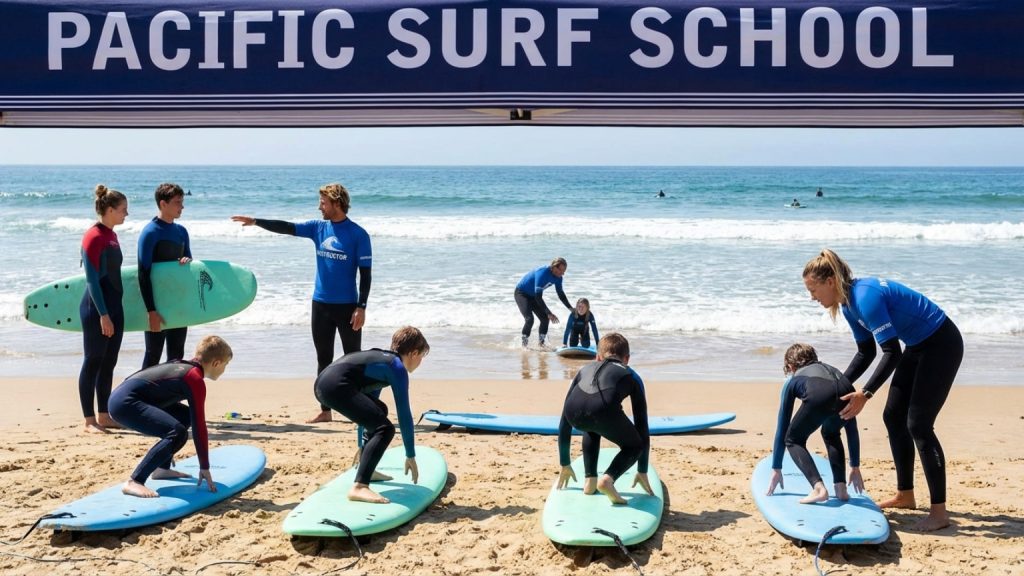
Do you dream of riding waves but feel unsure how to begin? Learning to surf can seem challenging, especially if you lack experience or local knowledge. A good surf school provides the structure and safety you need to start your journey. We are here to guide you through the basics and help you build confidence in the water.
1. What is the role of a surf school in learning to surf?
A surf school plays a crucial role in helping you learn to surf safely and effectively. We provide structured lessons and expert guidance, which makes the learning process much easier.
Our goal is to teach you foundational skills and ocean knowledge so you can enjoy surfing with confidence. This helps you avoid common mistakes and speeds up your progress.
- Expert instruction: Our certified instructors teach you the correct techniques from day one. They provide personalized feedback to help you improve your pop-up and wave riding skills.
- Ocean safety knowledge: We prioritize teaching you essential ocean safety rules and how to understand wave conditions. For example, you will learn about rip currents and how to identify safe entry and exit points.
- Proper equipment: A surf school provides you with the right surfboard and wetsuit for your skill level. This means you do not need to buy expensive gear before you even know if you like surfing.
- Structured learning environment: We follow a clear progression of skills, starting with basics like paddling and standing up. This structured approach helps you build a strong foundation step by step.
- Confidence building: Learning in a supportive group setting with experienced instructors helps build your confidence quickly. You will feel more comfortable tackling bigger waves after practicing in a safe environment.
By joining a surf school, you gain access to a safe, effective, and fun way to learn surfing. We help you develop crucial skills and a deep respect for the ocean.
2. Why is a surf school essential for safe and effective learning?
Learning to surf can seem exciting, but it also carries risks if you do not have proper guidance. A surf school makes sure you learn safely and correctly from the beginning. We provide the right environment and expert guidance to help you master the waves. This setup allows you to build confidence and skills effectively.
- Expert Instruction: A surf school provides certified instructors who teach proper techniques. They help you avoid bad habits and learn the right way to paddle, stand up, and ride waves.
- Safety First: Understanding ocean conditions is crucial for your safety. Our instructors teach you about currents, waves, and how to stay safe in the water.
- Right Equipment: Using the correct equipment is vital for beginners. A surf school provides soft-top boards that are stable and forgiving, making it easier to catch waves.
- Structured Learning: Surf schools offer a progressive curriculum designed for fast learning. You start with basic skills on the sand and slowly move into the water, building your abilities step by step. For example, if you try to learn alone, you might struggle with pop-ups. An instructor shows you the correct foot placement and balance, making it easier to succeed.
- Ocean Knowledge: Learning to surf is more than just riding waves; it is also about respecting the ocean. Our lessons cover important topics like wave etiquette and how to read the ocean.
Choosing a surf school helps you learn to surf in a fun and secure way. You gain essential skills and confidence, ensuring a positive experience in the ocean.
3. How does a surf school structure its lessons for beginners?
- Beach Safety and Introduction: We start every lesson on the sand with important safety rules and ocean awareness. For example, you will learn about rip currents, how to enter and exit the water safely, and how to handle your surfboard.
- Paddling Techniques: Next, you will learn how to paddle your surfboard effectively. This includes finding the correct balance on the board and using your arms to move through the water to catch waves.
- Wave Catching Practice: Instructors then guide you on catching small, unbroken waves. We teach you how to time your paddle and feel the wave’s push, often starting with white water waves close to shore.
- The Pop-Up Method: After catching a wave, you will learn the «pop-up,» which is how you quickly stand up on your board. We practice this movement repeatedly on the sand before trying it in the water.
- Stance and Balance: Once you can stand, we help you refine your stance and maintain balance on the board. This involves proper foot placement and body positioning to ride the wave smoothly.
4. What to consider when choosing the right surf school for you?
Choosing the right surf school helps you learn to surf well and safely. Many factors can influence your experience on the waves. Thinking about these points ensures you pick a school that fits your needs. This careful selection makes your learning journey more enjoyable.
- Instructor Qualifications: Your instructors should have proper training and certifications. Experienced teachers make a big difference in how quickly you learn and how safe you feel. For example, a certified instructor knows how to adapt lessons for different skill levels.
- Group Size: Smaller group sizes mean more personal attention from your instructor. This allows for specific feedback on your technique, helping you improve faster. If an instructor teaches many students at once, you might not get enough individual help.
- Safety Protocols: A good surf school prioritizes your safety above all else. They should have clear plans for emergencies and provide necessary safety gear. Always ask about their lifeguard certifications and first-aid readiness.
- Location and Waves: The surf spot should have waves suitable for beginners. Gentle, consistent waves are best for learning the basics without feeling overwhelmed. A school located on a beach with calmer conditions helps you build confidence.
- Equipment Provided: Check the quality and condition of the surfboards and wetsuits. Well-maintained equipment is essential for both safety and effective learning. Using a board suited for beginners makes catching your first waves easier.
Considering these points helps you choose a surf school that matches your goals. A thoughtful choice leads to a positive and successful surfing experience.