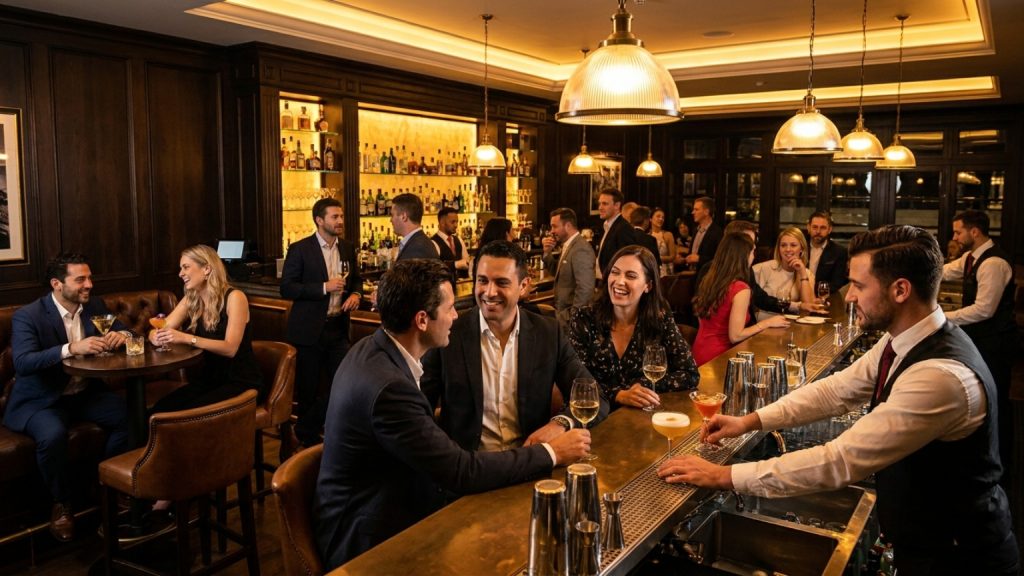
Many people seek places to socialize and relax after a long day, but often wonder about the specific purpose and environment of different venues. Understanding what a night bar truly offers can help you choose the right setting for your evening. This guide explores the fundamental aspects of these popular establishments.
1. What is the definition of a night bar and its core characteristics?
A night bar is a commercial establishment that primarily serves alcoholic beverages during evening and late-night hours. It provides a distinct social environment for patrons.
People often go to night bars to relax, socialize with friends, or meet new people. For example, many individuals unwind at a local bar on a Friday evening after a long work week.
- Atmosphere: A night bar typically has a unique ambiance created by its lighting, music, and decor. This atmosphere helps foster a relaxed and social mood among guests.
- Beverage Focus: The main offerings are alcoholic drinks, including cocktails, beers, and spirits. These establishments often feature a wide selection to cater to different tastes.
- Social Hub: Night bars serve as important places for social interaction. Friends gather here, and new connections can form.
- Operating Hours: These venues open in the evening and stay open late into the night. Their operating schedule distinguishes them from most other businesses.
- Entertainment: Many night bars also provide various forms of entertainment. This can include live music, DJ sets, or sometimes even small performances.
In summary, night bars are defined by their late hours, drink focus, and specific social setting. They play a significant role in providing spaces for entertainment and community interaction after dark.
2. Why is a night bar important for social interaction and community?
A night bar plays a key role in social interaction and community building. These venues offer specific spaces where people can meet and connect in a relaxed way. They often serve as an informal gathering spot, different from work or home environments. This unique setting helps foster new relationships and strengthen existing ones within a community.
- Facilitating New Connections: Night bars provide a setting for individuals to meet new people. For example, a person might easily start a conversation with someone sitting next to them at the bar.
- Strengthening Existing Bonds: These places are ideal for friends, family, or colleagues to gather. Groups often meet to relax, share stories, and simply enjoy each other’s company after a long day.
- Providing a Relaxed Atmosphere: The casual environment of a night bar helps reduce social pressure. This makes it easier for people to be themselves and engage in spontaneous interactions.
- Supporting Local Community: Many night bars become important hubs within their neighborhoods. Regular customers often get to know the staff and other patrons, building a familiar social network.
- Offering Shared Experiences: Night bars frequently host events like live music, trivia nights, or sports viewings. These activities create collective experiences that bring diverse groups of people together.
Therefore, night bars are much more than just places to consume drinks. They are essential social spaces that help foster human connection and build a stronger sense of community.
3. How to identify the different types of a night bar experience?
Night bars offer many different experiences, each designed for specific social preferences. Understanding these types helps people choose a venue that matches their mood or occasion. These places vary greatly in atmosphere, music, and the activities they provide.
- Lounge Bar: These bars prioritize comfort and conversation. They often feature soft lighting, plush seating, and quiet background music. This makes them ideal for intimate discussions or relaxed gatherings.
- Dance Club: These venues focus on loud music and dancing. They often have a DJ, a large dance floor, and a high-energy atmosphere.
- Sports Bar: People go to sports bars to watch live games. These places usually have many screens, a casual setting, and serve typical pub food and drinks.
- Cocktail Bar: These bars specialize in craft drinks and unique mixtures. Skilled bartenders create sophisticated beverages in an elegant and often upscale setting.
- Dive Bar: A dive bar offers a casual and unpretentious experience. They are often local spots with affordable drinks and a relaxed, familiar feel.
Recognizing these distinct bar types helps people choose a setting that best suits their social plans. Each type plays a specific role in social life, meeting desires for entertainment, interaction, or relaxation.
4. What to consider when choosing a night bar for your evening?
Choosing a night bar for an evening out involves several important factors. Your choice greatly affects the overall experience you will have. Consider your personal preferences and what kind of night you want. For example, if you wish to have a quiet conversation, a loud dance club would not be a suitable option.
- Atmosphere and music: The bar’s atmosphere sets the mood for your evening. Different bars offer varied music styles, from live bands to DJ sets, impacting your enjoyment.
- Location and accessibility: Think about how easy it is to reach the bar and get home safely. A bar close to public transport or your accommodation is often more convenient.
- Drinks and food selection: Review the menu for drink variety, quality, and pricing. Some bars specialize in craft cocktails, while others focus on a wide range of beers.
- Crowd and social scene: The type of people a bar attracts influences the social dynamic. A local pub might offer a familiar, friendly feel compared to a busy downtown spot.
- Cost: Consider your budget for drinks and potential cover charges. High-end bars may have more expensive items and entry fees, so check ahead of time.
Carefully thinking about these aspects will help you select the right bar. The best choice ultimately depends on your individual needs and desires for the evening.