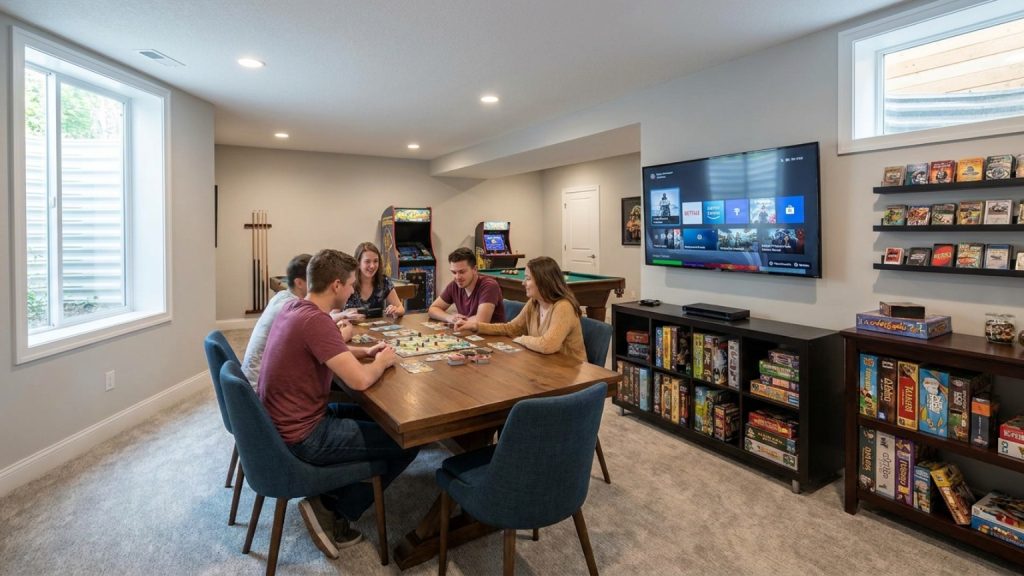
Many homeowners struggle to create a dedicated space for leisure activities, often leading to cluttered living areas or underutilized rooms. This challenge can make it difficult to unwind and enjoy hobbies at home. Understanding the purpose and potential of a game room can help address this common issue.
1. What is a game room: definition and key elements?
A game room is a dedicated area designed for entertainment and recreational activities. It serves as a space where people can relax, play games, and socialize.
This type of room is common in homes, but also found in community centers or workplaces. For example, many houses include a basement or a spare room set up with a console and a board game collection.
- Dedicated Space: A game room is a specific area apart from other main living spaces. This separation helps create a focused environment for play, free from everyday distractions.
- Entertainment Equipment: These rooms typically house various forms of entertainment. This can include video game consoles, arcade machines, pool tables, or extensive collections of board games and card games.
- Comfort and Atmosphere: Creating a pleasant and inviting atmosphere is crucial for a game room. Comfortable seating, appropriate lighting, and sound systems enhance the overall experience for players.
- Social Hub: A game room often functions as a central point for social gatherings. Friends and family can gather here to share hobbies, compete in friendly matches, and build lasting memories.
- Personalization: Owners often customize their game rooms to reflect their personal tastes and interests. This might involve themed decor, specific game collections, or unique seating arrangements.
Ultimately, a game room offers a valuable retreat for fun and engagement. It provides a unique setting for relaxation, competition, and shared enjoyment among individuals.
2. Why the creation of a game room offers significant benefits?
Creating a game room offers many important benefits for any home or workplace. This dedicated area serves as a special place for fun, relaxation, and social activity. It provides a unique environment where people can unwind and engage in enjoyable pastimes.
- Stress Relief: A game room provides an excellent escape from daily pressures. Playing games helps reduce stress and promotes a sense of calm.
- Social Connection: This space encourages friends and family to gather and interact. For example, a family playing a board game together on a rainy afternoon strengthens their bonds and creates lasting memories.
- Mental Engagement: Many games require strategic thinking, problem-solving, and quick reactions. This helps keep the brain active and can improve cognitive skills.
- Dedicated Entertainment Zone: Having a specific room for games keeps recreational items organized. This also prevents other living areas from becoming cluttered with gaming equipment.
- Improved Well-being: Engaging in play and laughter can boost mood and overall happiness. A game room fosters a positive atmosphere that contributes to better emotional health.
Therefore, a game room is more than just a place for entertainment. It is an investment in personal well-being, social harmony, and a more vibrant living space.
3. How to plan the design of a practical game room?
- Space Assessment: Evaluate the room’s size and shape before buying anything. This helps you determine what games and furniture will fit comfortably without making the area feel cramped.
- Game Selection: Choose games that match the interests of the primary users. If you love board games, ensure you have a large table and comfortable chairs for long sessions.
- Furniture and Seating: Select durable and comfortable furniture that suits the room’s use. Consider modular pieces that can adapt to different activities or guest numbers easily.
- Lighting: Plan for both ambient and task lighting to improve the experience. Good lighting prevents eye strain and enhances visibility, especially for detailed games.
- Storage Solutions: Include ample storage for games, controllers, and accessories. This keeps the room tidy and makes it easy to find items when needed.
4. What are the essential steps for building a game room?
Building a game room requires careful planning and execution. This space should offer both entertainment and comfort for everyone. Following specific steps ensures a functional and enjoyable area. A well-designed game room quickly becomes a favorite spot in any home.
- Define Purpose and Budget: First, decide what type of games your room will feature. For example, determine if it will focus on video games, board games, or arcade classics. Also, set a clear budget for all equipment, furniture, and any necessary renovations.
- Choose the Right Location: Select a room with enough space for all desired activities and equipment. A basement or a spare room often works well because it can help contain noise. Consider natural light and ventilation in your chosen area.
- Plan Layout and Furniture: Map out where each item, such as a gaming console setup, a pool table, or a dartboard, will go. Select comfortable seating options like bean bags or a sofa, and include storage for games and accessories. Proper furniture placement improves the room’s flow.
- Select Games and Equipment: Choose the specific games and gear that match your vision and budget. This might include a modern gaming PC, a classic arcade machine, or a collection of popular board games. Make sure to buy all necessary controllers, screens, and audio equipment.
- Consider Lighting and Sound: Good lighting creates the right atmosphere for different activities. Install dimmable lights for versatility, allowing bright light for board games and softer light for movies. Also, think about soundproofing or quality speakers to enhance the experience.
Following these steps helps create a game room that truly meets your specific needs. This careful approach results in a fun, comfortable, and lasting entertainment space for years to come.