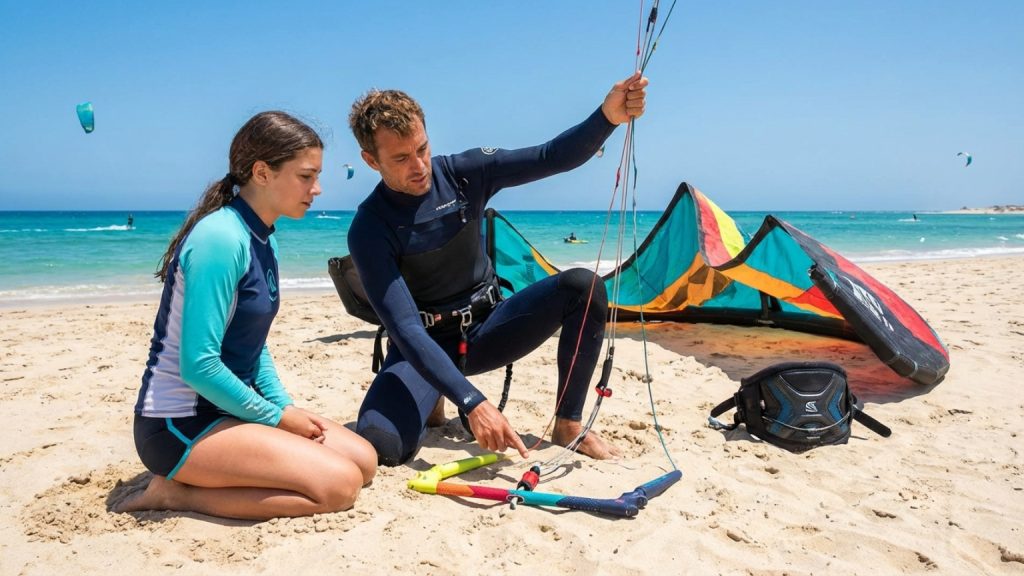
Do you sometimes feel lost when instructors use technical terms on the water? Understanding the specific language of kitesurfing is crucial for your safety and progress. Without this knowledge, lessons can become confusing, and clear communication with fellow riders is difficult. This guide will help you grasp the core concepts.
1. What is the essential kitesurfing vocabulary you should learn?
Learning the specific terms used in kitesurfing helps you understand instructions better and stay safe on the water. When you know the basic vocabulary, you can communicate clearly with your instructors and other riders.
This knowledge also improves your learning curve, making your first sessions smoother and more effective. For example, knowing what a «power zone» is helps you understand why your kite pulls you strongly.
- Kite: This is the large fabric wing that catches the wind and pulls you across the water. Different kites have various shapes and sizes, which affect how they fly and how much power they generate.
- Bar: You hold the bar to steer the kite and manage its power. Lines connect the bar to the kite, allowing you to control its direction and speed.
- Harness: This is a belt-like piece of equipment you wear around your waist or seat. It connects you to the kite via the bar, transferring the kite’s pull to your body, so your arms do not tire quickly.
- Wind Window: This term describes the area in the sky where your kite can fly relative to the wind direction. Understanding the wind window is key to launching, landing, and maneuvering your kite safely.
- Power Zone: The power zone is the central area of the wind window where the kite generates the most pull. When you move your kite through this zone, you will feel a strong acceleration, which is useful for starting or jumping.
Knowing these basic terms will make your kitesurfing lessons much easier to follow. You can then focus more on technique and less on understanding what your instructor means.
2. Why is understanding kitesurfing vocabulary crucial for your learning?
When you begin kitesurfing, you will encounter many new terms and phrases. Understanding this specific vocabulary is essential for your safety and quick learning. It helps you communicate clearly with your instructors and other riders on the water. This knowledge also makes your lessons much more effective.
- Wind window: This term describes the area where your kite can fly in relation to the wind. Knowing the wind window helps you control the kite and avoid dangerous situations, for example, flying it too far downwind where it loses power.
- Power zone: This is the specific area within the wind window where the kite creates the most pull. Understanding the power zone is vital for starting in the water and performing tricks, because it tells you exactly where to steer your kite for maximum force.
- De-power system: This mechanism allows you to quickly reduce the kite’s pulling force. You must know how to use your de-power system to control your speed and react to sudden gusts of wind, making your ride safer.
- Relaunch: This describes the process of getting your kite back into the air after it has fallen into the water. Learning how to relaunch quickly saves energy and keeps you from drifting too far away from shore.
- Leash: This is a safety line that connects you to your kite. The leash ensures your kite does not fly away if you let go of the control bar, which is crucial for safety during a fall or an emergency.
Learning these important terms makes your kitesurfing journey smoother and safer. You will feel more confident on the water and progress faster with clear communication.
3. How can you effectively learn and practice kitesurfing vocabulary?
- Flashcards and apps: Create digital or physical cards with terms like «wind window» and «depower system.» Review these often to memorize definitions before your lessons start.
- Listen and repeat: Pay close attention when instructors use terms such as «power stroke» or «body drag.» Repeat these words aloud and ask for clarification if you do not understand them.
- Practice on the beach: Before getting in the water, identify parts of the equipment. For example, point to the leading edge and trailing edge on your kite.
- Review sessions: After each lesson, take time to go over new words you learned. Discuss them with your instructor or fellow students to reinforce your understanding.
- Observe and ask: Watch experienced kitesurfers and listen to their conversations. If you hear an unfamiliar term, like «relaunch» or «water start,» ask what it means later.
4. What are the best actionable steps to master kitesurfing vocabulary?
Understanding kitesurfing vocabulary is essential for both your safety and learning progress. When you know the correct terms, you can communicate clearly with instructors and other riders. This knowledge also helps you understand instructions and react quickly in various situations on the water situations the water.
- Learn equipment names: Knowing the names of your gear helps you set up correctly and troubleshoot issues. For example, understanding what a «depower strap» does is crucial for managing kite power and adjusting your speed.
- Understand wind and weather terms: Kitesurfing depends heavily on wind conditions. You need to know terms like «onshore,» «offshore,» and «cross-shore» to choose safe riding areas and understand forecasts.
- Master maneuver and technique terms: Learning terms for different moves, such as «water start» or «body drag,» allows you to follow instructions during lessons. This helps you visualize and practice new skills effectively.
- Familiarize yourself with safety protocols: Safety is paramount in kitesurfing. Knowing terms like «quick release» and «leash» ensures you can do emergency procedures correctly and avoid accidents.
- Practice with real-world scenarios: Apply new words by discussing your gear or conditions with other kitesurfers. For instance, when you describe how your «kite lines» got tangled, you use the vocabulary actively.
By actively learning and using these terms, you will build confidence and improve your kitesurfing skills faster. A strong vocabulary makes your time on the water safer and more enjoyable.