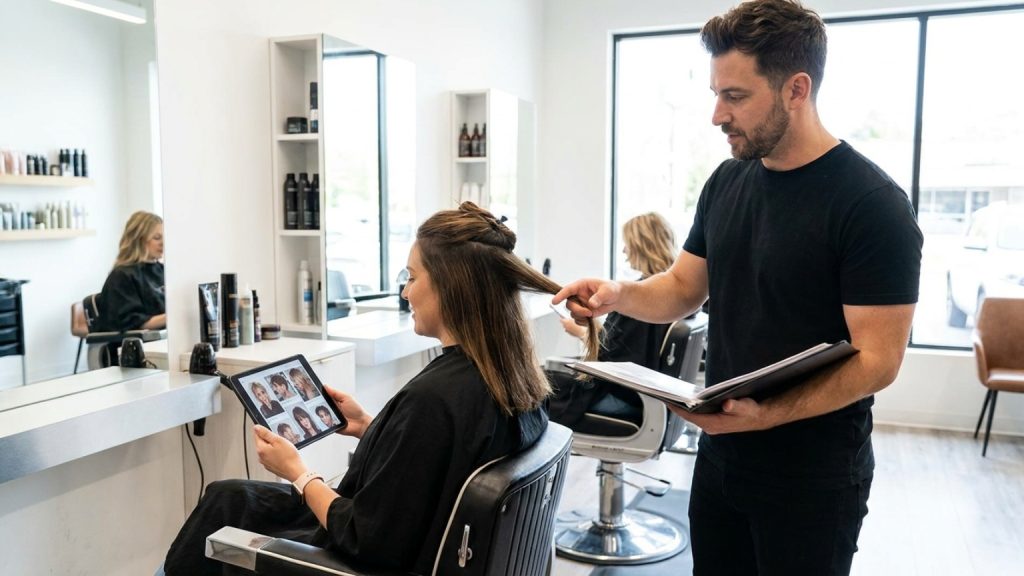
Many individuals feel overwhelmed when deciding on a new haircut. The vast array of styles and techniques often makes the choice difficult. This uncertainty can lead to dissatisfaction with the final result. Understanding the fundamentals of hair cutting helps in making an informed decision.
1. What is the essence of professional haircuts and their fundamental styles?
Professional haircuts represent more than just removing hair length. They involve a thoughtful process considering a person’s facial structure, hair type, and daily routine. This careful approach aims to create a style that enhances natural features and offers easy management. A true professional stylist possesses the expertise to blend these elements for a successful outcome for successful outcome.
- Classic Cuts: These styles maintain a timeless appeal and often suit many individuals. For example, a sleek bob or a traditional layered cut provides elegance and versatility for various occasions.
- Modern Styles: These cuts embrace current trends and frequently feature asymmetry or distinct textures. A modern style might include a textured crop with faded sides, reflecting contemporary fashion preferences.
- Layered Haircuts: Layers add volume, movement, and shape, especially to longer hair. This technique helps remove bulk from thick hair or adds body to fine hair, creating a dynamic look.
- Blunt Cuts: A blunt cut creates a sharp, even line across the hair ends. This style makes hair appear denser and often provides a strong, impactful silhouette.
- Textured Cuts: These cuts use specific techniques to add dimension and reduce weight. For instance, point cutting softens the ends of a bob, giving it a more natural and less severe finish.
Ultimately, professional haircuts combine technical precision with creative understanding. This process results in a look that perfectly suits an individual’s unique characteristics and lifestyle needs.
2. Why is the selection of a haircut crucial for personal expression and hair health?
Choosing a haircut holds significant importance for several reasons. It directly influences how an individual presents themselves to the world. A well-chosen style can enhance personal expression and boost confidence. Moreover, the right haircut also plays a vital role in maintaining the long-term health of the hair health the hair.
- Personal Expression: A haircut serves as a powerful form of non-verbal communication. For example, a person might choose a vibrant, asymmetrical bob to reflect a creative and modern personality.
- Face Shape Enhancement: The correct haircut can expertly frame the face and highlight desirable features. An individual with a round face might select long layers to create the illusion of length and definition.
- Hair Health Preservation: Regular trims and appropriate styles prevent damage and promote stronger hair growth. A cut that removes split ends, for instance, stops breakage from traveling up the hair shaft.
- Manageability and Maintenance: A suitable haircut aligns with an individual’s daily routine and styling preferences. For someone with a busy schedule, a low-maintenance cut can significantly reduce daily styling time and effort.
- Adapting to Hair Type: Different hair types, such as fine, thick, curly, or straight, require specific cutting techniques. A specialist can ensure the chosen style works harmoniously with the hair’s natural texture, preventing issues like excessive frizz or lack of volume.
Therefore, selecting a haircut involves more than just aesthetics; it requires careful consideration of individual needs. This thoughtful approach ensures both a pleasing appearance and sustained hair vitality.
3. How does the process of choosing a haircut align with individual features?
The process of choosing a new haircut aligns with an individual’s unique features to ensure a flattering and practical result. This alignment involves considering several personal characteristics that influence how a style appears and functions. A successful haircut enhances natural attributes and complements a person’s overall look.
- Face Shape: Different haircut styles can enhance or soften facial contours. For example, a client with a round face might find that layers around the jawline create a more elongated appearance.
- Hair Texture: The natural texture of hair dictates how a cut will lie and behave. Fine hair often benefits from blunt cuts for volume, while thick, wavy hair may require layers to reduce bulk.
- Lifestyle: A person’s daily routine and activities influence the practicality of a haircut. An individual with a busy schedule might prefer a low-maintenance style that requires minimal daily styling effort.
- Personal Style: The chosen haircut should reflect an individual’s aesthetic preferences and fashion sense. This ensures the style feels authentic and comfortable for the client.
Careful consideration of these individual features helps create a haircut that truly suits the person. This thoughtful approach ensures satisfaction and confidence with the new look.
4. What are the practical steps for a client to ensure a satisfactory haircut experience?
A client can take several practical steps to ensure a positive haircut experience. Thorough preparation and clear communication with the specialist are crucial elements for success. This approach helps align expectations with the desired final outcome.
- Researching styles: A client benefits greatly from researching desired haircut styles before an appointment. This preparation helps them identify looks that complement their hair texture, face shape, and lifestyle.
- Clear communication: Effective communication with the specialist is essential for a successful outcome. For example, bringing reference photos or clearly describing preferred length, layers, and styling preferences helps avoid misunderstandings.
- Active consultation: Engaging in a detailed consultation before the cut begins allows the client to share their vision completely. The specialist can then offer professional advice on suitability, potential challenges, and ongoing maintenance.
- Realistic expectations: It is important for a client to maintain achievable expectations for their new haircut. Factors like natural hair type, current condition, and previous treatments significantly influence the final result.
- Providing feedback: Clients should feel comfortable giving honest feedback during the haircut process. This open dialogue ensures that adjustments can be made as needed, leading to greater personal satisfaction.
These steps empower a client to be an active participant in their haircut journey. A collaborative effort between the client and specialist often leads to the most satisfying results.