Learning to surf can seem challenging when you first look at the ocean. You might wonder how to begin or if you have the right skills. We understand these feelings. Taking surf lessons is a great way to start your journey, providing you with the confidence and knowledge needed to ride the waves safely and effectively.
1. What is the structure of surf lessons?
- Beach safety and theory: Before you enter the water, you will learn about ocean conditions, rip currents, and how to stay safe. You also learn about the surfboard parts and basic surf etiquette. For example, understanding what a rip current looks like can help you avoid danger.
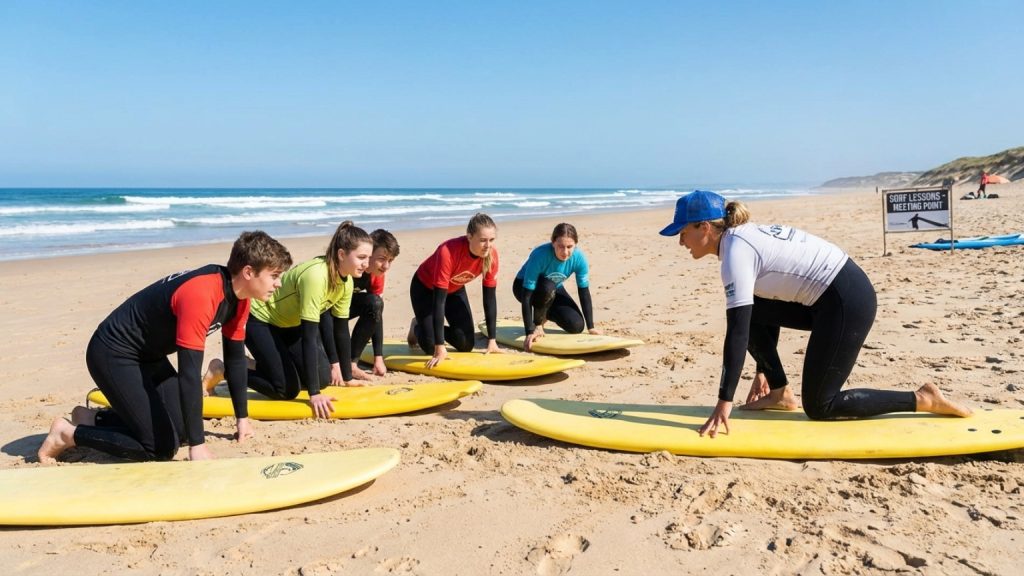
- Warm-up and practice on land: Instructors guide you through a warm-up to prepare your muscles. You then practice the ‘pop-up’ technique on your board while still on the sand. This helps you get the feel of standing up before you are in the moving water.
- Entering the water and catching waves: Next, you move into the water with your instructor. You learn how to paddle and catch small, unbroken white water waves. An instructor might give you a push into a wave, making it easier to start.
- Standing up and riding: Once you can catch waves, the focus shifts to standing up. You apply the pop-up technique you practiced on the sand to ride the wave. The goal is to stand and ride the wave all the way to the shore.
- Review and next steps: At the end of a lesson, your instructor will offer feedback on your progress. They will discuss what went well and suggest areas to practice. This helps you understand what to work on for your next lesson.
2. Why are surf lessons important for beginners?
- Safety First: Instructors teach you how to read ocean conditions, identify potential hazards, and fall safely from your board. For example, understanding rip currents helps you stay out of dangerous areas.
- Correct Technique: You learn the fundamental skills, from paddling efficiently to standing up on the board. A good instructor can correct your pop-up technique immediately, making it much easier to catch waves.
- Faster Progress: Learning from experienced surfers helps you avoid common mistakes and develop skills more quickly. This means you will stand up and ride waves sooner than if you tried to learn alone.
- Ocean Awareness: Lessons cover important information about tides, currents, and wave breaks. Knowing these details helps you choose the best spots and times to surf.
- Proper Equipment Use: You learn how to choose the right board for your skill level and how to handle it safely in and out of the water. This also includes knowing how to wax your board for better grip.
3. How do surf lessons teach you to ride waves?
Surf lessons give you a structured path to learn how to ride waves. We teach you step-by-step, starting with safety and basic skills on land basic skills land.
This approach builds your confidence. It also helps you understand the ocean before you even enter the water.
You learn the proper techniques, making your first wave-riding experience successful and fun.
- Ocean Safety: Instructors first teach you about ocean conditions and potential hazards. For example, you learn to identify rip currents and how to react safely.
- Paddling Technique: You learn how to paddle the surfboard efficiently to catch waves. This includes proper arm strokes and body positioning on the board.
- Pop-Up Practice: We show you the «pop-up,» which is how you quickly stand up on the board. You practice this move many times on the sand before trying it in the water.
- Wave Selection and Timing: You learn to read waves and choose the right ones to ride. This skill helps you understand when to start paddling for a wave.
- Board Control: Once standing, you get tips on how to balance and steer your board. This allows you to ride the wave for longer and more smoothly.
Learning to surf with lessons makes the process safer and more enjoyable. You gain essential skills and knowledge from experienced instructors. This helps you progress much faster than learning alone.
4. What to consider when choosing surf lessons?
- Instructor Experience and Certification: Experienced instructors understand ocean conditions and effective teaching methods. They also hold certifications in first aid and water safety, which keeps students safe during lessons.
- Group Size and Personal Attention: Smaller groups mean each student gets more direct feedback and help. For example, a class of four students allows an instructor to correct techniques more often than a class of ten.
- Safety Protocols and Equipment: A good school prioritizes safety with clear rules and proper gear. They use soft-top boards for beginners and provide appropriate wetsuits when needed for comfort and protection.
- Location and Wave Conditions: The surf spot should have gentle, consistent waves suitable for learning. A beach with smaller, rolling waves is ideal for beginners to practice standing up and gain confidence.
- Program Structure and Curriculum: Look for a program that outlines what students will learn each day. A clear curriculum helps students build skills progressively, from paddling basics to catching their first waves.