Many adults consider learning a new sport but feel uncertain about where to begin. The idea of kitesurfing can seem daunting, with questions about safety, equipment, and the learning curve. This uncertainty often prevents individuals from exploring an exciting water sport.
1. What is included in kitesurfing lessons for adults?
Kitesurfing lessons for adults typically provide a structured approach to learning this dynamic water sport. The curriculum covers both theoretical knowledge and essential practical skills. This ensures students develop a strong foundation for independent and safe kitesurfing. The lessons progress from basic concepts to more advanced techniques, adapting to each individual’s learning pace.
- Safety Protocols: Lessons always begin with a thorough understanding of safety. This includes learning about wind conditions, equipment checks, and emergency procedures, such as how to quickly release the kite in a sudden gust.
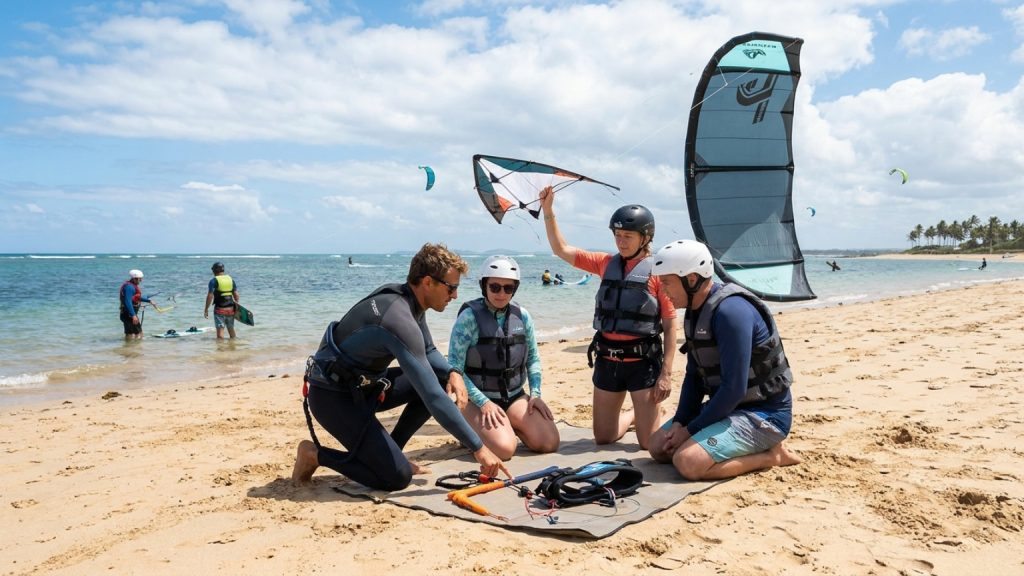
- Equipment Introduction: Students learn about the different components of kitesurfing gear. This involves identifying the kite, control bar, lines, harness, and board, and understanding their specific functions.
- Kite Control on Land: Initial practical sessions focus on mastering kite handling on the beach. Students practice launching, landing, and controlling the kite’s power in the wind window before entering the water.
- Body Dragging Techniques: Once in the water, the focus shifts to body dragging. This skill allows the student to move through the water using the kite’s power, for example, to retrieve a lost board or navigate upwind without standing.
- Water Start and First Rides: The final stage involves learning to stand on the board and ride short distances. This includes practicing the water start, where the student gets up onto the board using the kite’s pull.
The structured progression ensures that each skill builds upon the last, leading to confident riding. This comprehensive approach prepares adults to enjoy kitesurfing safely and effectively.
2. Why are kitesurfing lessons for adults beneficial?
Kitesurfing lessons for adults offer many advantages. They provide a safe and structured path to learning this thrilling water sport. An experienced instructor guides participants through essential theory and practical skills. This approach builds a strong foundation for future independent riding.
- Enhanced Safety: Professional guidance greatly reduces risks. Lessons teach proper safety protocols, including how to launch, land, and recover the kite safely. This knowledge is crucial for preventing accidents.
- Faster Skill Progression: Structured lessons accelerate the development of skills. Instructors offer personalized feedback, helping students correct mistakes quickly. For example, an instructor can immediately correct a beginner’s stance or kite position. A person learning alone might struggle with such issues for weeks.
- Correct Technique Development: An early focus on correct technique prevents bad habits. Learning the right way from the start makes future progression much easier. This ensures efficient and comfortable kitesurfing.
- Access to Quality Equipment: Schools provide appropriate and well-maintained gear for beginners. This includes suitable kites, boards, and safety equipment. Access to the right gear is essential for a positive learning experience.
- Increased Confidence and Community: Mastering new skills boosts personal confidence significantly. Learning with others can also foster a sense of community among students. This creates a supportive and enjoyable learning environment.
These benefits make formal instruction an invaluable investment. Kitesurfing lessons help adults gain competence and safely enjoy the sport.
3. How does the learning process for kitesurfing lessons for adults work?
The learning process for kitesurfing lessons for adults follows a structured progression. It begins with essential theoretical knowledge and gradually moves to practical skills in the water. This approach ensures safety and builds confidence at each stage of development each stage development.
- Foundational theory: The initial phase focuses on understanding wind theory, equipment setup, and safety systems. For example, a student learns about the wind window and how to properly activate the quick-release mechanism on the kite bar.
- Kite control on land: Students then practice flying a small training kite on the beach. This step helps individuals develop a feel for kite steering and power generation, such as learning to move the kite in a controlled figure-eight pattern.
- Body dragging in water: The next stage involves entering the water without a board to practice body dragging. This allows an individual to experience the kite’s power as it pulls the body through the water, building comfort and control.
- Board skills and first rides: After mastering body dragging, the focus shifts to combining the kite with the board. This includes learning to get up on the board, maintain balance, and ride short distances, such as successfully riding a few meters across the water.
- Independent riding and refinement: The final stages involve supervised practice to consolidate skills and improve technique. A student works on consistently riding in both directions and performing basic turns.
This systematic learning path ensures a solid foundation for aspiring kitesurfers. Patience and consistent practice are crucial for mastering the sport safely and effectively.
4. What are the first steps for kitesurfing lessons for adults?
Kitesurfing lessons for adults begin with essential theoretical and practical foundations. These initial stages focus on safety protocols, equipment understanding, and basic kite control. A structured approach ensures students develop the necessary skills before advancing to more complex maneuvers. For example, understanding the wind window early prevents common errors later.
- Theory and Safety Briefing: The first step involves a comprehensive introduction to kitesurfing theory. This session covers wind dynamics, safety systems, and essential rules of the water.
- Equipment Familiarization: Students then learn about the different components of kitesurfing gear. This includes the kite, control bar, lines, harness, and board, understanding their function and setup.
- Kite Control on Land: Practical training starts with controlling a small training kite on the beach. Students practice launching, landing, and steering the kite to develop muscle memory and coordination.
- Body Dragging in Water: Once land control is established, the lesson moves to the water for body dragging. This involves using the kite’s power to move through the water without a board, focusing on steering and staying upwind.
- Water Start Introduction: The final introductory stage involves the initial attempts at standing on the board. This step combines kite control with board positioning to achieve the first short rides.
These fundamental steps are crucial for building confidence and competence in kitesurfing. Consistent practice of these basics prepares an adult student for independent riding.