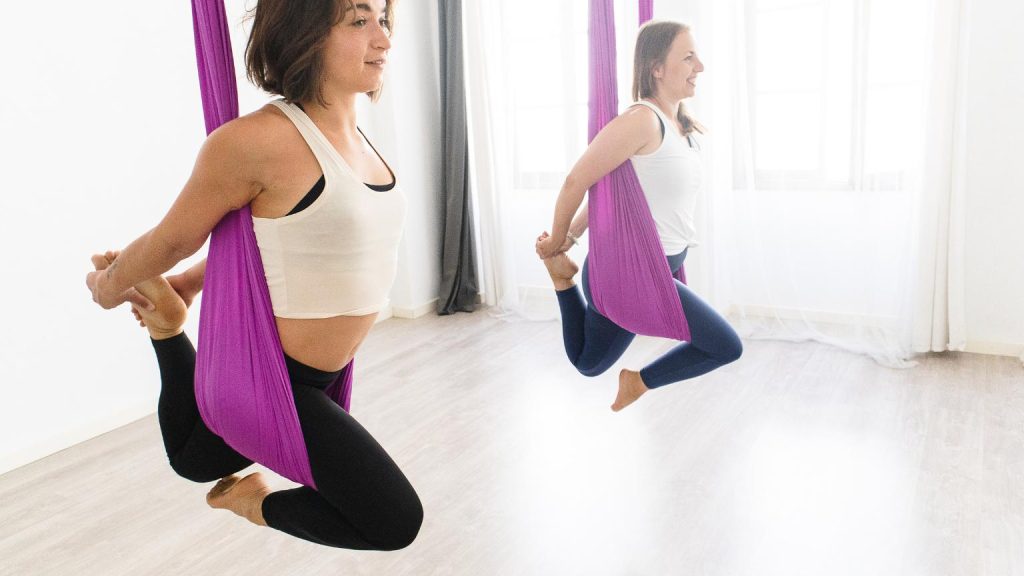
Aerial fitness has become a complete and demanding discipline within aerial sports, combining strength, mobility, body control, and expression in the air. To fully enjoy its benefits, choosing the right equipment is essential, as your body relies entirely on what supports you from above.
We believe training in suspension should feel safe, progressive, and adapted to you. From our experience as aerialists and manufacturers at Aerial Obsessed, we know that equipment quality directly affects confidence, performance, and long-term physical health.
In this guide, we explain how to choose aerial fitness equipment using professional and realistic safety criteria.
1. Understanding the demands of aerial fitness before choosing equipment
Before purchasing any aerial apparatus, it is important to understand what aerial fitness truly demands from your body. This discipline combines strength, coordination, and endurance while requiring constant contact with the equipment.
Grip strength, core engagement, and joint stability are always involved. Movements usually alternate between dynamic transitions and static holds, which means the equipment must respond consistently without unexpected stretching or discomfort.
Not all equipment works equally well for every level or style within aerial sports, so understanding your own practice is the first step toward making a safe choice.
2. Safety as the foundation of all aerial equipment
When it comes to aerial fitness, safety is never optional. Equipment must be designed to handle dynamic loads, repeated use, and long training sessions.
Safe aerial equipment should meet several essential criteria:
- High-strength, load-rated materials
- Reinforced stitching and professional finishes
- Testing under dynamic conditions
- Compatibility with certified rigging systems
Trust in your equipment allows you to focus fully on movement instead of worrying about failure.
3. Aerial straps as a versatile and demanding option
Aerial straps are widely used in aerial fitness because they allow freedom of movement while building significant upper-body strength. They are especially popular among athletes who want to develop power, control, and dynamic skills.
When choosing aerial straps, small details make a big difference. The grip should feel secure without being abrasive, the material must be comfortable against the skin, and the length should suit your ceiling height and training style.
At Aerial Obsessed, we design handcrafted aerial straps that balance durability and comfort, making them suitable for both technical work and extended training sessions.
4. Trapeze for acrobatics and controlled progression
The trapeze for acrobatics offers a more structured experience within aerial fitness. Its rigid bar provides stability, which helps many practitioners develop confidence and refine technique.
A well-designed trapeze supports controlled transitions and expressive movement. When selecting one, it is important to evaluate:
- Bar diameter and surface finish
- Rope or strap quality
- Proportions adapted to your body and space
Proper dimensions and materials improve alignment and reduce unnecessary strain during training.
5. Aerial yoga and its role in aerial fitness training
Aerial yoga plays an important complementary role within aerial fitness. Its slower pace focuses on flexibility, mobility, and body awareness, making it ideal for recovery and injury prevention.
This discipline is especially useful if you want to:
- Improve joint mobility and flexibility
- Build confidence in suspension
- Balance intense strength training
Even though aerial yoga feels gentler, fabric quality, elasticity, and rigging safety remain essential.
6. The importance of rigging in aerial fitness
Rigging is one of the most underestimated elements in aerial fitness, yet it is fundamental. Every apparatus depends on a secure and properly installed system.
A safe rigging setup should always include:
- Certified anchor points designed for aerial loads
- Approved carabiners and connectors
- Installation adapted to the training environment
From our experience at Aerial Obsessed, rigging should never be improvised. It is the foundation that allows all aerial equipment to function safely.
7. Choosing equipment based on your level and goals
Not every apparatus is suitable for every stage of training. Beginners often benefit from more stable equipment, while advanced practitioners may seek tools that allow greater freedom and complexity.
Progressing gradually helps build strength and confidence without unnecessary risk. Matching your equipment to your goals ensures that aerial fitness remains challenging but sustainable over time.
8. Craftsmanship and customization as added value
Handcrafted aerial equipment offers clear advantages in aerial fitness. Custom measurements, tailored finishes, and attention to detail improve both comfort and performance.
When your body is suspended, even small adjustments can significantly affect how movements feel. Personalized equipment helps reduce pressure points and supports cleaner execution.
9. Training with confidence and enjoying the journey
Choosing the right equipment for aerial fitness is an investment in safety, progress, and enjoyment. When you trust what supports you, movement becomes more fluid and training feels more rewarding.
Aerial fitness is not only about strength or aesthetics. It is about control, awareness, and confidence in the air. The right equipment allows you to focus on growth, creativity, and the joy of flying.