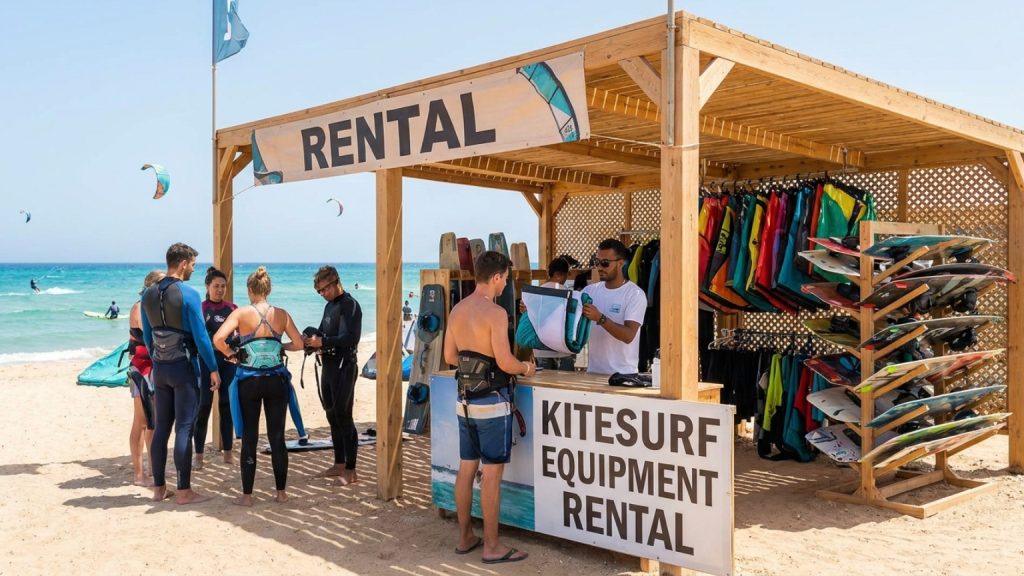
Many individuals interested in kitesurfing face the challenge of acquiring or transporting expensive equipment. The initial investment for gear can be substantial, and logistics for travel often become complex. This situation frequently leads enthusiasts to seek alternative solutions for accessing the necessary tools for the sport.
1. What is the concept of kitesurf equipment rental?
Kitesurfing equipment rental involves obtaining the necessary gear for kitesurfing from a specialized provider for a set period. This service allows individuals to enjoy the sport without the significant initial investment of purchasing their own equipment. It offers a practical solution for travelers and those exploring kitesurfing for the first time.
- Accessibility: Equipment rental makes kitesurfing more accessible to a broader audience. For example, a beginner can try the sport with different kite sizes and board types before committing to buying.
- Cost-effectiveness: Renting gear is often more economical than buying a full set of new equipment. This saves money, especially for casual riders or those who only kitesurf a few times a year.
- Convenience for travelers: Traveling with large kitesurfing gear can be difficult and expensive. Rental services eliminate the need to transport heavy and bulky equipment, making trips much simpler.
- Trial and experimentation: Rental allows riders to test various brands, models, and sizes of kites and boards. This helps them find the ideal setup that suits their riding style and local conditions.
- Up-to-date equipment: Rental centers usually maintain a modern fleet of kites and boards. This ensures renters use the latest technology and well-maintained gear for safety and performance.
The rental model provides flexibility and reduces barriers to entry for kitesurfing. It supports both new learners and experienced riders seeking convenience or variety.
2. What are the benefits of kitesurf equipment rental?
- Cost Efficiency: Kitesurf equipment rental significantly reduces the initial financial burden for new participants, avoiding the high upfront cost associated with buying a complete set of gear, which can be substantial.
- Access to Latest Gear: Rental services regularly update their inventory with modern and well-maintained kites, boards, and safety equipment, ensuring renters always have access to safe, high-performance gear suitable for current conditions.
- Flexibility and Convenience: Renting eliminates the logistical challenge of transporting bulky kitesurf equipment, especially for travelers; for example, a visitor flying to Tarifa can avoid extra baggage fees and the hassle of carrying heavy bags.
- Trial Different Equipment: The rental option allows individuals to experiment with various kite sizes, board types, and brands, which helps riders discover which specific setup best matches their skill level and preferred riding style before making a purchase.
- Maintenance-Free Experience: Rental companies are responsible for all equipment storage, cleaning, and repairs, providing a worry-free experience for the user, who simply picks up and returns the gear.
3. How is the selection of kitesurf equipment for rental made?
The selection of kitesurf equipment for rental involves a detailed assessment. This process considers several key factors to match the gear with the rider’s needs. Proper equipment ensures both safety and an enjoyable experience on the water. Therefore, a careful evaluation is always made before any rental.
- Rider Skill Level: The rental process first evaluates the kitesurfer’s experience. Beginners often receive larger, more stable kites and wider boards to aid in learning.
- Wind Conditions: Local wind strength plays a crucial role in equipment choice. Stronger winds necessitate smaller kites, while lighter winds require larger ones for effective propulsion.
- Body Weight and Height: A rider’s physical attributes influence the optimal board and kite size. For example, a heavier individual typically needs a board with more volume or a larger kite to get planing.
- Equipment Type: Different kites and boards suit various kitesurfing styles. A person interested in freeride will receive different gear than someone focused on freestyle maneuvers.
- Safety Features: All rental equipment undergoes regular checks to ensure safety mechanisms function correctly. This includes inspecting quick-release systems and leash integrity.
This thorough approach to equipment selection makes the rental process highly effective. It helps ensure that each kitesurfer receives suitable gear, leading to a better and safer time on the water.
4. What are the key steps for kitesurf equipment rental?
Kitesurf equipment rental makes the sport accessible for many individuals. Understanding the rental process ensures a smooth experience. It helps aspiring kitesurfers and experienced riders get the right gear efficiently. This approach allows more time on the water enjoying the wind.
- Assessing needs: A rider first considers their skill level, body weight, and the current wind conditions. For example, a beginner rider will need a larger board and kite than an advanced one.
- Selecting equipment: The rental center then helps choose the appropriate kite, board, harness, and safety gear. The correct size and type of equipment are crucial for both safety and performance.
- Understanding terms: The rental agreement details the duration, costs, and any damage policies. It is important to review these conditions carefully before taking the equipment.
- Pre-rental inspection: Before leaving the center, the equipment undergoes a thorough check for any existing damage. This step protects the renter from being held responsible for prior wear and tear.
- Return and post-inspection: After use, the equipment is returned to the center for a final inspection. Prompt and careful return ensures a good relationship with the rental provider.
Following these steps helps ensure a positive rental experience. It allows riders to focus on their session without equipment worries.