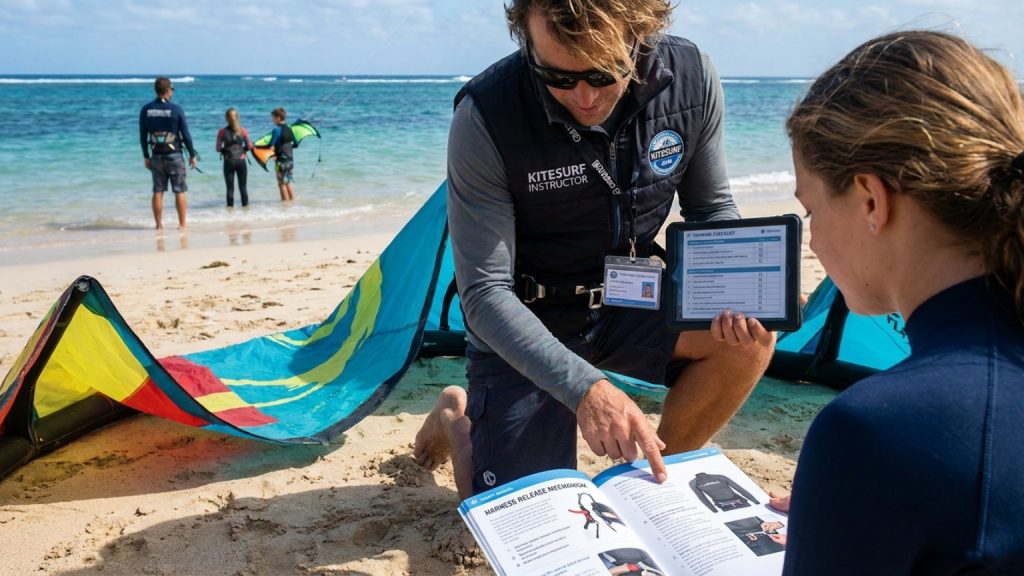
The desire to learn kitesurfing often comes with questions about safety and effective instruction. Without proper guidance, beginners can face unnecessary risks and slow progress. Understanding the qualifications of an instructor is crucial for a successful and secure learning experience. This article explores the importance of a certified kitesurf instructor.
1. Qué es la certificación de un instructor de kitesurf?
Kitesurf instructor certification confirms an individual’s competence to teach kitesurfing safely and effectively. This formal recognition comes from specific international organizations. It ensures instructors meet high standards for teaching skills, safety protocols, and technical knowledge.
- Safety Protocols: Certification requires instructors to master essential safety procedures. This includes understanding right-of-way rules and managing various kite and board control situations.
- Teaching Methodology: Certified instructors follow a structured teaching curriculum. This approach helps students learn progressively, building skills from basic control to advanced maneuvers.
- Emergency Response: An instructor with certification knows how to handle unexpected situations, such as sudden wind shifts or equipment failure. For example, they can quickly do a self-rescue or assist a student in distress.
- Equipment Expertise: Certification ensures instructors possess deep knowledge of kitesurfing equipment. They can properly set up, maintain, and inspect gear for optimal performance and safety.
- Environmental Awareness: Certified instructors understand the impact of kitesurfing on marine environments. They teach students about responsible practices, such as respecting wildlife and keeping beaches clean.
This certification protects students by guaranteeing a professional and secure learning environment. It also upholds the sport’s reputation for safety and quality instruction.
2. Por qué la elección de un instructor de kitesurf certificado es fundamental?
The choice of a certified kitesurf instructor is critical for anyone learning this sport. Such an instructor provides a safe and effective learning experience. This professional ensures students develop correct techniques from the beginning, which helps prevent injuries and build confidence. Without proper guidance, new kitesurfers can face significant risks on the water risks the water.
- Enhanced Safety Protocols: A certified instructor adheres to strict safety guidelines and procedures. This includes assessing weather conditions and choosing appropriate equipment, which significantly reduces the potential for accidents during lessons. For example, a certified professional knows when to cancel a lesson due to strong or gusty winds.
- Structured Skill Development: Certified instructors follow a proven curriculum designed for progressive learning. This approach ensures students master each skill before moving to the next, fostering a solid foundation. An instructor teaches essential steps, such as setting up the kite on land before attempting water starts.
- Correct Technique Application: Learning from a certified expert helps students develop proper body posture and kite control. This prevents the formation of bad habits that can be difficult to correct later. For instance, an instructor guides students on how to steer the kite gently instead of making abrupt movements.
- Appropriate Equipment Selection: Certified professionals possess extensive knowledge about various kitesurfing gear. They help students choose the right size kite and board for their weight, skill level, and wind conditions. This ensures optimal performance and safety for the learner.
- Effective Emergency Response: Instructors with certification are trained in first aid and rescue techniques. They can respond quickly and effectively to unexpected situations or emergencies on the water. This includes knowing how to perform a self-rescue or assist a student who has lost control of their kite.
A certified instructor provides more than just lessons; they offer a secure and professional learning environment. This expert guidance is vital for a positive and successful entry into kitesurfing.
3. Cómo la identificación de un instructor de kitesurf certificado guía la elección?
- Safety Protocols: A certified instructor prioritizes student safety above all else. For instance, they teach proper equipment setup, wind assessment, and emergency procedures, which prevents common accidents during initial lessons.
- Standardized Curriculum: Certified instructors follow a structured teaching methodology. This ensures students learn fundamental skills progressively and efficiently, building a strong foundation.
- Demonstrated Competence: Certification verifies an instructor’s personal kitesurfing ability and teaching skills. This reassures students that their teacher possesses the necessary expertise to guide them.
- Professional Accountability: Certified instructors are often part of a larger professional body. This provides a framework for ethical conduct and ongoing professional development, benefiting student learning.
- Risk Management: Instructors with certification are typically covered by professional liability insurance. This offers an extra layer of protection for students during lessons, addressing potential unforeseen events.
4. Qué pasos seguir para la elección de un instructor de kitesurf certificado?
Selecting a certified kitesurfing instructor is a crucial step for any beginner. This choice directly impacts the safety and effectiveness of the learning process.
A certified instructor ensures that students receive high-quality education and adhere to established safety standards. For example, a beginner learning in Tarifa greatly benefits from a qualified teacher who understands the local wind conditions.
- Verify Certification: Always confirm the instructor’s certification from recognized bodies like IKO (International Kitesurfing Organization) or F-ONE. These certifications mean the instructor has met specific teaching and safety standards.
- Assess Experience and Specialization: Look for instructors with a strong track record, especially in teaching new students. Some instructors specialize in certain conditions or skill levels, which can be beneficial for specific learning goals.
- Evaluate Teaching Style: A good instructor communicates clearly and patiently, making complex concepts easy to understand. An instructor who uses simple language helps students feel more confident on the water.
- Inquire About Safety Protocols: Ask about the instructor’s approach to safety, including emergency procedures and equipment checks. A certified instructor always checks wind conditions and ensures all gear is in proper working order before each lesson.
- Consider Student-Instructor Ratio: A smaller student-to-instructor ratio often provides more personalized attention. This closer focus can significantly accelerate a student’s learning progress.
Following these steps helps ensure a safe and effective learning experience in kitesurfing. Careful selection of an instructor leads to better skill development and increased confidence on the water.