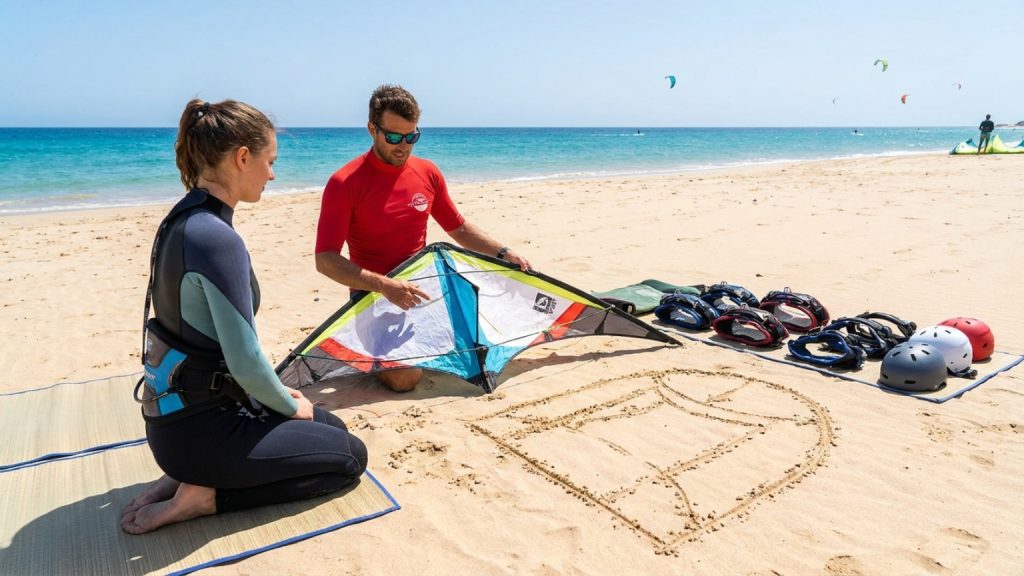
Many individuals interested in kitesurfing often feel overwhelmed by the initial steps required to learn this dynamic sport. The complexity of equipment and the importance of safety can seem daunting. Understanding the foundational elements is crucial for a successful start. This guide explains the initial phase of learning kitesurfing.
1. What defines level 1 kitesurf lessons?
Level 1 kitesurf lessons serve as the crucial starting point for individuals new to the sport. These sessions focus primarily on establishing a strong foundation in safety, basic theory, and initial kite control.
The instruction ensures a student develops essential skills on land before progressing to water-based activities. For example, a typical lesson begins with understanding the wind window and its importance.
- Safety protocols: Instructors teach fundamental safety procedures and how to use the kite’s safety systems. This includes learning how to activate the quick-release mechanism in an emergency.
- Kite theory: Students learn about wind dynamics, the different parts of the kitesurfing equipment, and how to set it up. Identifying the leading edge and struts of a kite is an early step.
- Land-based kite control: This stage focuses on handling a smaller trainer kite on the beach. Students practice launching, landing, and flying the kite in various patterns, such as a figure-eight.
- Equipment familiarization: Participants become familiar with the kite, control bar, lines, and harness. Understanding the proper harness fitting and its connection to the control bar is essential.
These initial lessons build confidence and a solid understanding of the sport’s core principles. This approach ensures a safe and effective progression into the exciting world of kitesurfing.
2. Why are level 1 kitesurf lessons essential for beginners?
Level 1 kitesurf lessons establish a crucial foundation for all individuals new to the sport. This initial instruction covers essential skills and safety procedures required for safe participation. A structured learning path helps prevent common mistakes and reduces potential hazards on the water hazards the water.
- Fundamental Safety Protocols: The lessons introduce critical safety systems and emergency procedures. For example, students learn how to activate the quick release system on the control bar to depower the kite instantly in an unsafe situation.
- Basic Kite Control on Land: Students develop the ability to handle the kite effectively before entering the water. This includes understanding the wind window, launching, landing, and steering the kite safely in a controlled environment.
- Equipment Knowledge: Instruction covers the various components of kitesurfing gear and their functions. A beginner learns how to set up the lines, connect the harness, and inspect the equipment for proper working order.
- Understanding Wind Theory: The lessons explain how wind interacts with the kite and the safe limits for different conditions. This knowledge helps a rider identify suitable wind speeds and directions for their skill level, avoiding dangerous scenarios.
These foundational elements are indispensable for building confidence and ensuring a secure progression in kitesurfing. Completing level 1 lessons prepares an individual for the exciting challenges of riding the wind with greater skill and awareness.
3. How does the learning process for level 1 kitesurf lessons unfold?
The learning process for level 1 kitesurf lessons focuses on building a strong foundation in safety and basic kite handling. This initial stage introduces new students to the fundamental principles of kitesurfing in a controlled environment kitesurfing controlled environment.
The goal is to ensure a clear understanding of the equipment and how to manage the kite safely on land and in the water.
- Theory and Safety: The lesson begins with essential theoretical knowledge and safety protocols. Students learn about wind direction, weather conditions, and international communication signals, for example, recognizing when the wind is too strong or too weak for safe practice.
- Equipment Setup: Students become familiar with the kitesurfing gear. This includes identifying the kite, bar, lines, harness, and safety systems. The specialist teaches how to properly set up and pack down the equipment.
- Kite Control on Land: Practical training starts with a small training kite on the beach. This helps students develop muscle memory and coordination for steering the kite. An example is practicing figure-eights with the kite to feel its power and movement.
- Body Dragging: After mastering land control, the process moves to the water without a board. Body dragging involves using the kite’s power to move through the water. This teaches students how to navigate and control the kite’s pull effectively.
- Water Relaunch: A crucial skill taught is how to relaunch the kite from the water after it falls. This ensures students can recover the kite independently. The specialist demonstrates techniques to get the kite back into the air quickly and safely.
This structured approach ensures students gain confidence and competence in managing the kite. The progression through these steps prepares individuals for more advanced kitesurfing techniques in subsequent lessons.
4. What to consider when choosing level 1 kitesurf lessons?
Selecting the right level 1 kitesurfing lessons is important for a safe and effective learning experience. The initial choice significantly influences how quickly and confidently a student progresses in the sport. Careful consideration of key factors ensures a solid foundation for future kitesurfing activities.
- Instructor Qualifications: Certified instructors possess the necessary expertise to teach proper techniques and safety protocols. An experienced instructor can adapt teaching methods to suit individual learning styles.
- Equipment Quality: Modern, well-maintained kitesurfing gear prevents technical issues during lessons. Safe and functional equipment is crucial for a beginner’s initial time on the water.
- Student-to-Instructor Ratio: Smaller group sizes allow for more personalized attention from the instructor. For example, a 2:1 student-to-instructor ratio provides ample individual feedback and guidance.
- Safety Protocols: A reputable school prioritizes clear safety briefings and effective rescue procedures. Understanding emergency steps builds confidence and reduces risks for new learners.
- Location and Conditions: Choosing a kitesurfing spot with consistent, gentle winds and shallow water is ideal for beginners. Such conditions, often found in places like Tarifa, make learning easier and safer.
A thorough evaluation of these elements helps ensure a positive and productive introduction to kitesurfing. This foundational choice directly impacts a student’s enjoyment and long-term development in the sport.