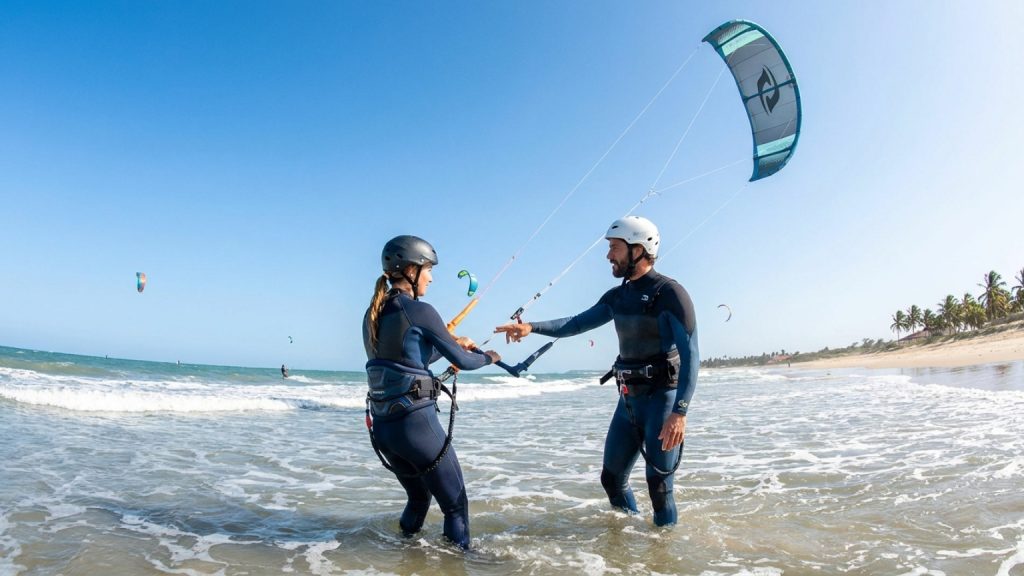
Many individuals find learning kitesurfing challenging in group settings. The pace can be too fast or too slow, leading to frustration and slow progress. This often leaves aspiring riders feeling overwhelmed and uncertain about their next steps. Understanding effective learning methods is crucial for skill development.
1. What is the concept of private kitesurf lessons?
Private kitesurf lessons involve one-on-one instruction between a student and a dedicated instructor. This focused approach allows for a highly personalized learning experience. The entire session adapts to the individual’s skill level, learning pace, and specific goals, ensuring maximum progress.
- Personalized Curriculum: The lesson plan adjusts to the student’s exact needs and areas for improvement. For example, a student struggling with launching the kite receives dedicated practice until the technique is mastered.
- Flexible Pacing: The speed of instruction is tailored to the student’s ability to absorb new information and perform maneuvers. This means no time is wasted on concepts already understood, nor does the student feel rushed.
- Direct Feedback: The instructor provides immediate and specific corrections on technique and body positioning. This constant guidance helps the student understand and correct mistakes quickly.
- Enhanced Safety: Constant, undivided supervision from the instructor significantly improves safety during the learning process. This reduces potential risks, especially for individuals new to kitesurfing.
- Faster Progress: The concentrated attention from an instructor often leads to quicker skill acquisition and greater confidence. Students typically advance through different learning stages more rapidly with this approach.
This concentrated learning environment maximizes skill development and understanding for the student. Therefore, private lessons offer an efficient path to becoming a confident kitesurfer.
2. Why is the investment in private kitesurf lessons valuable?
Private kitesurf lessons offer significant advantages for individuals seeking rapid and effective learning. This approach provides focused attention from an instructor, which helps address specific needs and challenges. Personalized guidance often leads to faster skill development and a deeper understanding of kitesurfing techniques understanding kitesurfing techniques.
- Personalized Instruction: An instructor dedicates full attention to one student. This allows for immediate feedback and adjustments tailored to the individual’s learning style. For example, a student struggling with kite control can receive specific drills to improve their handling.
- Accelerated Progress: One-on-one coaching helps students grasp concepts more quickly than in group settings. This focused environment often means individuals achieve milestones, such as standing on the board or making initial water starts, in fewer sessions.
- Enhanced Safety: The instructor can closely monitor the student’s actions and the surrounding conditions. This vigilance helps prevent common mistakes and ensures adherence to safety protocols, reducing risks on the water.
- Flexible Scheduling: Private lessons offer greater flexibility in booking session times. Students can arrange lessons around their personal availability, making it easier to integrate learning into a busy schedule.
- Targeted Skill Development: Lessons can concentrate on specific areas where a student needs improvement or wishes to learn advanced maneuvers. An instructor can, for instance, focus entirely on helping a student master riding upwind or executing their first jump.
Investing in private kitesurf lessons therefore provides a highly efficient and safe path to mastering the sport. This tailored experience maximizes learning potential and builds confidence on the water.
3. How does the instruction in private kitesurf lessons occur?
Private kitesurf lessons provide a highly tailored learning experience for each student. The instruction focuses entirely on the individual’s progress, skill level, and specific learning needs.
A dedicated instructor works one-on-one with the student, guiding them through every stage of development. This personalized approach often leads to faster and more effective skill acquisition compared to group settings.
- Individual Skill Assessment: Before starting, the instructor evaluates the student’s current experience and physical condition. This initial assessment helps in creating a specific curriculum that addresses the student’s strengths and weaknesses.
- One-on-One Attention: The student receives the instructor’s complete and undivided focus throughout the lesson. This constant supervision allows for immediate feedback and precise adjustments, which accelerates the learning curve significantly. For example, if a student struggles with kite control, the instructor can dedicate extra time to drills for that specific skill.
- Flexible Pacing: Lessons progress at the student’s own speed, ensuring full comprehension before moving to new techniques. If a student masters a skill quickly, the lesson can advance, or if more time is needed, the instructor can provide it without holding back other learners.
- Direct and Immediate Feedback: The instructor offers real-time advice and corrections on posture, kite handling, and board control. This direct communication helps the student understand and correct mistakes as they happen, preventing the development of bad habits.
- Improved Learning Environment: Instructors can choose the best location and time for the lesson based on the student’s level and the day’s weather conditions. This ensures the safest and most productive environment for learning, maximizing practical time on the water.
This focused and adaptable instruction ensures a comprehensive and safe path to mastering kitesurfing skills. Students often achieve their personal kitesurfing goals more quickly and confidently through private lessons.
4. What is the process for choosing private kitesurf lessons?
- Skill level assessment: An instructor first determines the student’s current kitesurfing experience. For example, a complete beginner requires foundational safety and equipment knowledge, while an intermediate student may focus on specific maneuvers like water starts or riding upwind.
- Goal definition: The student and instructor discuss specific learning objectives for the lessons. This might include mastering board control, improving turning techniques, or attempting first jumps.
- Instructor matching: Finding an instructor whose teaching style complements the student’s learning preference is important. Some students prefer a very direct approach, while others learn better with more encouragement and patience.
- Lesson structure and duration: A plan is created detailing the number of hours, session length, and overall schedule. For instance, a student might opt for two-hour sessions daily over three days to build consistent skills.
- Location and conditions: The choice of kitesurfing spot influences the lesson’s effectiveness. Beginners often benefit from flat, shallow water areas, which provide a safer and less challenging environment for initial practice.