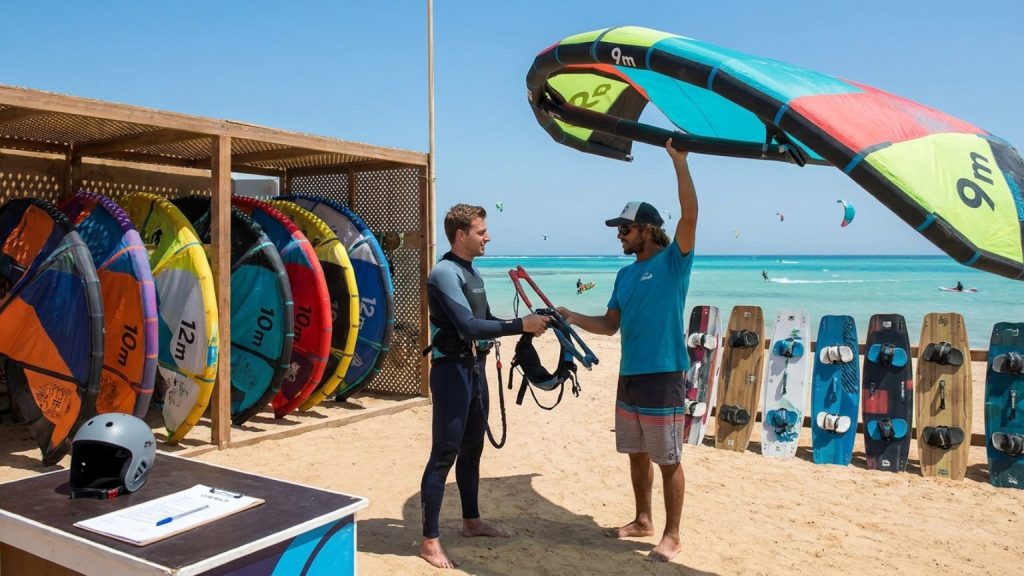
New kitesurfers often face significant investment costs when starting the sport. The initial purchase of kites, boards, and safety gear can be daunting. Understanding the options for accessing equipment is crucial for those entering the world of kitesurfing. This article explores the concept of kitesurf equipment rental.
1. What does kitesurf equipment rental include?
Kitesurf equipment rental typically provides all the necessary gear for a session on the water. This service allows new kitesurfers to experience the sport without a large initial investment in personal equipment investment personal equipment.
For example, a beginner can try different kite sizes, such as a 9m or 12m kite, to see which best suits the wind conditions and their learning style. Renting also ensures access to gear that is appropriate for current weather and skill levels.
- Kite: This is the main power source, catching the wind to pull the rider across the water. Rental packages include various kite sizes, which are chosen based on wind strength and the rider’s weight.
- Kitesurf Board: The board allows the rider to glide on the water’s surface, similar to a surfboard. Most rentals for new kitesurfers include a twin-tip board, known for its ease of use and versatility.
- Harness: The harness connects the rider to the kite, distributing the kite’s pull across the rider’s body. It reduces arm fatigue and allows for better control during a session.
- Bar and Lines: The control bar allows the rider to steer the kite and adjust its power. It connects to the kite through a set of lines, typically four or five, that transmit steering commands.
- Safety Gear: Essential safety items like a life vest and a helmet are often part of a rental package. This equipment protects the rider and enhances overall safety during a kitesurfing session.
Renting kitesurf equipment offers convenience and flexibility for those learning the sport or traveling light. It provides a practical way to access suitable gear and enjoy kitesurfing safely.
2. Why consider the rental of kitesurf equipment?
New kitesurfers often wonder about equipment needs. Renting kitesurf equipment offers significant advantages for those starting in the sport. This approach allows individuals to learn and progress without the initial financial burden of purchasing gear. It also provides flexibility and access to modern equipment access modern equipment.
- Reduced Initial Investment: Kitesurfing equipment requires a substantial upfront cost. Renting eliminates this large expense, making the sport more accessible for beginners.
- Access to Varied Equipment: Rental services provide access to a range of kites and boards. This allows a new kitesurfer to try different sizes and types, understanding what works best before buying.
- No Storage or Maintenance Concerns: Owning equipment demands storage space and regular upkeep. Renting means the school handles all cleaning, repairs, and storage needs.
- Equipment Matched to Skill Level: Instructors select gear appropriate for a beginner’s size, weight, and current learning stage. For example, a new student typically uses a larger, more stable board and a smaller, easier-to-handle kite.
- Flexibility for Travel: Transporting kitesurfing gear can be cumbersome and costly. Renting at the destination simplifies travel logistics, allowing for lighter luggage.
Considering equipment rental provides a practical and cost-effective entry into kitesurfing. This option supports a smooth learning experience and helps new participants enjoy the sport fully.
3. How does the process of kitesurf equipment rental work?
The process of renting kitesurf equipment involves several straightforward steps for new kitesurfers. This approach allows individuals to experience the sport without the initial investment of buying gear investment buying gear.
It also ensures that the equipment chosen matches the user’s skill level and the day’s conditions. For example, a beginner might rent a larger board and kite for easier starts.
- Skill assessment: An instructor or rental professional first assesses the kitesurfer’s experience level. This step ensures that appropriate and safe equipment is provided. It helps prevent accidents and promotes a better learning experience.
- Equipment selection: Based on the assessment, the specialist recommends suitable gear. This includes a kite, board, harness, and wetsuit. The right equipment depends on factors like wind strength, body weight, and rider ability.
- Safety briefing: Before rental, a brief explanation of the equipment and safety guidelines is provided. This covers how to handle the gear and important local rules. It helps ensure a safe and enjoyable session on the water.
- Rental agreement: A rental agreement is completed, outlining the terms and duration of use. This document specifies return times and any responsibilities for the equipment. It protects both the renter and the rental provider.
- Return and inspection: After use, the equipment is returned and inspected for any damage. This check ensures the gear remains in good condition for future renters. It also allows for timely repairs if needed.
This organized system makes kitesurfing accessible to many individuals. It provides a flexible way to enjoy the sport and continue skill development.
4. What to check before choosing kitesurf equipment for rental?
When considering kitesurf equipment rental, new kitesurfers must carefully check several factors. This initial inspection ensures safety and improves the learning experience. Proper equipment selection prevents common issues and supports skill development. It also allows the renter to feel confident on the water.
- Kite Size and Type: The appropriate kite size depends on wind strength and the individual’s weight and skill level. A kite that is too large in strong winds can overwhelm a beginner, for example.
- Board Condition: Renters should check the board for any significant damage like deep scratches or cracks. A smooth, undamaged board provides better stability and control for learning.
- Harness Fit and Wear: A well-fitting harness is crucial for comfort and control during a session. Renters must ensure the straps are secure and the padding shows no signs of excessive wear.
- Safety Systems on the Bar: The quick-release mechanism on the control bar must function easily and correctly. This system allows for immediate depowering of the kite in an emergency.
- Lines and Pulleys: The lines should be free of knots, fraying, or twists, as these can affect steering and safety. Pulleys, if present, must move freely without sticking.
A thorough check of rental kitesurf equipment is vital for a positive and safe experience. This attention to detail contributes significantly to a successful progression in the sport.