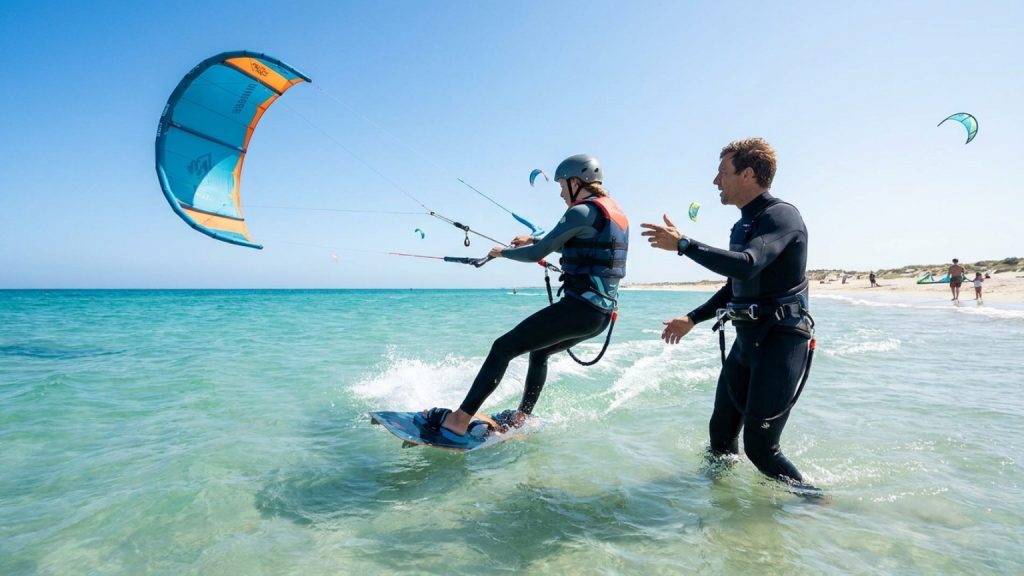
Many aspiring kitesurfers find themselves at a crossroads after mastering the initial steps. The challenge often lies in understanding how to transition from basic control to more advanced maneuvers and independent riding. This phase requires specific guidance to refine techniques and ensure safety on the water.
1. What is the focus of level 2 kitesurf lessons?
Level 2 kitesurf lessons build upon the fundamental skills acquired in initial sessions. These lessons primarily focus on transitioning a rider from basic kite control to actual board riding on the water riding the water.
The goal is to develop the essential techniques needed for independent kitesurfing, moving beyond land-based practice. This stage prepares an individual for navigating the water effectively and safely.
- Water Starts: This skill involves learning to stand on the board and begin riding from a seated position in the water. It requires careful coordination between kite power, body posture, and board placement.
- First Rides: After mastering water starts, the focus shifts to maintaining balance and direction for short distances. A rider learns to ride consistently in both directions, demonstrating control over the board and kite.
- Riding Upwind: An important objective is to learn how to ride against the wind’s direction. This technique prevents a rider from drifting too far downwind and allows for returning to the starting point.
- Water Relaunch: This lesson covers how to get the kite back into the air after it falls into the water. Mastering this skill ensures that a session can continue without needing assistance.
- Self-Rescue: Essential safety procedures are taught for situations where the wind drops or equipment fails. This includes packing down the kite in the water and returning to shore independently.
Completing level 2 lessons enables a person to manage their kite and board with confidence in the water. This strong foundation is crucial for further progression and enjoying the sport independently.
2. Why are level 2 kitesurf lessons crucial for advanced development?
Level 2 kitesurf lessons are essential for riders looking to move beyond basic control and achieve true independence on the water. These lessons build upon foundational skills, introducing techniques necessary for safe and efficient self-sufficient riding. They prepare a student for more complex maneuvers and a deeper understanding of the sport understanding the sport.
- Independent upwind riding: This skill allows a rider to return to the starting point without walking along the beach. It significantly extends the riding area and makes sessions much more productive.
- Effective self-rescue methods: Learning self-rescue is vital for managing unexpected situations, such as a sudden drop in wind or equipment failure. This knowledge ensures a rider can safely pack down their kite and return to shore.
- Consistent water starts: Mastering the water start helps a rider get up on the board quickly and efficiently after falling. This improves continuity in riding and reduces fatigue.
- Introduction to transitions: Transitions involve changing direction while riding without stopping. This skill is a stepping stone to continuous riding and more advanced tricks.
- Advanced kite control: A deeper understanding of the wind window and kite positioning is developed. This enhanced control is fundamental for attempting jumps, turns, and other freestyle elements.
Therefore, level 2 instruction provides the necessary foundation for true independence and further skill development in kitesurfing. It ensures a safe, confident, and enjoyable progression in the sport.
3. How do level 2 kitesurf lessons build upon foundational skills?
Level 2 kitesurf lessons significantly advance a rider’s abilities beyond basic water starts and short rides. These lessons focus on establishing consistent kite and board control in various conditions. The instruction helps individuals become more independent and confident on the water, preparing them for a wider range of kitesurfing scenarios range kitesurfing scenarios.
- Upwind Riding: This skill allows a rider to travel against the wind, returning to their starting point without walking back up the beach. It involves precise kite control and body positioning to generate lift and move diagonally across the wind.
- Smooth Transitions: Riders learn to change direction fluidly while maintaining speed and control. This includes turning the board and kite together without stopping or falling, making the ride continuous.
- Self-Rescue Techniques: These essential safety procedures teach riders how to pack down their kite and use it as a raft to return to shore in deep water or when the wind drops. The process ensures safety and independence far from the beach.
- Advanced Board Recovery: This involves efficient body dragging techniques to quickly retrieve a lost board after a fall. Riders practice specific downwind body drags to reach their board with minimal effort and time.
- Introduction to Basic Jumps: Level 2 lessons may also introduce the initial concepts for small jumps, focusing on timing and kite movement to achieve brief airtime. This lays the groundwork for more advanced aerial maneuvers.
Mastering these level 2 skills increases a rider’s safety and enjoyment on the water. It also provides the necessary foundation for exploring more advanced tricks and techniques in the future.
4. What should be considered when choosing level 2 kitesurf lessons?
Choosing appropriate level 2 kitesurf lessons is important for continued skill development. These lessons aim to refine basic techniques and introduce more advanced maneuvers. A careful selection process ensures that a student’s progression is effective and safe. The right instructor and school make a significant difference in this learning phase.
- Instructor Certification: An IKO-certified instructor ensures a structured and safe learning environment. Their expertise is crucial for explaining complex maneuvers and providing effective feedback.
- Specific Skill Focus: Level 2 lessons should target specific areas like consistent water starts, upwind riding, or basic transitions. A clear curriculum helps students understand their learning objectives and track progress.
- Quality of Equipment: Access to modern and well-maintained kites, boards, and safety gear is essential. Reliable equipment enhances safety and allows for more effective practice of new skills.
- Student-to-Instructor Ratio: A low student-to-instructor ratio provides more personalized attention and feedback. This direct guidance helps students overcome individual challenges more efficiently.
- Suitable Learning Environment: The chosen location needs consistent, moderate wind and appropriate water conditions for intermediate practice. For example, a spot with flat water allows for easier execution of new tricks and transitions.
Considering these factors helps students select level 2 kitesurf lessons that truly match their needs. This careful approach supports continued skill development and builds confidence on the water.