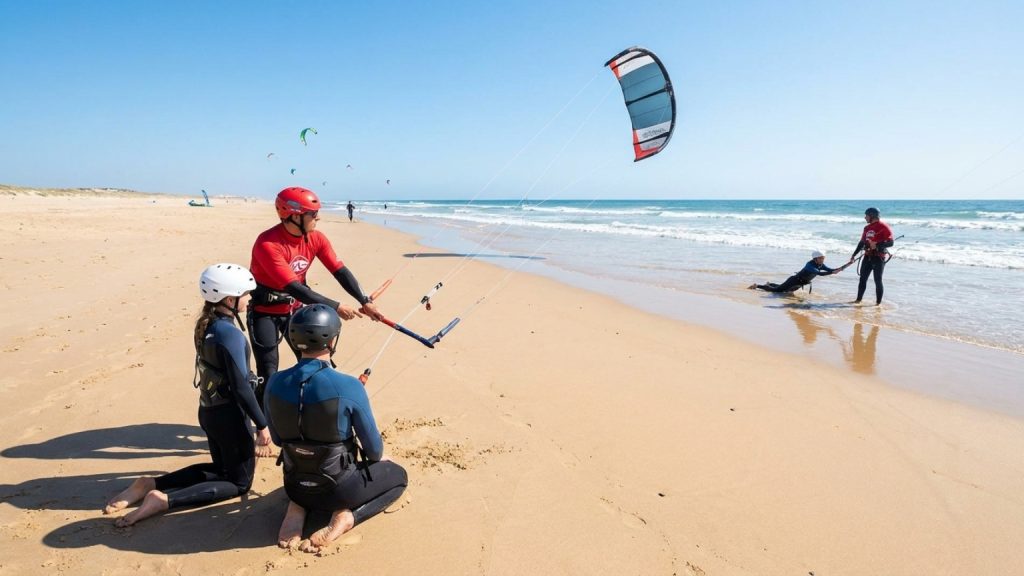
Many individuals dream of gliding across the water, powered by the wind, but feel uncertain about how to begin. The initial steps into kitesurfing can seem complex, with questions arising about safety, equipment, and the learning process. Understanding the foundational aspects of this sport is crucial for a successful start.
1. What is the core content of beginner kitesurf lessons?
Beginner kitesurf lessons focus on building a strong foundation for new riders. The instruction covers essential safety protocols and fundamental skills. This structured approach prepares individuals for independent riding after completing the course.
- Kite safety and theory: Understanding safety systems is crucial for all participants. The specialist explains how to use the quick release and leash to ensure immediate kite disconnection if needed.
- Kite control on land: Participants learn to manage a training kite in a controlled environment. This practice helps develop coordination and a feel for the wind before entering the water.
- Body dragging techniques: This technique involves using the kite’s power to move through the water without a board. It helps individuals understand kite steering and body positioning, for example, when recovering a lost board.
- Water starts: After mastering body dragging, the focus shifts to combining the board with the kite. This step requires coordination to stand up and ride the board for the first time.
- Right of way rules: Understanding basic rules on the water ensures safety and avoids collisions. These guidelines dictate who has priority in different situations during a session.
These initial lessons build a solid base for future kitesurfing progress. The acquired skills allow individuals to enjoy the sport safely and confidently.
2. Why is formal instruction crucial for beginner kitesurf lessons?
- Safety protocols: Instructors teach crucial safety rules and emergency procedures. They explain how to manage equipment safely in various wind conditions. For example, knowing how to activate the quick-release system prevents dangerous situations if the kite becomes uncontrollable.
- Correct technique: Proper instruction establishes good habits from the beginning. This prevents the development of inefficient techniques that are difficult to correct later. A specialist demonstrates the correct body position, kite control, and board handling.
- Equipment knowledge: Lessons introduce the different types of kites, boards, and harnesses. An instructor explains how each piece of gear works and its purpose. This understanding helps a person choose the right equipment for their skill level and local conditions.
- Wind and weather awareness: Kitesurfing relies heavily on understanding wind patterns and weather. Instructors teach how to read wind direction, strength, and potential hazards. They also explain how to interpret weather forecasts for safe and successful sessions.
- Faster progression: Structured lessons provide a clear and logical learning path. This systematic approach allows a student to advance more quickly and efficiently. It helps avoid common frustrations and ensures a smoother learning curve.
3. How is the learning process structured in beginner kitesurf lessons?
- Theoretical Introduction: The initial phase covers essential safety protocols and an understanding of the wind window. Students learn about different types of kites and the proper use of safety systems.
- Kite Control on Land: Instructors introduce students to flying a small training kite on the beach. This stage focuses on developing precise kite control, including launching, landing, and steering the kite through the wind window.
- Body Dragging in Water: After mastering land control, students move into the water without a board. Body dragging teaches them to use the kite’s power to move through the water, simulating the feeling of being pulled by the kite.
- Water Start Techniques: The next step involves combining kite control with standing on the board. Students practice the water start, aiming to rise onto the board and ride short distances across the water.
4. What are the next steps after completing beginner kitesurf lessons?
Completing beginner kitesurf lessons signifies a major step in a student’s journey. This initial training provides the essential skills for kite control, body dragging, and standing on the board. After these foundational lessons, a kitesurfer can then focus on refining techniques and gaining more independence on the water independence the water.
- Independent Practice: After beginner lessons, consistent practice is crucial. A kitesurfer should rent appropriate equipment and practice in safe, controlled conditions to solidify learned skills. For example, a student might spend several sessions riding short distances downwind, focusing on board control and kite steering.
- Advanced Lessons: Many kitesurfers choose to take advanced lessons to improve specific skills. These courses cover techniques such as riding upwind, performing turns, or making small jumps. An instructor provides personalized feedback to help the student progress efficiently.
- Equipment Selection: Understanding suitable equipment becomes important for continued progression. A kitesurfer learns to choose the correct kite size and board type based on wind conditions and personal skill level. This knowledge helps ensure safety and enjoyment during independent sessions.
- Safety and Weather Awareness: Continued attention to safety protocols and weather forecasting is paramount. An experienced kitesurfer always checks wind strength, direction, and potential hazards before entering the water. This careful approach prevents dangerous situations and protects other water users.
The period after beginner lessons is vital for developing confidence and proficiency. Consistent effort and further learning allow a kitesurfer to enjoy the sport safely and to its fullest potential.