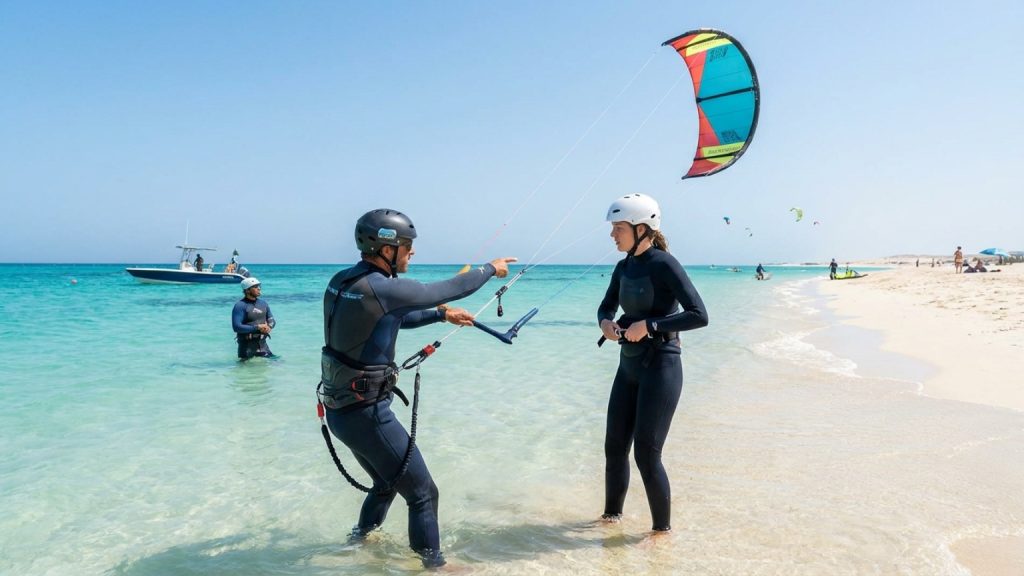
Many individuals find it challenging to master kitesurfing techniques in group settings. The lack of personalized feedback can hinder progress and extend the learning curve. This often leads to frustration and slower skill acquisition. Understanding the options for focused instruction is therefore important.
1. What is the nature of private kitesurf lessons?
Private kitesurf lessons involve one instructor working with a single student. This approach provides highly personalized attention throughout the learning process. The lesson structure adapts to the student’s individual needs and skill level. It offers a distinct advantage over group settings, allowing for more focused instruction.
- Personalized Pace: Each student learns at their own speed. A private lesson allows the instructor to adjust the teaching pace directly to the individual, ensuring full comprehension before moving to the next skill.
- Focused Feedback: The instructor provides immediate and specific feedback. This direct communication helps the student understand and correct mistakes quickly, improving technique more effectively.
- Customized Curriculum: The lesson plan is tailored to the student’s existing abilities and specific goals. For example, a beginner struggling with kite control can dedicate more time to that fundamental skill, while an intermediate student might focus on advanced maneuvers like transitions or small jumps.
- Enhanced Safety: The instructor’s undivided attention significantly increases safety during the session. This constant supervision minimizes risks and builds student confidence in challenging situations.
- Rapid Skill Progression: The combination of personalized attention and immediate feedback accelerates the learning curve. Students often achieve their desired skills much faster compared to a group environment.
Ultimately, private kitesurf lessons offer an efficient path to skill development. They ensure a more effective and tailored learning experience for every individual.
2. Why is personalized instruction in private kitesurf lessons so effective?
Personalized instruction significantly improves the speed and quality of skill development in kitesurfing. This approach tailors the entire learning experience to an individual student’s specific needs and capabilities. A focused, one-on-one environment also helps address particular challenges quickly, making the learning process more efficient.
- Individualized Feedback: The instructor provides immediate and specific feedback on every action. This helps the student understand and correct mistakes right away, preventing the formation of bad habits.
- Pacing and Progression: The lesson pace adjusts directly to the student’s learning speed and comfort level. This ensures a thorough mastery of each skill before advancing to more complex techniques.
- Safety Focus: The instructor can constantly monitor the student’s safety, equipment, and surrounding conditions. This close supervision greatly reduces risks and builds student confidence during practice sessions.
- Targeted Skill Development: Specific weaknesses or desired skills receive direct and concentrated attention. For example, a student struggling with launching the kite will receive focused coaching on that exact maneuver.
- Improved Equipment Use: The instructor selects and adjusts equipment best suited for the student’s size, current skill level, and prevailing wind conditions. This ensures best performance and comfort throughout the lesson.
Therefore, personalized instruction leads to faster and more confident skill acquisition in kitesurfing. This method makes the learning journey efficient, effective, and highly enjoyable for every student.
3. How does the process of private kitesurf lessons unfold?
Private kitesurf lessons offer a tailored learning path for students. The process focuses on individual needs and skill levels, ensuring efficient progress. An instructor guides the student through each step, making sure techniques are understood and correctly applied.
- Initial Assessment: The instructor first evaluates the student’s existing water sports experience and learning goals. For example, a complete beginner needs to learn kite control from scratch, while an intermediate student might want to master specific jumping techniques.
- Equipment Selection: The right gear is crucial for safety and effective learning. The instructor helps choose the appropriate kite size, board, and harness based on wind conditions and the student’s body weight.
- Theory and Safety Briefing: Before entering the water, essential safety rules and basic kitesurfing theory are covered. This includes understanding wind windows, safety systems, and right-of-way rules.
- Practical Application: Hands-on training begins in a controlled environment, often on the beach or in shallow water. Students practice kite launching, landing, body dragging, and water starts, repeating movements until proficiency is achieved.
- Feedback and Progression: The instructor provides continuous, real-time feedback on technique and offers adjustments. This personalized guidance helps students correct mistakes quickly and build confidence, allowing faster progression to advanced maneuvers.
This structured approach to private kitesurf lessons helps students build confidence and master skills quickly. It ensures a safe and effective learning environment, adapting to individual learning styles.
4. What steps are involved in choosing private kitesurf lessons?
Selecting private kitesurf lessons requires a thoughtful approach. A structured process helps ensure the lessons match a student’s specific needs and goals. This careful selection leads to more effective learning and faster skill development on the water.
- Assess skill level and goals: A student should first understand their current kitesurfing ability and what they aim to achieve. For example, a complete beginner needs foundational instruction, while an intermediate rider might focus on improving jumps or upwind technique.
- Research instructor qualifications: It is important to verify an instructor’s certifications and teaching experience. Certified instructors, such as those with IKO accreditation, follow recognized safety and teaching standards.
- Consider lesson structure and location: The details of the lesson plan and the chosen teaching spot significantly impact the learning experience. Some areas offer calmer, shallow waters ideal for initial practice, making the first steps easier.
- Review equipment and safety protocols: Students should confirm that modern, well-maintained equipment is provided and that strict safety procedures are in place. This ensures a secure learning environment and reduces risks during practice.
- Check reviews and recommendations: Feedback from previous students offers valuable insights into an instructor’s teaching style and overall effectiveness. This helps a prospective student make an informed decision about their private lessons.
Following these steps helps ensure a student selects private lessons that are well-suited to their individual progression. A good match between student and instructor promotes confidence and enjoyment in the sport.