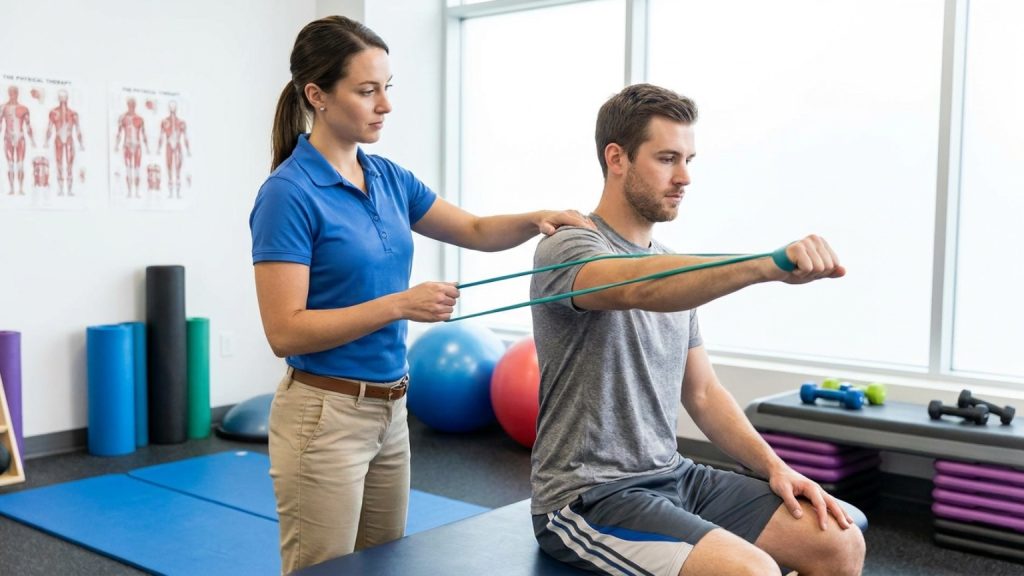
Do you struggle with daily movements or persistent discomfort? Many people experience limitations in their physical abilities, making simple tasks challenging. Kinesioterapia offers a specialized approach to address these issues. This therapy focuses on restoring your body’s natural function and improving overall mobility.
1. What is kinesioterapia: its definition and purpose?
Kinesioterapia is a therapeutic approach that uses movement to improve physical function and reduce pain. It is a core part of physical rehabilitation, focusing on restoring the body’s natural ability to move. This method helps individuals recover from injuries, manage chronic conditions, and prevent future physical issues.
- Definition of Kinesioterapia: Kinesioterapia, also known as kinesiotherapy, is a specialized form of physical therapy. It involves the use of carefully designed active and passive movements to treat various diseases or injuries affecting the musculoskeletal system.
- Primary Purpose: The main goal of this therapy is to restore normal body function, reduce discomfort, and prevent long-term disability. It helps patients regain control over their movements and improve their quality of life.
- Key Techniques Used: Therapists use a range of methods, including targeted exercises, gentle stretches, and specific manual therapy techniques. These are always tailored to meet each patient’s individual needs and recovery goals.
- Real-world Application: For example, a person recovering from knee surgery might do specific leg exercises as part of kinesioterapia. These movements help strengthen the muscles around the knee and increase its range of motion over several weeks.
- Broader Benefits: This therapy not only improves muscle strength, flexibility, and coordination but also enhances overall physical well-being. It promotes better circulation and can significantly reduce the need for pain medication.
Through its focus on structured movement, kinesioterapia empowers individuals to regain their physical abilities safely and effectively. It offers a clear, structured path towards better health and a more active, pain-free lifestyle.
2. Why is kinesioterapia important for recovery and well-being?
Kinesioterapia, also known as movement therapy, uses specific exercises and movements to restore physical function and improve health. It is crucial for recovery because it helps the body heal and regain strength after injury or surgery after injury surgery.
This therapy also plays a vital role in overall well-being by enhancing physical capabilities and reducing discomfort. For example, a person recovering from a knee injury can use kinesioterapia to strengthen muscles and improve joint movement.
- Pain Reduction: Kinesioterapia helps lessen pain by improving circulation and reducing muscle tension. Regular movement can also decrease inflammation in affected areas.
- Improved Mobility: This therapy increases range of motion and flexibility in joints and muscles. It allows you to move more freely and without restriction.
- Faster Recovery: By guiding the body through specific movements, kinesioterapia speeds up the healing process. It helps rebuild strength and function more quickly after an injury.
- Prevention of Future Injuries: Kinesioterapia strengthens weak areas and corrects poor movement patterns. This makes your body more resilient and less prone to re-injury.
- Enhanced Body Awareness: Through guided exercises, you learn how your body moves and functions. This awareness helps you maintain good posture and movement habits in daily life.
In summary, kinesioterapia is essential for both healing from physical issues and maintaining long-term physical health. It provides a structured approach to help you move better, feel better, and live an active life.
3. How is kinesioterapia addressed: the treatment process?
Kinesioterapia uses a structured process to help your body heal and move better. The journey begins with a detailed assessment to understand your specific needs and current physical state. After this, a personalized treatment plan is created just for you. This careful approach ensures that your care focuses directly on your unique condition and goals.
- Initial assessment: A therapist first evaluates your movement patterns, pain levels, and medical history. For example, if you report shoulder pain, they will observe your arm’s range of motion and identify any restricted movements.
- Personalized treatment plan: Based on the assessment, the therapist designs specific exercises and manual techniques. This plan aims to reduce pain, restore function, and prevent future issues.
- Manual therapy: Therapists use their hands to mobilize joints, stretch tight muscles, or apply gentle pressure. This helps to release tension, improve blood flow, and enhance tissue healing.
- Therapeutic exercises: You will learn specific movements designed to strengthen weak muscles, improve flexibility, or correct imbalances. For instance, you might do gentle stretches for a stiff neck or core stability exercises to support your back.
- Education and self-management: An important part of treatment involves learning about proper posture, body mechanics, and exercises to do at home. This empowers you to manage your condition and maintain improvements long after your sessions end.
The Kinesioterapia process is a partnership, with you actively participating in your recovery journey. By consistently following your plan, you can regain strength and significantly improve your daily quality of life.
4. What to do to start a kinesioterapia plan?
Starting a kinesitherapy plan requires a thoughtful approach to ensure it meets your specific health needs. This journey begins with understanding your body and consulting experts who can guide you. Taking the right initial steps helps create an effective and personalized treatment path for you.
- Consult a specialist: The first step is to see a qualified physical therapist or kinesiologist. They can accurately diagnose your condition and understand your physical limitations or goals. For example, if you have persistent knee pain, a specialist will assess its root cause, not just the symptom.
- Undergo an initial assessment: Your therapist will conduct a thorough physical examination and review your medical history. This helps them understand your movement patterns, strength, flexibility, and any areas of discomfort. They might ask about past injuries or daily activities that impact your body.
- Develop a personalized plan: Based on the assessment, the therapist will create a specific kinesitherapy plan just for you. This plan includes tailored exercises and techniques designed to improve your function, reduce pain, and prevent future issues. Someone recovering from a shoulder injury will receive exercises focused on restoring range of motion and strength.
- Commit to the process: Kinesitherapy requires consistent effort and patience to achieve lasting results. Regularly doing your prescribed exercises at home, in addition to your sessions, is vital for progress. Your commitment helps strengthen your body and improve your overall well-being.
- Communicate with your therapist: Openly share your progress, challenges, or any new discomfort with your therapist. This feedback allows them to adjust your plan as needed, making sure it remains effective and appropriate for your recovery. Good communication ensures your treatment stays on track.
Beginning a kinesitherapy plan is an investment in your physical health and long-term well-being. By following these steps, you can start a path toward better movement and a healthier life.