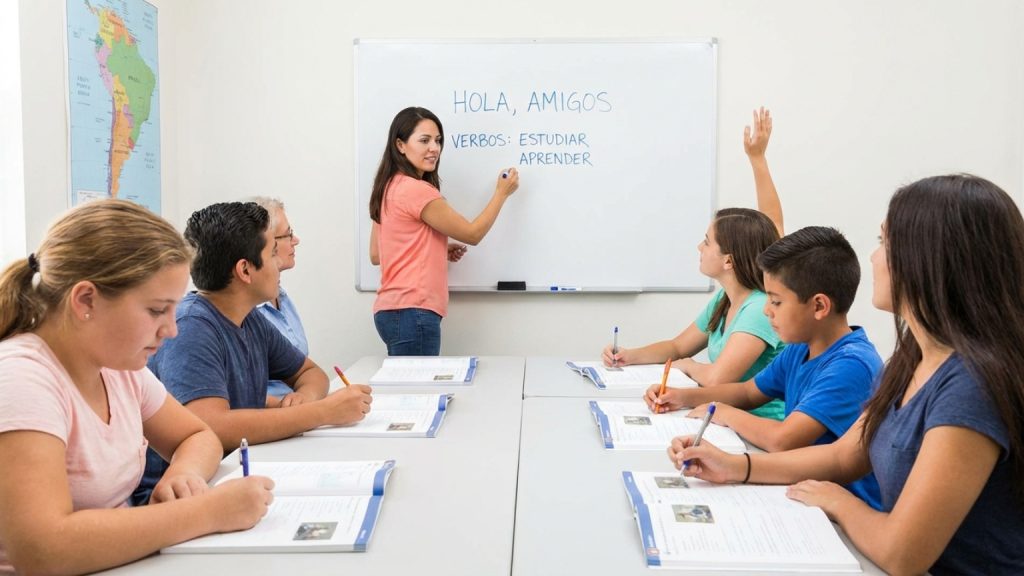
Do you find yourself wanting to learn Spanish but struggle with traditional methods or finding time? Many people face this challenge when trying to master a new language. We understand that effective learning requires flexibility and engagement. Let us explore how structured spanish classes can offer a solution for you.
1. What are spanish classes and what do they offer?
Spanish classes provide a structured way to learn the language. These classes offer guided instruction and a clear path for progress, which is often more effective than learning alone.
They help you build a strong foundation and develop your communication skills. Imagine trying to learn to play a musical instrument without a teacher; classes give you that essential guidance.
- Structured curriculum: You follow an organized plan from basic grammar to advanced topics. This ensures you learn in a logical order and do not miss important steps. For example, you learn basic greetings and verbs before moving to complex sentence structures.
- Native teachers: You learn from instructors who speak Spanish as their first language. They teach you correct pronunciation and share valuable insights into Spanish culture. This helps you sound more natural when you speak.
- Interactive practice: Classes give you many chances to speak, listen, and practice with others. You can engage in role-playing or group discussions. This active participation helps you use the language in real-life situations.
- Personalized feedback: Teachers give you specific advice on your strengths and areas for improvement. This targeted feedback helps you correct mistakes and refine your skills faster. For instance, a teacher might help you fix a common verb conjugation error.
- Cultural immersion: Beyond just grammar, you learn about the traditions, customs, and daily life of Spanish-speaking countries. Understanding the culture makes your language learning richer and more meaningful. You might discuss popular festivals or typical foods.
Spanish classes give you the tools and support needed to learn the language well. They offer a comprehensive experience that goes beyond rote memorization. This helps you become a confident Spanish speaker.
2. Why is the choice of spanish classes important for learning?
Choosing the right Spanish classes is crucial for your learning journey. The type of class you select directly affects how quickly and effectively you learn the language. A good fit ensures you stay motivated and reach your fluency goals. This decision can make a significant difference in your progress difference your progress.
- Teacher Expertise: Good teachers guide you through complex grammar and pronunciation. They help you understand cultural nuances, which improves your overall communication skills. For example, a teacher from Seville can explain local expressions and traditions, making your learning richer than just textbook Spanish.
- Curriculum Structure: A well-designed curriculum provides a clear path from basic to advanced topics. It ensures you build a strong foundation in grammar, vocabulary, and conversation skills.
- Learning Style Compatibility: Some students learn best in group settings, while others prefer one-on-one attention. Choosing classes that match your personal learning style makes the process more enjoyable and productive.
- Practice Opportunities: Effective classes offer many chances to speak and listen to Spanish. Regular interaction helps you gain confidence and apply what you learn in real conversations.
- Flexibility and Convenience: Online classes, for example, allow you to learn Spanish from anywhere, fitting into your schedule. This flexibility removes common barriers to consistent study, helping you maintain progress.
Therefore, taking time to choose your Spanish classes wisely is a critical first step. The right environment and teaching approach will greatly enhance your ability to learn and master the language.
3. How does the methodology of spanish classes work?
Spanish classes use various methods to help you learn the language effectively. These approaches focus on more than just memorizing words. They aim to make you comfortable speaking and understanding Spanish in real situations. This means you will practice using the language from the very beginning.
- Communicative Approach: This method focuses on real-life conversations. You learn to speak and understand by doing, not just by studying rules. For example, you might role-play ordering food in a Spanish restaurant.
- Grammar in Context: Instead of isolated rules, grammar is taught as it appears in actual speech. This helps you understand when and why to use specific structures. You see how verb tenses change when discussing daily routines.
- Cultural Immersion: Classes often include cultural elements to give you a deeper understanding of Spanish-speaking countries. Learning about traditions helps you connect with the language more deeply. This might involve discussing Spanish holidays or music.
- Personalized Feedback: Teachers give you specific advice on your speaking, listening, reading, and writing. This targeted help improves your skills quickly. For instance, a teacher might correct your pronunciation of a tricky Spanish sound.
- Interactive Activities: Many classes use games, group discussions, and paired exercises. These activities make learning fun and encourage participation. You could work with a classmate to describe a picture in Spanish.
This varied methodology creates an engaging learning environment. It helps you build confidence and truly use Spanish in your daily life.
4. What steps to take to find the right spanish classes?
Finding the right Spanish classes is key to successful learning. Many options exist, so choosing carefully helps you make good progress. You need to consider what works best for your personal goals and learning style.
- Define your learning goals: First, understand why you want to learn Spanish. Do you want to travel, use it for work, or prepare for an exam like DELE? Knowing your goal helps you find classes that fit your needs.
- Evaluate teaching methods: Think about how you learn best. Some classes focus on grammar, while others prioritize conversation. For example, if you want to speak fluently, look for classes that emphasize active communication and role-playing.
- Check teacher qualifications: Good teachers make a big difference. Look for instructors who are native speakers and have experience teaching Spanish. They can offer valuable cultural context and correct your pronunciation effectively.
- Consider class size and format: Decide if you prefer private lessons or group classes. Private lessons offer personalized attention, while group classes provide opportunities to practice with other students. Both options have their benefits.
- Look for trial lessons or reviews: Many schools offer a free trial class. This lets you experience the teaching style before you commit. Reading reviews from past students also gives you an idea of the class quality.
Taking these steps helps you choose Spanish classes that truly match your needs. A thoughtful choice leads to a more engaging and effective learning journey.