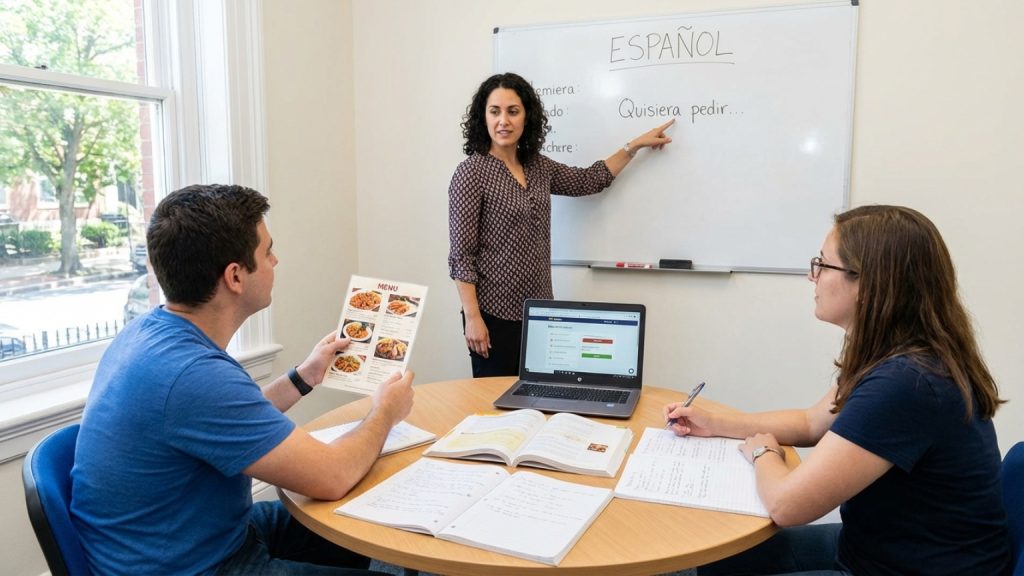
Do you feel overwhelmed by the many options for learning a new language? Many people want to speak Spanish but struggle to find a clear path. Understanding what spanish courses offer can simplify your journey. We will explore how these programs can help you achieve your language goals.
1. What are spanish courses and their main types?
Spanish courses are structured learning programs designed to teach you the Spanish language. These programs help you develop important skills in speaking, listening, reading, and writing.
They use a clear curriculum to guide your progress from basic concepts to advanced fluency. For example, a beginner course might teach you how to introduce yourself and order food in a restaurant order food restaurant.
- Beginner Courses: These courses introduce you to the basics of Spanish grammar and vocabulary. You learn essential phrases for everyday situations, such as greetings or asking for directions.
- Intermediate Courses: After mastering the basics, these courses help you expand your vocabulary and tackle more complex grammar. You can start to hold longer conversations and understand more nuanced expressions.
- Advanced Courses: These courses focus on achieving near-native fluency and understanding complex cultural contexts. You will practice discussing abstract topics and reading advanced literature.
- Conversation Courses: The main goal of these courses is to improve your speaking and listening skills. They offer many opportunities to practice real-life dialogues and interact with others.
- DELE Preparation Courses: These specific courses prepare you for the official DELE exams, which certify your Spanish language level. They cover all exam sections, including reading, writing, listening, and speaking, with targeted practice.
Choosing the right type of Spanish course depends on your current level and learning goals. Understanding these options helps you pick a path that best fits your needs to learn Spanish effectively.
2. Why are the benefits of structured spanish courses important for learning?
- Clear learning path: Structured courses guide you through the language from basic to advanced levels. For example, a beginner course starts with simple greetings and introductions before moving to more complex verb tenses. This helps you avoid confusion about what to study next.
- Expert guidance: Native teachers provide essential feedback and correct your mistakes. They can explain difficult concepts, like the difference between «ser» and «estar,» in a way that textbooks cannot. This personalized help is key for quick improvement.
- Consistent practice: Regular classes and homework assignments ensure you practice often. This routine builds your confidence and helps you remember new words and grammar rules. Daily exercises, for instance, make new vocabulary stick in your memory better.
- Motivation and accountability: Being part of a course helps you stay motivated. You have set class times and often work with classmates, which encourages you to keep studying. Knowing you have a lesson next week prompts you to review your notes.
- Cultural context: Many courses include valuable insights into Spanish culture. Understanding traditions and customs makes the language more meaningful and helps you use it correctly in real situations. Learning about Spanish holidays, for example, helps you grasp common phrases used during those times.
3. How to make the selection of effective spanish courses for your needs?
Choosing the right Spanish courses is important for learning effectively. You should consider your personal goals and how you learn best. An effective course matches your needs and helps you progress steadily. This thoughtful selection makes your learning journey more successful.
- Your learning goals: Think about why you want to learn Spanish. For example, if you plan to travel to Spain, a course focused on conversational phrases and cultural insights would be more useful. This is better than one only on grammar rules.
- Teacher expertise: Good teachers make a big difference in how well you learn. Look for native speakers who have experience teaching Spanish as a second language.
- Course format: Decide if you prefer group classes or private lessons. A private class, for instance, offers more direct feedback and tailored content for your specific challenges.
- Flexibility and schedule: Your course needs to fit into your daily life. Online options often provide flexible times, letting you learn even with a busy work schedule.
- Curriculum focus: Examine what the course teaches. Some courses prioritize conversation, while others focus on grammar or preparing for official exams like DELE.
By carefully evaluating these points, you can find Spanish courses that truly meet your expectations. This ensures your time and effort lead to real language progress.
4. What are the first steps in starting your spanish courses journey?
- Define your goals: Understanding why you want to learn Spanish is the first step. This helps you choose the right course content and stay motivated. For example, if you want to travel to Spain, you might focus on common travel phrases and cultural insights.
- Assess your level: Knowing where you stand helps you find suitable materials. Many online courses offer placement tests to guide you. If you are a complete beginner, starting with basic greetings and phonetics is essential.
- Choose a learning method: Decide if you prefer live online classes, self-paced apps, or in-person lessons. Live online courses with native teachers often provide better conversational practice and immediate feedback.
- Set a consistent schedule: Regular practice is vital for language acquisition. Even short, daily sessions are more effective than long, infrequent ones. For instance, dedicating 30 minutes each day ensures steady progress.