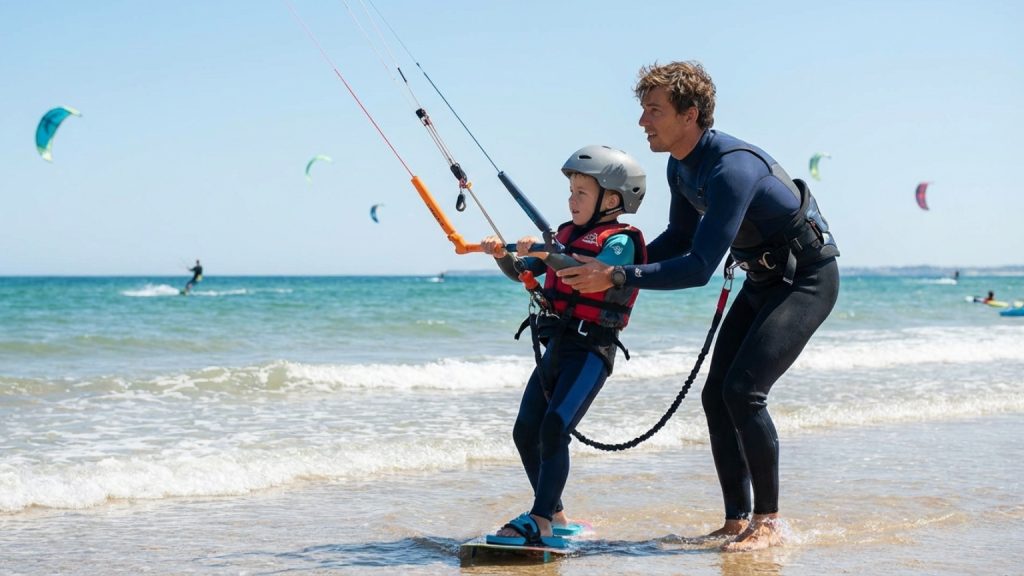
Are you looking for an exciting outdoor activity for your child but worry about safety? Many parents consider water sports like kitesurfing, wondering if it is appropriate for younger participants. We understand these concerns and want to help you make an informed decision about this dynamic sport.
1. What is kitesurfing for children?
- Adapted Equipment: Children use smaller kites and boards designed for their lighter weight and size. This specialized gear makes controlling the equipment much easier and safer for younger participants to manage.
- Focus on Safety: Instructors teach crucial safety protocols from the very first lesson. Children learn how to understand wind conditions, how to release the kite safely, and what to do in different situations.
- Professional Supervision: Certified instructors always guide children through every step of their kitesurfing journey. They ensure a secure and supportive learning environment, giving parents peace of mind. For example, an instructor will always be nearby, holding a safety line or giving clear verbal commands.
- Skill Development: This activity helps kids build important physical skills like balance, coordination, and core strength. They also learn about wind dynamics, ocean currents, and general water safety, which are valuable life skills.
- Fun and Engagement: Kitesurfing offers an exciting and active way for children to enjoy the outdoors and connect with nature. Many kids find a great sense of achievement and confidence as they learn to ride the water.
2. Why is kitesurfing a beneficial sport for children?
- Physical Strength and Balance: Kitesurfing builds strong core muscles and improves overall balance. Children learn to coordinate their body movements with the kite and board. For example, a child must use their legs to steer the board while also pulling on the control bar to direct the kite.
- Focus and Discipline: This sport demands constant attention and understanding of wind conditions. Children develop patience and learn to read the environment around them. They practice observing wind direction and strength, which helps them make quick decisions.
- Problem-Solving Skills: Kitesurfing presents various situations that require quick thinking and adaptation. Children learn to adjust their technique and find solutions independently. For instance, if the wind changes suddenly, a child must quickly decide how to adjust their kite to stay in control.
- Confidence and Self-Esteem: Mastering kitesurfing gives children a great sense of achievement. Successfully riding waves or performing a new maneuver increases their belief in themselves. This boost in confidence can extend to other areas of their lives, such as school or social interactions.
- Connection with Nature: Kitesurfing allows children to experience the ocean and wind firsthand. They gain a deeper appreciation for natural elements and marine environments. This direct interaction helps them understand environmental factors like tides and weather patterns.
3. How to determine if your child is ready for kitesurfing?
Deciding if your child is ready for kitesurfing involves looking at several important factors. We recommend considering their age, physical strength, and how well they follow instructions. These elements help ensure a safe and enjoyable learning experience for them. Assessing these points carefully will guide your decision.
- Age and maturity: Most children can start kitesurfing around 8 to 12 years old. They need enough maturity to understand safety rules and stay focused during lessons.
- Physical strength and coordination: Kitesurfing requires some arm and core strength to manage the kite. Your child should also have good body coordination, similar to what is needed for other sports.
- Swimming skills: It is essential that your child can swim well and feels comfortable in the water. This skill is fundamental for their safety in the ocean.
- Ability to follow instructions: Your child must listen carefully and respond quickly to an instructor’s directions. For example, if your child can understand and act on commands during other sports, they might be ready for kitesurfing.
- Genuine interest: The child should genuinely want to learn kitesurfing, not just be pushed into it. Their motivation makes the learning process much more effective and fun.
Observing these signs will help you make an informed choice for your child. Always consult with certified instructors to assess your child’s specific readiness for this exciting sport.
4. What steps should you take to start kitesurfing for children safely?
- Seek professional instruction: Always enroll your child in a certified kitesurfing school. Qualified instructors understand how to teach children safely and effectively, using methods suited for their age.
- Assess age and maturity: Not all children are ready for kitesurfing at the same age. Consider your child’s ability to focus, follow instructions, and understand risks before starting lessons.
- Use child-specific equipment: Ensure your child uses kites and boards designed for their size and weight. Smaller gear is easier to control and reduces the physical demands, making learning safer.
- Choose a safe learning location: Select spots with shallow, flat water and consistent, light winds. These conditions minimize risks and allow children to practice in a controlled, less intimidating setting.
- Follow a gradual learning path: Children should begin with basic kite control on land before entering the water. This step helps them build confidence and essential skills without added complexity.