Starting kitesurfing can feel overwhelming, with so much to learn before you even get on the board. You might wonder where to begin or what skills are truly essential. Understanding the core techniques from the start is crucial for a safe and enjoyable learning experience.
1. What are the basic kitesurfing techniques every beginner should know?
Learning kitesurfing requires mastering a few fundamental techniques before you can ride the waves. These skills build your confidence and ensure your safety on the water. Focusing on these basics will make your learning process smoother and more enjoyable.
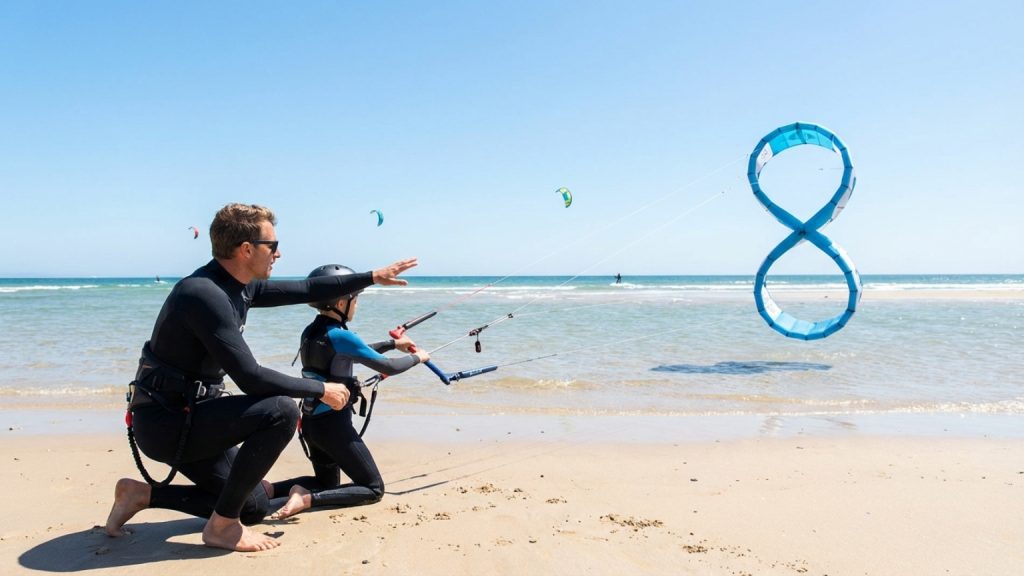
- Kite Control on Land: You must first learn to manage the kite while standing on the beach. This involves understanding wind windows and practicing flying the kite in different directions, often with a smaller trainer kite. For example, you can practice flying the kite in a figure-eight pattern without looking at it, which shows good muscle memory.
- Body Dragging: After mastering land control, you will learn to use the kite to pull your body through the water without the board. This technique helps you understand kite power and how to move in the water. An important part of this is learning to body drag upwind to retrieve your board if you lose it.
- Water Start: This is the crucial step where you get up on the board for the first time. It requires coordinating your kite movements with your body and board position to generate enough power to stand. You will practice getting the board on your feet, positioning the kite, and then smoothly standing up as the kite pulls you forward.
- Riding Upwind: Once you can water start, you need to learn how to ride against the wind to return to your starting point. This involves angling your board and kite correctly to generate lift and move diagonally across the wind. Without this skill, you would always drift downwind and have to walk back up the beach.
Mastering these core techniques is essential for any aspiring kitesurfer. Consistent practice and patience will help you progress quickly and safely.
2. Why is understanding basic kitesurfing techniques fundamental for your safety?
Kitesurfing offers an exciting experience, but it also carries inherent risks. Understanding basic kitesurfing techniques is fundamental for your safety on the water. These essential skills help you maintain control over your equipment and prevent dangerous situations. Without them, you risk injury to yourself and others.
- Kite Control: This skill is essential for managing the kite’s power and direction. Without proper control, you might get pulled unexpectedly or crash your kite, which can be dangerous.
- Body Dragging: This technique lets you move through the water without your board. For example, if you fall and your board drifts away, body dragging allows you to retrieve it safely.
- Self-Rescue Procedures: These steps teach you how to handle equipment failures or unexpected wind changes. Learning to pack down your kite and swim to shore is vital if you are far from land.
- Understanding the Wind Window: Knowing where your kite generates power is crucial for safe launching and landing. Launching your kite too far into the power zone on land can cause an uncontrolled pull.
- Right of Way Rules: These rules help prevent collisions with other riders and water users. Following them ensures a safer environment for everyone sharing the water.
Mastering these foundational techniques builds confidence and significantly reduces risks. This preparation allows you to enjoy kitesurfing fully and safely.
3. How is the learning of basic kitesurfing techniques done step by step?
Learning basic kitesurfing techniques follows a clear, step-by-step process. This structured approach helps you build skills safely and effectively. You will learn each new skill before moving to the next, ensuring a solid foundation ensuring solid foundation.
- Understanding theory and safety: Before touching the water, you learn about wind windows, safety systems, and equipment setup. This fundamental knowledge is crucial for a safe experience and helps you understand how the kite works.
- Kite control on land: You begin by flying a small training kite on the beach to understand wind direction. This step helps you develop essential kite steering skills and feel the wind’s power before using a larger kite.
- Body dragging in water: Next, you enter the water without the board and let the kite pull you across the surface. This practice teaches you how to control the kite while moving and how to recover your board if you lose it.
- Water start technique: After mastering body dragging, you learn to put on the board and stand up with the kite’s help. This is often the most exciting and challenging part for beginners, requiring coordination between kite and board.
- First rides and steering: Finally, you will make your first short rides across the water, focusing on maintaining speed and direction. You also practice changing direction and maintaining balance, which are key for continuous riding.
Mastering these basic techniques requires patience and consistent practice. With proper instruction, you will quickly gain the confidence to enjoy kitesurfing.
4. What to do for the practical application of basic kitesurfing techniques?
Learning basic kitesurfing techniques requires practical application on the water. You must move beyond understanding theoretical concepts to actively performing each action. This hands-on experience is crucial for building essential muscle memory and confidence. Consistent practice helps you master each skill before you move to more advanced maneuvers.
- Kite Control on Land: Before entering the water, you must practice flying the kite on land in a safe area. This helps you understand the wind window, how to generate power, and how to safely depower the kite.
- Body Dragging: Next, learn to use the kite to pull your body through the water without the board. This technique teaches you directional control, proper body positioning, and how to retrieve your board if you lose it.
- Water Starts: Mastering water starts involves combining precise kite control with getting onto your board. You must coordinate the kite’s power with your body and board position to stand up smoothly and begin riding.
- Riding Upwind and Downwind: Once you are riding, you need to learn how to steer both upwind and downwind effectively. This skill allows you to control your position on the water, return to your starting point, and avoid drifting too far.
- Self-Rescue: Always practice self-rescue techniques to handle unexpected situations safely while on the water. This involves packing down your kite in the water, wrapping your lines, and swimming back to shore if needed.
Regularly practicing these fundamental techniques will build a strong foundation for your kitesurfing journey. Patience, consistent repetition, and professional guidance are key to becoming a confident and skilled rider.