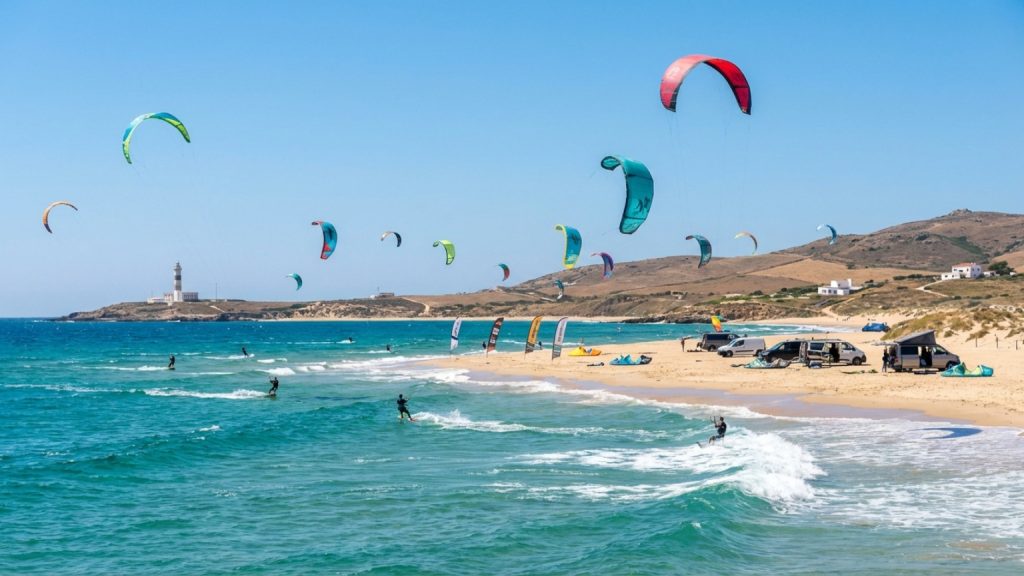
Are you searching for the perfect place to kitesurf in Spain? Choosing the right location can be challenging with so many beautiful coastlines. You need to consider wind conditions, wave types, and local facilities. This guide helps you discover ideal spots for your next kitesurfing trip.
1. What characteristics define the best kitesurf spots in Spain?
- Consistent wind: Reliable wind is crucial for kitesurfing. Spots with thermal winds or open coastlines often provide steady and predictable conditions, allowing for longer and more consistent sessions.
- Appropriate water conditions: Some riders prefer flat water, which is perfect for learning new tricks and improving control. Others seek challenging waves for jumping and surfing, which offers a different kind of excitement.
- Ample space and safety: Large sandy beaches offer plenty of room to launch and land kites safely, reducing the risk of accidents. Shallow areas near the shore are also ideal for beginners, making it easier to stand up and practice.
- Good local infrastructure: The best spots often have certified schools, equipment rental shops, and professional rescue services. This comprehensive support system helps you learn safely and ensures assistance is available if needed.
- Vibrant community and accessibility: Many top spots boast a lively atmosphere with cafes, restaurants, and a strong community of fellow kitesurfers. Easy access to the beach and amenities enhances the overall experience and makes your trip more enjoyable.
2. Why is the choice of kitesurf spots in Spain crucial for your experience?
Choosing the right kitesurf spots in Spain is very important for your experience. The location directly affects your safety, learning speed, and overall enjoyment.
A good spot provides the right conditions for your skill level, helping you make the most of your time on the water. We want you to have the best possible kitesurfing adventure.
- Wind Consistency: Reliable wind is key for learning and practice. Some spots offer consistent thermal winds, while others depend on specific weather patterns, which can be less predictable. For example, Tarifa is famous for its almost constant Levante and Poniente winds, making it a top choice for consistent riding days.
- Water Depth and Conditions: Shallow, flat water is ideal for beginners to practice body dragging and water starts safely, reducing frustration. Deeper water or wavy conditions, however, suit more experienced riders looking for a challenge. You will learn faster and feel more secure in water that matches your current skill level.
- Crowd Levels: Less crowded areas provide more space and reduce collision risks, especially for those learning to control their kite. A busy beach can make it hard to launch, land, and practice maneuvers without constant worry for yourself and others. Choosing a dedicated kitesurf zone or a less popular spot during peak times is often best.
- Available Infrastructure: Access to certified schools, equipment rentals, and rescue services makes a big difference in your learning journey. These services ensure you have proper instruction, well-maintained gear, and crucial support if needed during your session. This is why many people prefer spots with established kitesurfing communities and facilities.
Careful selection of your kitesurf destination ensures a safer and more rewarding experience. It helps you progress quickly and enjoy every moment on the water.
3. How to identify kitesurf spots in Spain that suit your level?
Choosing the right kitesurf spot in Spain depends greatly on your skill level. Matching the location’s conditions with your experience is important for a good time. This approach helps you stay safe and also lets you improve your technique effectively.
- Wind conditions: Beginners should look for spots with lighter, more consistent winds, typically between 10 to 15 knots. Stronger, gustier winds are better for experienced riders who can handle these challenges.
- Water type: Flat, shallow water provides an ideal learning environment for new kitesurfers. Spots with larger waves or strong currents are more suitable for advanced riders who want to try tricks or wave riding.
- Space and obstacles: Wide, open beaches with few obstacles like rocks or buildings offer a safer area for learning and practicing. Crowded spots or those with many hazards can be difficult for less experienced individuals. For example, some parts of Tarifa can get very busy, which might not be ideal for your first solo session.
- Local services: Check if the spot has kitesurf schools, rental shops, or rescue services available. These services are especially helpful for beginners and intermediate riders who might need support or equipment.
Considering these points helps you select a kitesurf spot that truly suits your ability. This ensures you have a positive and safe experience while enjoying Spain’s beautiful coastlines.
4. What to consider when planning your trip to kitesurf spots in Spain?
Planning a kitesurf trip to Spain requires careful thought to ensure a great experience. You should consider several factors before you pack your bags and head to the coast head the coast.
These considerations help you choose the best spot and time for your skill level. For example, Tarifa is famous for its strong Levante and Poniente winds, which are perfect for kitesurfing, but you need to know which wind suits you best.
- Wind Conditions: Wind is the most important factor for kitesurfing. Research the typical wind patterns and strengths for your chosen spot, as some locations are better for certain wind directions.
- Season and Weather: The time of year significantly impacts your trip. summer offers warmer water and air, but some spots can get crowded, while spring and autumn often provide good winds with fewer people.
- Your Skill Level: Consider if you are a beginner, intermediate, or advanced rider. Some spots have calmer waters ideal for learning, while others offer challenging waves for experienced kitesurfers.
- Equipment and Lessons: Think about whether you need to rent equipment or take lessons. Many popular spots, like Tarifa, have schools that offer certified instructors and a wide range of gear for rent.
- Local Amenities: Look into accommodation, food options, and other activities near your chosen spot. Having good facilities nearby makes your trip more comfortable and enjoyable after a long day on the water.
By thinking about these points, you can make sure your kitesurfing trip to Spain is well-planned. This preparation helps you find the perfect conditions and enjoy your time on the water to the fullest.