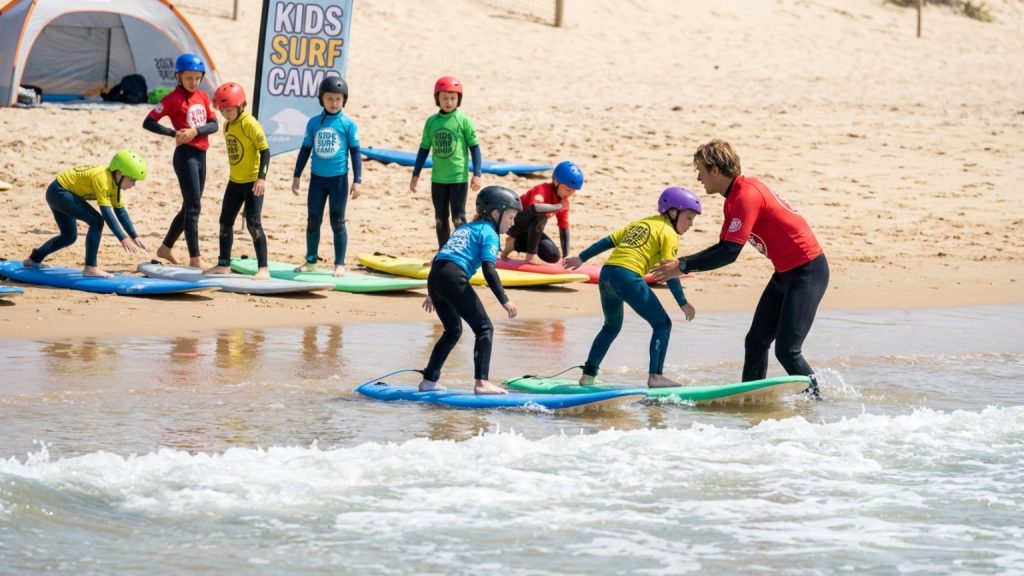
Are you searching for an exciting and healthy activity for your child this summer? Many parents wonder how to combine fun with skill development. Kids surf offers a unique solution, providing both physical challenge and personal growth in a safe ocean environment. We will explore what kids surf truly means.
1. What is kids surf and what does it mean for young learners?
Kids surf refers to specialized surfing programs designed for children and teenagers. These programs offer a safe and structured way for young people to learn how to surf. It is much more than just riding waves; it teaches valuable life skills and promotes a deep connection with the ocean.
- Skill Development: Children learn fundamental surfing techniques, such as paddling, catching waves, and standing on the board. This process greatly improves their balance, coordination, and agility.
- Ocean Awareness: Young learners develop a strong understanding of ocean safety, currents, and marine environments. For example, they learn to identify safe swimming areas and understand why certain waves break in particular ways.
- Confidence Building: Surfing challenges kids to overcome fears and persist through difficulties. Successfully catching a wave helps them feel capable and proud of their achievements.
- Physical Fitness: Surfing is an excellent full-body workout that strengthens muscles and increases stamina. It provides a fun and active way to stay healthy outdoors.
- Social Interaction: Kids meet new friends and learn to work together in a supportive group setting. They also practice good sportsmanship and respect for others.
These programs provide a unique blend of physical activity, environmental education, and personal growth. Your child gains not only surfing skills but also important qualities that help them in many areas of life.
2. What are the benefits of kids surf for your child’s development?
Kids surf offers more than just a fun activity; it helps your child grow in many important ways. This sport provides a unique path for both physical and mental development. Through learning to surf, children build essential skills that benefit them inside and outside the water.
- Physical fitness: Surfing is a full-body workout that improves strength, balance, and coordination. Paddling and standing on a board use many different muscles and also increase stamina. For example, a child learns to paddle vigorously, building arm and core strength without even realizing it.
- Confidence and self-esteem: Successfully catching and riding a wave gives children a huge sense of accomplishment. This helps them believe in their own abilities and encourages them to face new challenges. Imagine a child who was hesitant at first, feeling immense pride after riding their very first wave to the shore.
- Connection with nature: Kids surf teaches respect for the ocean and its powerful environment. Children learn directly about tides, waves, and marine life, fostering a deeper appreciation for nature. They see firsthand how the ocean changes each day.
- Social skills: Surfing often happens in group settings, which naturally promotes teamwork and friendship. Children learn to share waves, encourage their peers, and build camaraderie with others. For instance, kids frequently cheer for their friends when they successfully catch a wave, creating a supportive atmosphere.
- Patience and persistence: Learning to surf takes time, practice, and many attempts. Children learn not to give up, even after falling multiple times, understanding that effort leads to progress. This teaches them to keep trying until they reach their goal.
Engaging in kids surf provides a dynamic environment for your child to develop important life skills. It positively impacts their overall growth, making them stronger and more confident individuals.
3. How does the process of learning kids surf work?
Learning to surf for kids follows a clear, step-by-step process designed for safety and fun. We guide your child through essential skills, starting on the sand and moving into the water.
This approach helps them build confidence and competence with each session. For example, a typical first lesson begins with basic ocean awareness before ever touching a surfboard in the water.
- Safety and Awareness: We always start with important safety lessons. Your child learns about beach rules, ocean conditions, and how to stay safe around waves.
- Land-Based Practice: Before going into the ocean, children practice fundamental movements on the sand. They learn how to paddle, pop up, and balance on the surfboard.
- Catching First Waves: Instructors then help your child catch small, gentle waves in shallow water. We provide support and gentle pushes, making sure they feel secure.
- Building Water Confidence: As they get more comfortable, children gain greater independence in the water. They learn to paddle for waves and manage their board with less help.
- Skill Progression: The learning path moves from riding waves lying down to kneeling, and then standing up. Each new skill builds on the previous one, improving their balance and technique.
This structured learning journey is both rewarding and enjoyable for your child. It helps them develop new physical skills and grow their self-assurance in the ocean.
4. What should you consider when choosing kids surf for your child?
When you choose a kids surf program for your child, several key factors deserve your attention. Making the right decision ensures your child has a safe, fun, and educational experience. A good program helps them learn surfing skills and also builds their confidence in the water.
- Safety Protocols: Look for clear safety rules and certified instructors. Check the student-to-instructor ratio, as a small group size, like 1:4, means your child gets more direct attention and supervision.
- Instructor Experience: Ensure instructors have experience teaching children and hold relevant certifications in surfing and first aid. Experienced teachers make learning both effective and enjoyable for young surfers.
- Program Structure: Understand the daily schedule and what skills your child will learn. A well-designed program balances structured lessons with free time and fun activities.
- Location Suitability: The surf spot should be safe and appropriate for beginners. Gentle waves and clear water create the best learning environment for kids.
- Group Dynamics: Consider the age range and size of the groups. Smaller groups often allow for more personalized coaching and foster a stronger sense of community among young surfers.
By carefully considering these aspects, you can choose a kids surf program that perfectly suits your child’s needs. This thoughtful selection will lead to skill development and create wonderful, lasting memories for them.