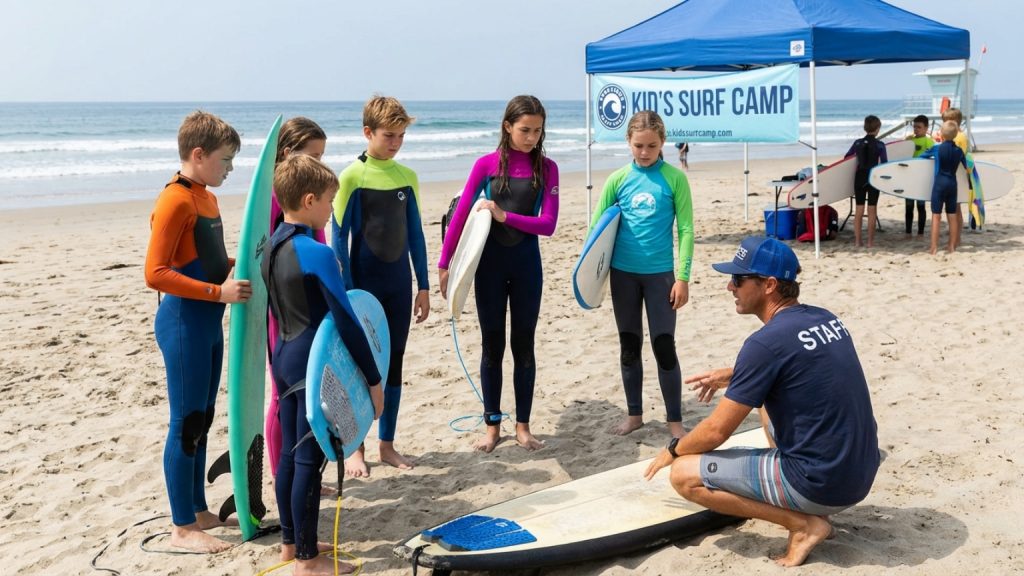
Are you searching for a unique summer experience that combines fun, learning, and physical activity for your child? Finding the right program can be challenging, especially when you want something more than typical summer options. We understand you want your child to build confidence and new skills in a supportive setting.
1. What is the definition of surf camps for kids?
Surf camps for kids are specialized summer programs. They teach children how to surf in a safe and supportive ocean environment.
These camps help kids learn new skills, build confidence, and develop a love for the ocean. For example, a child who has never seen a surfboard can learn to catch a wave by the end of the week.
- Professional Instruction: Children receive lessons from experienced and certified instructors. They are taught step-by-step, from paddling to standing on the board.
- Safety Protocols: Camps prioritize safety with constant supervision and appropriate gear. This includes teaching kids about ocean currents and beach rules.
- Skill Building: Kids develop physical skills like balance, coordination, and strength. They also learn patience and perseverance as they practice new techniques.
- Social Connection: Participants meet other children who share an interest in surfing. This creates opportunities for making new friends and teamwork.
- Ocean Education: Camps often include lessons on ocean awareness and marine conservation. Children learn to respect the environment while having fun.
Overall, surf camps for kids offer a unique and enriching summer experience. They combine outdoor adventure with valuable life lessons and skill development.
2. Why are surf camps for kids beneficial for development?
Surf camps offer more than just a chance to learn how to ride waves. These camps provide a unique environment that helps children grow in many important ways. Kids develop new skills, build confidence, and learn to appreciate the ocean.
- Physical Development: Surfing greatly improves a child’s strength, balance, and coordination. Kids get healthy exercise outdoors, which is good for their overall fitness. For example, a child who struggles with balance on land often finds their core strength improves significantly after a week of catching waves.
- Confidence and Resilience: Learning a challenging new skill like surfing boosts a child’s self-esteem. They learn to handle falls and try again, which builds strong resilience. When a child finally stands up on a surfboard after several tries, the sense of accomplishment is huge and carries over into other areas of their life.
- Social Skills: Camps involve group activities and teamwork, encouraging children to interact. Kids learn to cooperate, share, and make new friends. Sharing waves and cheering for peers helps children develop strong bonds and practice good sportsmanship.
- Connection with Nature: Spending time in the ocean helps kids appreciate the natural world. They learn about marine life, ocean safety, and environmental care. Children often develop a deeper respect for the ocean after learning about tides and local ecosystems from their instructors.
- Discipline and Patience: Surfing requires waiting for waves and understanding ocean conditions. Kids learn patience and follow instructions from their coaches. Waiting for the perfect wave teaches kids to observe their surroundings and control their impulses, skills useful beyond the beach.
These experiences help children build important life skills in a fun and active setting. Surf camps provide a valuable opportunity for kids to learn, grow, and create lasting memories.
3. How to choose the right surf camps for kids?
Choosing the best surf camp for your child requires careful thought. You want a place where your child feels safe, learns well, and has fun. Consider several key factors before making your decision. This ensures a positive and memorable summer experience for them.
- Safety Protocols: Look for camps with clear safety rules and certified staff. For example, ensure instructors have lifeguard and first aid certifications. They should also maintain a low student-to-instructor ratio, perhaps one instructor for every five kids.
- Instructor Experience: Good instructors make a big difference in how well your child learns. Ask about their surfing background and experience working with children. Experienced teachers create a supportive and encouraging learning environment.
- Program Activities: A varied program keeps kids engaged throughout the day. Beyond surfing, check for activities like beach games, ocean awareness lessons, or art projects. This helps children develop a broader appreciation for the marine environment.
- Group Size and Age Match: Smaller groups mean more personal attention for each child. Confirm that the camp separates children into appropriate age and skill levels. This ensures your child learns at their own pace and feels comfortable.
- Location and Facilities: The camp’s location should offer safe, beginner-friendly waves. Also, consider practical facilities like shaded areas, changing rooms, and easy beach access. These details contribute to overall comfort and convenience.
Selecting the right surf camp helps your child gain new skills and build confidence. Taking time to research these aspects will lead to a truly rewarding summer adventure.
4. What steps can you take to prepare for surf camps for kids?
Preparing your child for a surf camp can make their experience even better. A little planning helps them feel ready and excited for their time in the water. These simple steps ensure your child is comfortable, safe, and eager to learn new skills. This preparation helps them get the most out of their camp experience.
- Swimming ability: Ensure your child can swim comfortably and confidently in the ocean. This skill is a basic safety requirement for any water sport and builds their confidence.
- Physical fitness: Encourage some light physical activity before camp, like running or playing outside. This helps build the strength and endurance needed for paddling and balancing on a surfboard.
- Sun protection: Teach your child about the importance of sunscreen and wearing protective clothing. For example, make sure they know to apply waterproof sunscreen to exposed skin before each session.
- Appropriate gear: Help your child pack essential items like a swimsuit, towel, hat, and a reusable water bottle. Having their own gear ready makes them feel prepared for the day.
- Manage expectations: Talk to your child about what they will learn and experience at camp. Explain that learning to surf takes practice and patience, and falling is a normal part of the process.
Taking these simple steps will help your child feel ready and excited for their surf camp adventure. A well-prepared child is more likely to enjoy the experience and gain confidence in the water.