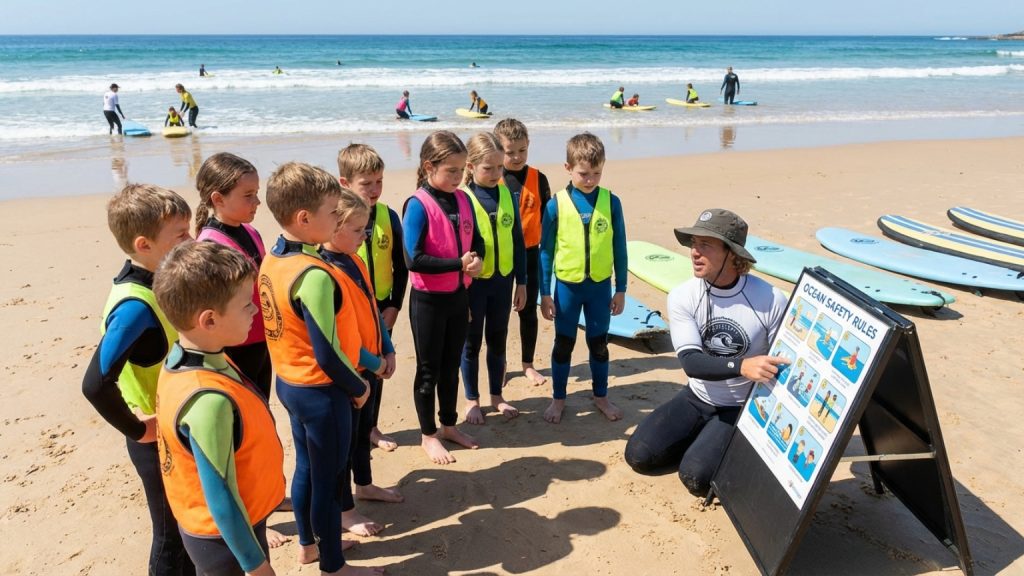
Finding safe and engaging activities for your child can be challenging, especially when considering water sports. You want your child to learn new skills and have fun in a supportive environment. Choosing the right surf school for kids can feel overwhelming, but we are here to help.
1. What is the primary focus of a surf school for kids?
A kids’ surf school primarily focuses on creating a safe, fun, and educational experience for young surfers. We aim to introduce children to the ocean and the sport of surfing in a supportive environment surfing supportive environment.
Our goal is to teach fundamental skills while also building confidence and a deep respect for marine life. For example, we see kids’ excitement when they catch their first wave, which shows their quick learning and joy.
- Safety First: The top priority is always the well-being of every child in our care. This includes careful supervision, proper equipment use, and teaching essential ocean safety rules.
- Skill Development: We focus on teaching core surfing techniques in a step-by-step manner. Children learn everything from paddling and wave judgment to standing up and riding small waves.
- Fun and Engagement: Making the learning process enjoyable keeps children motivated and eager to return. Our instructors use games and positive reinforcement to ensure every session is exciting and memorable.
- Ocean Awareness: Kids learn about the ocean environment, including tides, currents, and marine creatures. This knowledge helps them understand and respect the powerful natural world they are playing in.
- Confidence Building: Surfing helps children overcome challenges and develop self-assurance. Each successful wave ride or new skill learned boosts their belief in their own abilities.
Ultimately, a surf school for kids seeks to provide more than just lessons; it offers a chance for personal growth. We want children to leave with new skills, lasting memories, and a lifelong appreciation for the ocean.
2. Why is a surf school for kids beneficial for your child?
A surf school offers more than just learning to ride waves. It provides a safe and structured environment for children to grow and develop. Your child will build important life skills while having fun in the ocean. This experience can boost their confidence and improve their physical health.
- Safety and expert guidance: Certified instructors teach proper techniques and crucial ocean safety rules. This careful instruction reduces risks and makes the learning process enjoyable for young surfers.
- Physical development: Surfing naturally improves balance, core strength, and coordination. Regular physical activity in the ocean is excellent for your child’s overall health and fitness.
- Building confidence and resilience: Learning a new skill like surfing can be challenging at first. Overcoming the ocean’s waves helps children feel proud and more capable, such as when they catch their first wave after many attempts.
- Social skills and teamwork: Kids learn in small groups, which encourages interaction and mutual support. They often cheer each other on and make new friends during their time at the school.
- Connection with nature: Spending time in the ocean teaches respect for marine life and the environment. This experience helps foster a lasting appreciation for the natural world around them.
Choosing a surf school for your child offers many advantages beyond just learning to surf. It is an investment in their personal growth, physical health, and overall happiness.
3. How to identify a quality surf school for kids?
Choosing the right surf school for your child is important for their safety and enjoyment. You want a place where they can learn new skills in a supportive environment. A quality school will prioritize both fun and proper instruction. This ensures your child has a positive and memorable experience.
- Instructor Experience: Look for instructors who are certified in first aid and CPR. They should also have specific experience teaching children how to surf safely.
- Safety Protocols: A good school will have clear safety rules and a low student-to-instructor ratio. For example, a ratio of 4 students per instructor allows for close supervision in the water.
- Small Group Sizes: Smaller groups ensure each child gets personalized attention and feedback. This helps children learn faster and feel more comfortable in the water.
- Quality Equipment: Check that the school provides well-maintained, soft-top surfboards and properly fitting wetsuits. Safe and appropriate gear is essential for learning and safety.
By considering these factors, you can make an informed decision about a surf school. Your child can then enjoy learning to surf in a safe and encouraging setting.
4. What steps should you take before enrolling in a surf school for kids?
Choosing a surf school for your child involves several important steps. Taking time to research helps you find the best fit for their needs and safety. You want to ensure they have a fun and educational experience on the water.
- Research school reputation: Look for schools with positive reviews and a strong local presence. For example, talk to other parents whose children have attended surf camps in your area.
- Verify instructor certifications: Ensure all instructors hold current certifications in surfing instruction, first aid, and CPR. This shows their commitment to both teaching and safety.
- Understand safety measures: Ask about the student-to-instructor ratio and the school’s emergency action plan. A lower ratio means more personal attention and better supervision for your child.
- Check equipment quality: Inquire about the surfboards, wetsuits, and other gear provided. Good quality equipment makes learning easier and safer for young surfers.
- Review program content: Make sure the curriculum matches your child’s age and skill level. For instance, a beginner program should cover ocean awareness, paddling, and catching small waves.
Following these steps helps you make an informed choice for your child’s surf school. A well-chosen program offers a safe, engaging, and rewarding introduction to surfing.