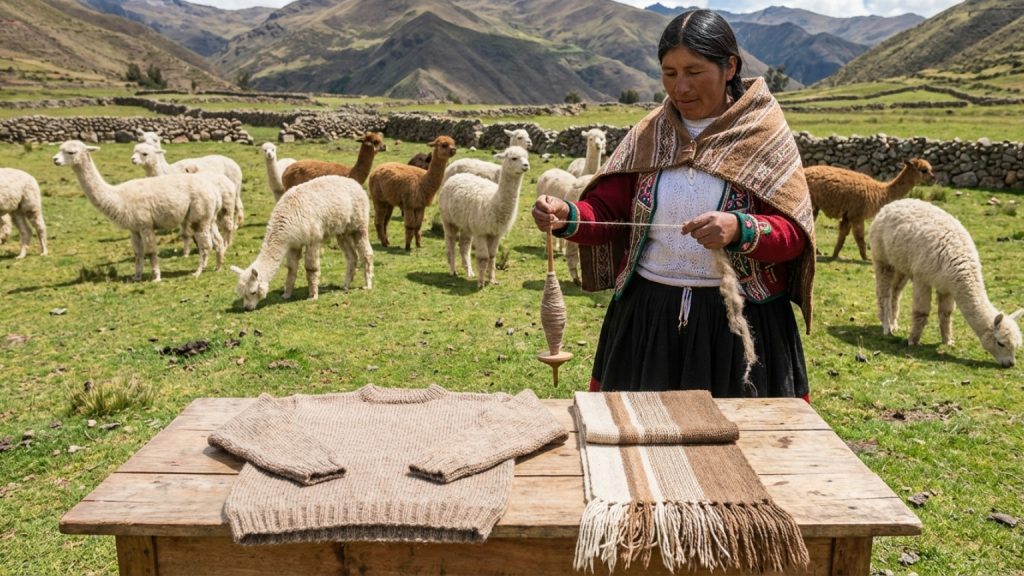
Do you often find yourself torn between luxury and ethical responsibility when choosing new clothes? It can be challenging to find garments that offer both exquisite comfort and a clear conscience. Understanding the origins and impact of your fashion choices is key to building a wardrobe that reflects your values.
1. What is sustainability in alpaca clothing?
Sustainability in alpaca clothing means making products with minimal harm to the environment and society. This approach covers ethical animal treatment, responsible land use, and fair labor practices. It ensures that the benefits of alpaca fiber continue for future generations.
- Ethical Sourcing: This refers to how alpacas are raised and shorn. Sustainable practices ensure the animals live in humane conditions, often on small family farms in the Andes, where they graze naturally.
- Environmental Impact: Alpaca fiber production has a low environmental footprint. Alpacas are gentle on pastures, and their fiber needs less water and fewer chemicals to process compared to other materials.
- Fair Labor Practices: Sustainability also means all workers involved in creating the garments receive fair wages and work in safe conditions. This supports local artisans and communities, for example, in Peru.
- Durability and Longevity: Sustainable alpaca clothing is made to last a long time. A well-crafted alpaca sweater, for instance, can be a staple in your wardrobe for many years, reducing the need for frequent replacements.
- Biodegradability: Alpaca fiber is a natural material that breaks down safely at the end of its life cycle. Unlike synthetic fabrics, it does not contribute to microplastic pollution in our ecosystems.
Choosing sustainable alpaca clothing supports responsible practices across the entire supply chain. You invest in quality garments that respect the planet and its people.
2. Why is the choice of sustainable alpaca clothing important?
Choosing sustainable alpaca clothing is important for several reasons, impacting both the environment and human welfare. This choice helps protect the planet and ensures fair treatment for all involved in production. When you select these garments, you contribute to a more ethical fashion industry.
- Reduced Environmental Footprint: Alpaca production has a lower impact on the environment compared to other fibers. For example, alpacas have soft pads instead of hooves, which prevents soil erosion in their grazing areas.
- Ethical Treatment of Animals: Alpacas are shorn annually for their comfort and health, without harm. This ensures that animal welfare is a priority in the fiber’s sourcing.
- Support for Fair Labor: Sustainable practices often include fair wages and safe working conditions for artisans and farmers. Your purchase helps local communities thrive and promotes equitable trade.
- Long-Lasting Quality: Alpaca fiber is naturally strong and durable, meaning garments last many years. This reduces the need for frequent replacements and cuts down on textile waste.
Choosing sustainable alpaca clothing is not just about personal style; it is about making a responsible choice. This decision supports a healthier planet and fairer practices for everyone.
3. How to recognize sustainability in alpaca clothing?
Recognizing sustainable alpaca clothing involves looking beyond the label. True sustainability considers the entire production process, from how alpacas are raised to how the fiber is processed. You can identify ethical choices by understanding key aspects of responsible sourcing and manufacturing. This ensures your purchase supports both environmental health and fair practices.
- Ethical animal treatment: Sustainable alpaca farming prioritizes the well-being of the animals. Alpacas are not harmed during shearing, and they live in their natural high-altitude environments. This humane approach ensures the animals are healthy and respected.
- Environmentally friendly practices: Look for brands that minimize their environmental footprint. This includes responsible land management, reduced water usage, and avoiding harsh chemicals in processing. For example, some producers use natural dyes or closed-loop systems for water.
- Fair labor conditions: Sustainability extends to the people who make the clothing. Companies should ensure fair wages, safe working conditions, and no child labor for all workers. This supports local communities and their artisans.
- Transparency and traceability: A truly sustainable brand will openly share information about its supply chain. They can tell you where the alpaca fiber comes from and how it was processed. This allows you to verify their claims of ethical production.
By focusing on these factors, you can make informed decisions when buying alpaca clothing. Your choices support a more responsible and ethical fashion industry.
4. What to do to support the production of sustainable alpaca clothing?
To support the production of sustainable alpaca clothing, you can make informed choices as a consumer. Your actions directly help protect the environment and support ethical practices within the industry. By choosing carefully, you contribute to a better future for both alpacas and the people who work with their fiber.
- Choose Brands with Certifications: Look for companies that provide certifications or clear transparency reports. These documents show their commitment to ethical sourcing, animal welfare, and fair labor practices. For example, a brand might detail its supply chain from farm to finished garment.
- Inquire About Sourcing: Ask where the alpaca fiber comes from and how it is processed. Sustainable brands will openly share information about their farms and production methods. This helps you understand the journey of your clothing.
- Care for Your Alpaca Garments Properly: Extend the life of your clothing by following care instructions like hand washing. Proper care reduces the need for frequent replacements, which lowers your overall environmental impact. This also saves resources used in new production.
- Support Small-Scale Producers: Buy directly from artisans or small businesses focused on ethical production. This helps local communities and ensures fair wages for the people involved in crafting your garments. You directly empower these independent makers.
Your purchasing decisions have a real impact on the sustainability of alpaca clothing. By choosing wisely, you help foster an industry that respects animals, people, and the planet.