Finding high-quality, comfortable, and sustainable clothing can be a challenge. You might wonder which materials truly offer warmth without bulk, or how to make an ethical choice. Alpaca clothing presents an appealing option, but understanding its nuances is key to a satisfying purchase.
1. What is alpaca clothing: understanding its types and grades?
Alpaca clothing comes from the fleece of alpacas, animals native to the Andes Mountains. This natural fiber is known for its warmth, softness, and durability. Understanding the different types and grades of alpaca is essential before you make a purchase. This knowledge helps you choose garments that best suit your needs and budget.
- Alpaca Fiber: Alpaca fiber is naturally hypoallergenic and much warmer than sheep’s wool. It also feels softer and does not contain lanolin, which can irritate some skin types.
- Baby Alpaca: This grade comes from the first shearing of an alpaca or from the softest parts of an adult alpaca. It is exceptionally soft and fine, making it ideal for items worn close to the skin, such as scarves or baby blankets.
- Royal Alpaca: Royal alpaca is the finest and rarest grade available, measuring less than 19 microns in diameter. Only a small percentage of alpaca fleece qualifies as royal alpaca, making it a premium and luxurious choice.
- Superfine Alpaca: This grade is finer than standard alpaca but not as fine as baby or royal alpaca. It still offers excellent softness and warmth, providing a good balance of quality and value for many clothing items.
- Huacaya vs. Suri Alpaca: Huacaya alpacas produce a crimped, fluffy fiber similar to sheep’s wool, which gives garments a soft, matte look. Suri alpacas have long, silky, straight fibers that create a lustrous, draping fabric, often used in more elegant designs.
Knowing these distinctions allows you to choose alpaca clothing with confidence. You can then ensure your purchase matches your expectations for comfort, quality, and price.
2. Why consider alpaca clothing: its unique benefits and sustainability?
Alpaca clothing offers many advantages over traditional materials. It combines luxurious comfort with practical performance, making it a smart choice for various climates. When you buy alpaca, you also support sustainable practices and ethical production. This makes alpaca garments an excellent investment for your wardrobe.
- Exceptional Warmth and Lightness: Alpaca fiber has a hollow core, which traps air and provides excellent insulation. This means an alpaca sweater can keep you warmer than a heavier wool garment, without feeling bulky. For example, a thin alpaca scarf can offer surprising warmth on a cold day.
- Luxurious Softness and Hypoallergenic Qualities: Alpaca is incredibly soft, often compared to cashmere, but without the lanolin found in sheep’s wool. This lack of lanolin makes it naturally hypoallergenic, so it is gentle on sensitive skin. You can wear an alpaca garment directly against your skin without irritation.
- Durability and Longevity: Alpaca fibers are strong and resilient, resisting pilling, stretching, and wrinkling better than many other natural fibers. With proper care, an alpaca piece can last for many years, maintaining its shape and quality. This makes it a lasting addition to your closet.
- Sustainable and Eco-Friendly Production: Alpacas have a lighter environmental footprint than other livestock; their soft hooves do not damage pastures, and they eat less. They are shorn once a year, a process that does not harm the animal and provides a renewable fiber. Choosing alpaca supports responsible farming and reduces environmental impact.
Considering these benefits, alpaca clothing stands out as a superior choice for discerning buyers. It offers a blend of comfort, style, and environmental responsibility that few other materials can match.
3. How to identify quality when buying alpaca clothing?
- Fiber type: Alpaca fiber comes in different grades, with «baby alpaca» being one of the softest and finest. While not from baby alpacas, this term refers to the fiber’s fineness, offering a luxurious feel. For example, a sweater labeled «baby alpaca» will feel much softer and lighter against your skin than one simply labeled «alpaca,» which might contain coarser fibers.
- Weave and construction: High-quality alpaca clothing shows excellent craftsmanship. Look for tight, even stitches, strong seams, and a consistent weave without loose threads or thin spots. Examine seams for neatness and check if the fabric has a uniform texture without thinning areas, which indicates careful manufacturing.
- Feel and drape: Genuine alpaca wool feels incredibly soft, smooth, and has a natural, elegant drape. It should not feel scratchy, stiff, or overly bulky. A high-quality alpaca scarf, for instance, will feel gentle against your skin and fall smoothly, unlike a cheaper blend that may feel rough or rigid.
- Pilling and shedding: While some natural fibers can pill, high-quality alpaca should pill less and shed minimally. If you rub a small area, excessive fiber shedding or immediate pilling suggests a lower quality product or a blend with other fibers.
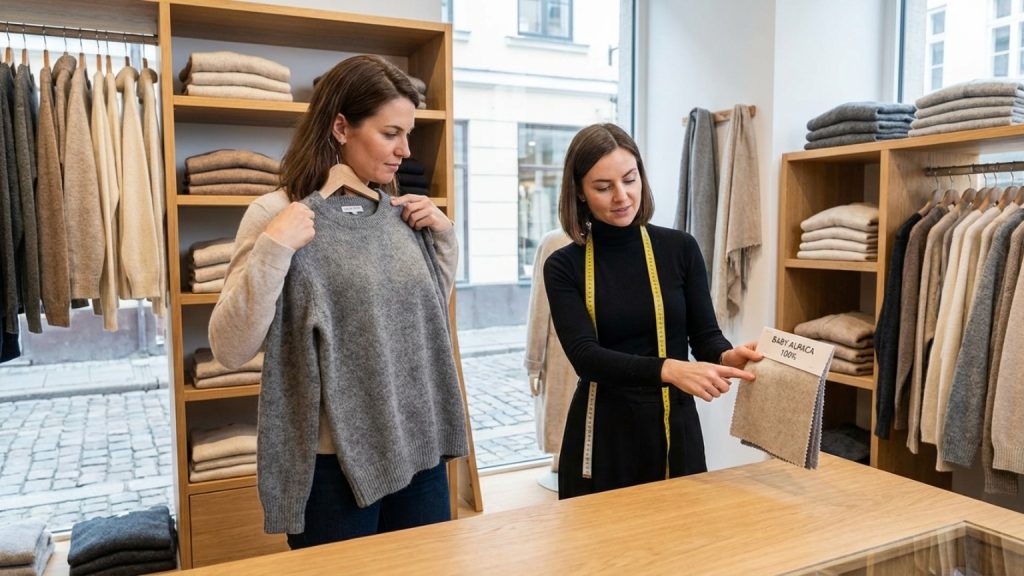
- Labeling: Always check the garment’s label for clear information about its fiber content. A label clearly stating «100% Baby Alpaca» gives more confidence in the product’s quality than one with vague terms or no specific fiber content listed. This transparency helps confirm the material’s authenticity.
4. What steps to take for buying authentic alpaca clothing?
- Check the Label: Always read the care label carefully. It should state «100% alpaca» or specify the exact blend, for example, «70% alpaca, 30% silk.» If the label is vague or missing, like simply saying «soft wool,» this is a red flag.
- Feel the Texture: Authentic alpaca fiber feels incredibly soft, smooth, and lightweight against the skin. It should not feel scratchy or coarse like some sheep’s wool. For instance, if a sweater feels rough or prickly, it is likely not pure alpaca.
- Examine the Weave or Knit: High-quality alpaca garments show consistent and even stitching or weaving. Look closely for loose threads, uneven tension, or signs of poor craftsmanship. A well-made alpaca item will have a uniform appearance.
- Consider the Seller’s Reputation: Purchase alpaca clothing from reputable brands or stores that specialize in natural fibers. Established sellers often provide details about their sourcing and quality control. This transparency helps build trust in their products.
- Evaluate the Price: Alpaca is a luxurious and premium natural fiber, so its products come with a higher price point. If a garment is unusually cheap, it is probably not genuine alpaca or contains very little of it. Be wary of deals that seem too good to be true.