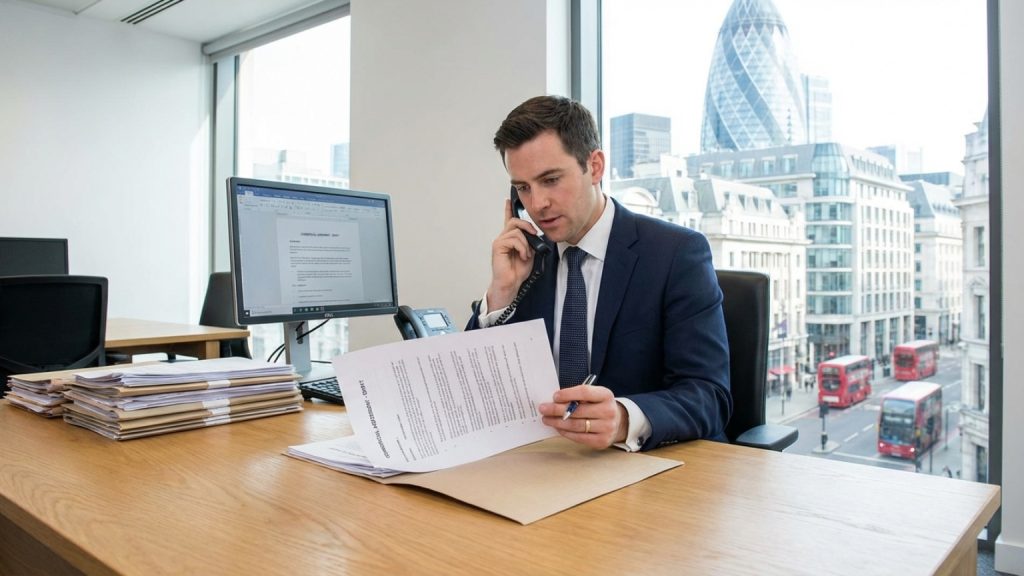
Many businesses struggle with the complexities of commercial agreements, often leading to unforeseen risks and disputes. Understanding the legal landscape for contracts is crucial for your company’s protection and growth. We help you navigate these challenges by clarifying the essential role of a commercial contract lawyer in the UK.
1. What is the role of a commercial contract lawyer in the UK?
A commercial contract lawyer in the UK helps businesses create, review, and manage their legal agreements. These professionals make sure all contracts are clear, legally sound, and protect the client’s interests. They play a key role in preventing disputes and ensuring smooth business operations.
- Drafting Contracts: They write new contracts tailored to a business’s specific needs. For example, a lawyer might draft a supply agreement for a manufacturer to clearly define terms with a new supplier.
- Reviewing and Negotiating: Lawyers examine existing contracts or proposed agreements from other parties. They negotiate terms to get the best outcome for their client, ensuring fairness and legal compliance.
- Ensuring Compliance and Managing Risk: They advise businesses on legal requirements and potential risks related to their contracts. This helps companies avoid legal problems and financial losses.
- Resolving Disputes: If a contract is broken, these lawyers work to resolve the issue. They might represent the client in negotiations or legal proceedings to enforce contract terms.
- Providing Strategic Advice: Beyond specific documents, they offer general legal guidance on commercial matters. This includes advice on business acquisitions or intellectual property licensing, helping clients make informed decisions.
Engaging a commercial contract lawyer helps businesses navigate complex legal landscapes with confidence. Their expertise supports growth and stability by securing strong, enforceable agreements.
2. Why is a commercial contract lawyer in the UK important for your business?
A commercial contract lawyer in the UK is vital for any business. They help create, review, and negotiate agreements, ensuring these documents protect your interests.
Without expert legal advice, businesses face significant risks, such as unclear terms or unexpected liabilities. For instance, when a company signs a new software license, a lawyer makes sure the usage rights and payment terms are fair and understood.
- Risk Mitigation: These lawyers identify potential problems and liabilities within contracts. They help businesses avoid future disputes and financial losses by addressing issues early.
- Legal Compliance: Commercial contracts must follow UK laws and regulations. A lawyer ensures all agreements meet these legal standards, preventing penalties or invalid contracts.
- Clear Terms: Lawyers draft agreements with precise language, removing ambiguity. This clarity helps all parties understand their duties and rights, making business relationships smoother.
- Dispute Resolution: If a contract dispute arises, a lawyer can represent your business. They work to resolve conflicts, either through negotiation or litigation, protecting your company’s position.
- Cost Savings: While hiring a lawyer has a cost, they often save businesses money in the long run. Preventing costly mistakes or legal battles is much cheaper than dealing with their aftermath.
Engaging a commercial contract lawyer is a strategic investment for business stability. Their expertise ensures that all your agreements are strong, legally sound, and support your long-term goals.
3. How does a commercial contract lawyer in the UK protect your interests?
A commercial contract lawyer in the UK helps businesses manage legal risks effectively. They draft, review, and negotiate contracts to secure favorable terms for clients. This expert guidance prevents future disputes and protects a business’s financial stability. Their work ensures all agreements are clear, enforceable, and fully compliant with UK law compliant with law.
- Drafting Clear Agreements: Lawyers create contracts that clearly define responsibilities and obligations for all parties. This precision helps prevent misunderstandings and potential legal challenges later.
- Identifying Hidden Risks: They carefully review terms to find clauses that could harm your business. For example, a lawyer might spot an unfair termination clause or a hidden liability related to intellectual property.
- Ensuring Compliance: Commercial contracts must always follow UK laws and specific industry regulations. A lawyer makes sure your agreements meet all legal requirements, helping you avoid penalties.
- Negotiating Favorable Terms: Lawyers advocate for your best interests during contract negotiations. They work to achieve terms that benefit your business financially and operationally.
- Resolving Disputes: If a disagreement arises from a contract, a lawyer can help find effective solutions. They can represent your company in negotiations or litigation to protect your position.
Engaging a commercial contract lawyer provides essential legal security for your business operations. This preventative approach safeguards your company from costly legal issues and supports its long-term success.
4. What to consider when choosing a commercial contract lawyer in the UK?
- Experience and Specialization: Look for a lawyer with specific knowledge in your industry or contract type. For example, a tech company benefits greatly from a lawyer experienced in software licensing agreements, not just general sales contracts.
- Commercial Acumen: The lawyer should understand your business objectives beyond just the legal terms. They can help structure a deal to meet sales targets, not only to avoid future litigation.
- Communication Style: A good lawyer explains complex legal issues clearly and directly. They should be able to break down contract clauses without using excessive legal jargon.
- Fee Structure: Understand how the lawyer charges for their services. Ask if they use an hourly rate, a fixed fee for specific projects, or another model.
- Availability and Responsiveness: Consider how quickly the lawyer can address your urgent matters. You need a professional who can review a critical contract draft within a tight deadline.