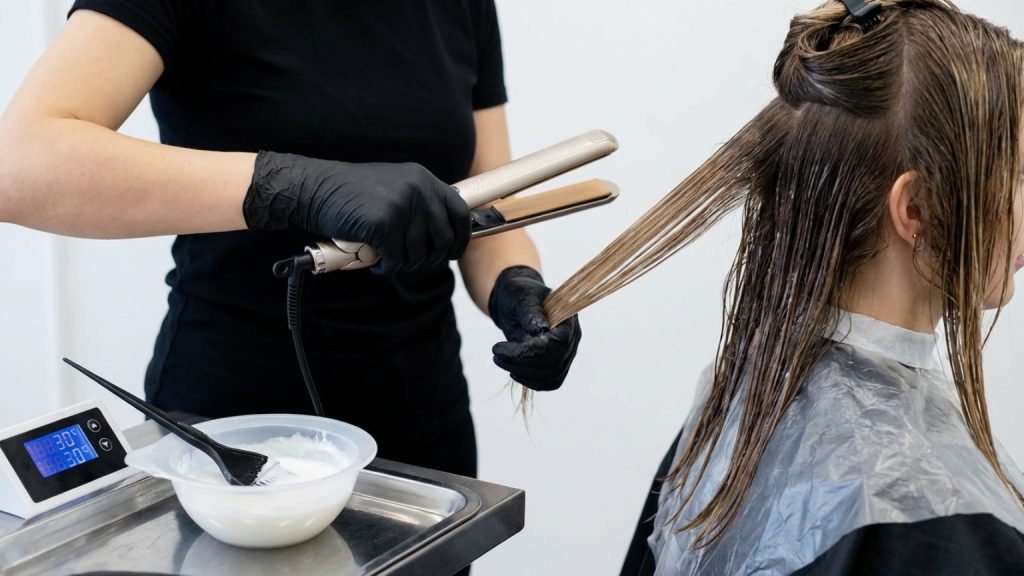
Do you often find your hair difficult to manage, prone to frizz, or lacking a smooth finish? Many people struggle with hair that resists styling and feels rough. Achieving consistently sleek, straight hair can seem like a daily challenge. This article explores ionic straightening, a method designed to address these common hair concerns.
1. What is ionic straightening: The definition and its principles?
Ionic straightening is a chemical hair treatment designed to make hair permanently straight. This process uses a special solution and heat to alter the hair’s natural structure. For example, hair that is naturally curly or wavy can become smooth and sleek through this method.
- Ionic Technology: The treatment applies a solution containing negatively charged ions to your hair. These ions help break the natural bonds within the hair shaft, preparing it for reshaping.
- Chemical Solution: The solution often contains a reducing agent, such as ammonium thioglycolate. This agent helps relax the hair’s internal structure, making it pliable.
- Heat Application: After the solution, professionals use a flat iron on small sections of hair. This heat seals the newly straightened shape into the hair, making the change lasting.
- Hair Structure Change: The chemicals and heat work together to alter the disulfide bonds in your hair. These bonds are responsible for your hair’s natural curl or wave pattern.
- Resulting Effect: The result is hair that stays straight, smooth, and often very shiny. This effect lasts until new hair grows out from the roots.
Ionic straightening offers a long-term solution for achieving straight hair. Proper care helps maintain the new look and hair health after the treatment.
2. Why choose ionic straightening: The benefits for hair health?
Ionic straightening is a popular choice for achieving smooth, straight hair. This method uses negative ions to help reshape the hair’s structure. It goes beyond simple straightening, offering specific benefits for your hair’s overall health and appearance. You can expect to see improvements in texture and manageability.
- Reduced Frizz: Ionic straightening seals the hair cuticle. This helps prevent moisture from entering, which is a common cause of frizz, so your hair stays smooth even in humid weather.
- Enhanced Shine: The sealed cuticle reflects light more effectively. This makes your hair look noticeably glossier and healthier.
- Improved Hair Texture: The process leaves hair feeling much softer and smoother to the touch. This also makes your hair easier to comb and style each day.
- Less Damage: While heat is involved, the ionic technology aims to protect the hair shaft. It helps to reduce static electricity and potential breakage compared to some other straightening methods.
- Longer Lasting Results: The structural changes made by ionic straightening are more stable. This means your straight hair can last for several weeks, reducing your need for daily heat styling.
Choosing ionic straightening means investing in both style and hair health. It provides a way to get smooth, shiny hair that also feels soft and easy to manage.
3. How is ionic straightening performed: The step-by-step process?
Ionic straightening is a precise chemical process designed to permanently alter the hair’s natural structure, making it straight and smooth. This method uses specific chemical solutions and heat to break and then reform the hair’s disulfide bonds. Understanding each stage of this treatment is essential for achieving the best results and maintaining hair health.
- Hair analysis and preparation: The process begins with a thorough assessment of your hair type, condition, and previous chemical treatments. This step ensures the correct product strength is chosen, preventing damage. For example, very fine or heavily processed hair requires a milder solution than thick, virgin hair.
- Application of straightening cream: A specialized straightening cream is applied evenly to dry hair, avoiding the scalp. This cream contains agents that soften the hair and break its natural bonds, allowing it to be reshaped. The cream typically stays on for a specific time, depending on your hair type.
- Rinsing and drying: After the processing time, the hair is thoroughly rinsed to remove all traces of the straightening cream. It is then carefully blow-dried until completely straight and dry. This drying prepares the hair for the next crucial step.
- Flat ironing: Small sections of hair are meticulously flat-ironed at a high temperature. This heat application physically straightens the hair, locking in the new shape. The flat iron’s heat also helps to seal the cuticles, creating a smooth finish.
- Neutralizer application: A neutralizer is applied to the hair, which hardens the new straight shape by reforming the disulfide bonds. This solution ensures the hair remains straight permanently. The neutralizer also helps to restore the hair’s pH balance after the chemical process.
After the neutralizer is rinsed out, the hair is conditioned and styled as desired. This multi-stage process ensures lasting straightness, but proper application by a trained professional is key to protecting your hair.
4. How to decide if ionic straightening is suitable for you?
Deciding if ionic straightening is right for you involves understanding your hair’s current state and your desired look. This process helps you make an informed choice about this permanent treatment. Consider your hair type, its health, and the level of maintenance you are willing to commit to.
- Hair Type and Texture: Ionic straightening works best on naturally curly, wavy, or frizzy hair. It is very effective for thick, coarse hair that resists other smoothing methods. For example, if you have very dense, unruly curls that you struggle to straighten daily, this treatment can offer a long-term solution.
- Hair Condition: Your hair must be in good health before undergoing ionic straightening. Severely damaged, brittle, or chemically over-processed hair may not respond well and could suffer further harm. A professional can assess if your hair is strong enough to handle the process safely.
- Desired Outcome: This treatment provides a permanent, sleek, and super-straight result. If you prefer a completely straight look without daily styling, this method could be a good fit. However, you will not be able to wear your hair naturally curly or wavy after the treatment.
- Maintenance Commitment: While ionic straightening reduces daily styling effort, it requires specific aftercare to maintain the results. You will need to use sulfate-free products and avoid certain styling tools or methods that could damage the chemically straightened hair. This commitment helps ensure the longevity of your smooth hair.
- Professional Consultation: Always speak with a hair professional who has experience with ionic straightening. They can evaluate your hair, discuss your expectations, and explain any potential risks or benefits. This step ensures you receive personalized advice tailored to your unique hair needs.
Making an informed decision about ionic straightening depends on a careful consideration of these factors. A professional consultation is always the best first step to ensure the treatment aligns with your hair goals and health.